
Asphalt Calculator
Estimate asphalt volume, cubic yards, short tons, metric tonnes, waste allowance, and optional material cost for driveways, parking areas, paths, and paving sections.
Results
Asphalt estimates are approximate. Actual tonnage can vary by mix density, compaction, base preparation, uneven grade, edge loss, delivery minimums, and supplier measurement methods.
The Asphalt Calculator estimates compacted paving volume and converts it to mass using an entered density. This supports preliminary tonnage planning for a rectangular driveway, patch, or pavement area. Thickness, mixture, base, compaction, drainage, transport, and placement must come from project requirements.
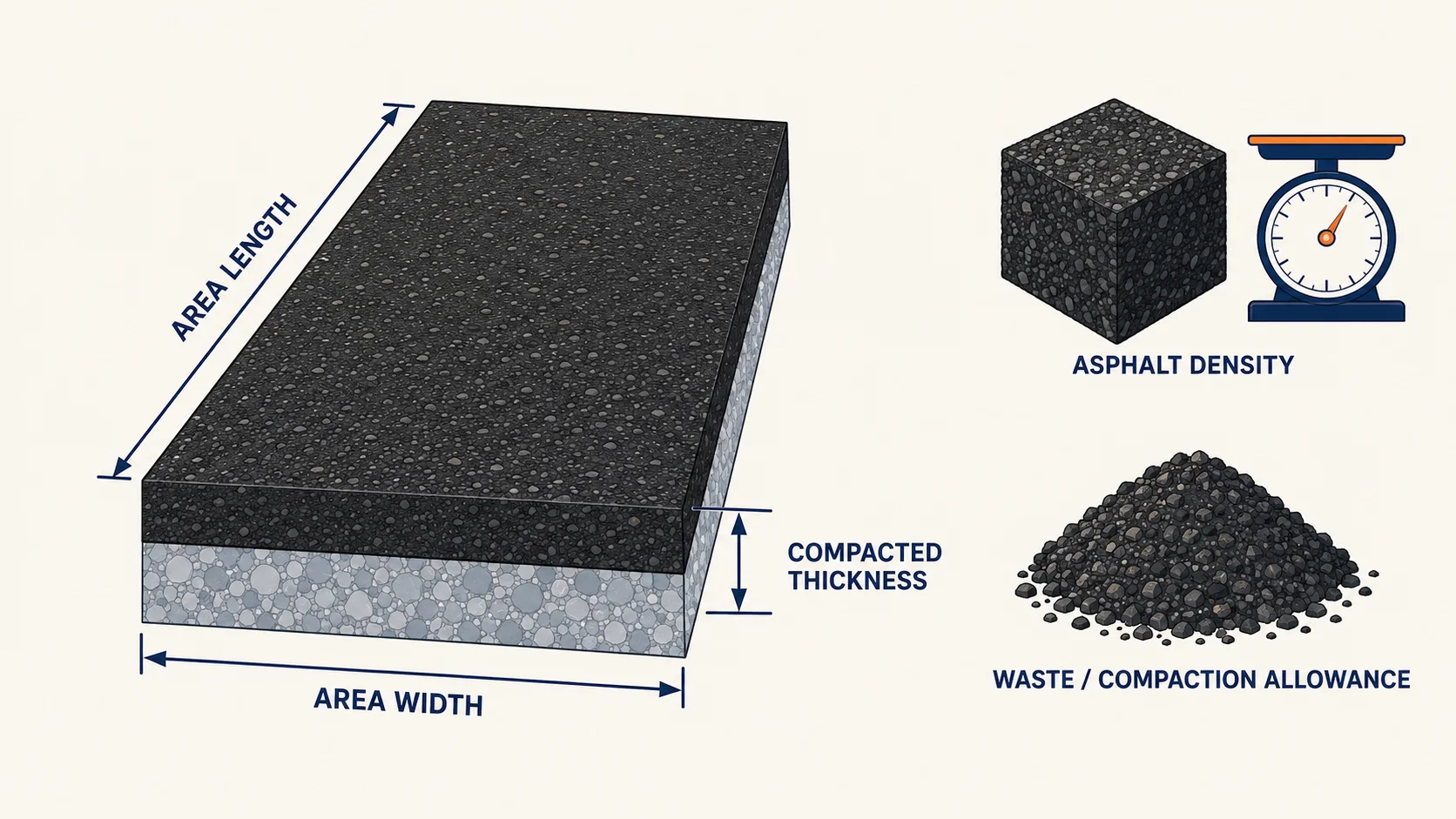
Use compacted dimensions
Measure the finished paving length and width and enter the specified compacted thickness. Convert thickness to the same unit before multiplying:
Compacted volume = paved area × compacted thickness
A 60 ft by 12 ft driveway at 3 in compacted thickness covers 720 ft² and has 180 ft³, or 6.67 yd³, of compacted volume.
Density converts volume into tonnage
Mass = compacted volume × compacted mixture density
Density varies with mix design, aggregate, air voids, temperature, and compaction. Use a project or supplier value instead of treating a generic number as guaranteed. Ensure the density unit matches the calculated volume before converting pounds, short tons, kilograms, or tonnes.
Loose delivery and compacted pavement are different states
The target thickness describes the finished compacted lift. Trucked mix is loose and consolidates during rolling. Do not increase finished thickness by an improvised compaction ratio when the supplier’s tonnage calculation already uses compacted density. Confirm which basis each input uses.
Allowance should reflect the operation
Irregular edges, handwork, small loads, truck carryback, segregation, and grade variation can create loss. Excessive allowance can leave hot material with nowhere safe to place. Discuss minimum loads, scale increments, plant distance, truck cycle, and paving rate with the supplier and crew.
Depth variation quickly changes mass
An extra half inch across a large area creates significant volume. Check subgrade and base elevations rather than measuring thickness at one location. The Asphalt Calculator cannot reveal low spots, failed base, drainage problems, or whether multiple lifts are required.
Area alone does not specify a pavement
Traffic, climate, soil, drainage, base thickness, edge support, mixture type, lift thickness, tack coat, joints, and compaction equipment determine performance. Patches also need sound boundaries and preparation. Use drawings, local standards, or a qualified pavement professional.
Dispatch checklist
- Verify paved limits and compacted elevations.
- Separate areas with different lift thicknesses or mixtures.
- Obtain the project density and plant conversion basis.
- Confirm load size, delivery timing, access, weather, and crew capacity.
- Track actual scaled tonnage against completed area.
Related volume tools
Estimate aggregate with the Gravel Calculator, concrete with the Concrete Calculator, or paving units with the Paver Calculator.
Thickness should describe the compacted layer
Asphalt is commonly delivered by mass but designed by compacted thickness. Clarify whether a quoted depth is loose placement or the finished compacted lift, and use the density or yield supplied for the approved mix. Deep repairs may require more than one lift, while a thin overlay depends on the existing pavement condition and preparation. Measure patches individually, account for tapers and irregular edges, and coordinate the final tonnage with the paving contractor and plant before dispatch. Delivery timing, truck capacity, haul distance, weather, minimum plant orders, and material cooling can also affect a small project’s practical quantity, paving sequence, crew planning, and site access.
Asphalt Calculator FAQ
Can cubic yards be converted to tons without density?
No. The conversion requires a density appropriate to the actual mixture and state.
Should I enter loose or compacted thickness?
Use the finished compacted thickness unless the calculator and supplier explicitly request another basis.
Does tonnage include the aggregate base?
No. Base is a separate material layer.
The National Asphalt Pavement Association engineering resources provide industry background.