Budget Calculator
Calculate your income, expenses, remaining balance, savings rate, and budget status for a monthly or yearly budget.
Expenses
Add each expense category, amount, and frequency. Blank rows are ignored.
Budget Results
This calculator provides a simple budget estimate. Actual cash flow may differ because of irregular income, one-time expenses, taxes, loan payments, subscriptions, seasonal bills, and timing differences between when money is earned and spent.
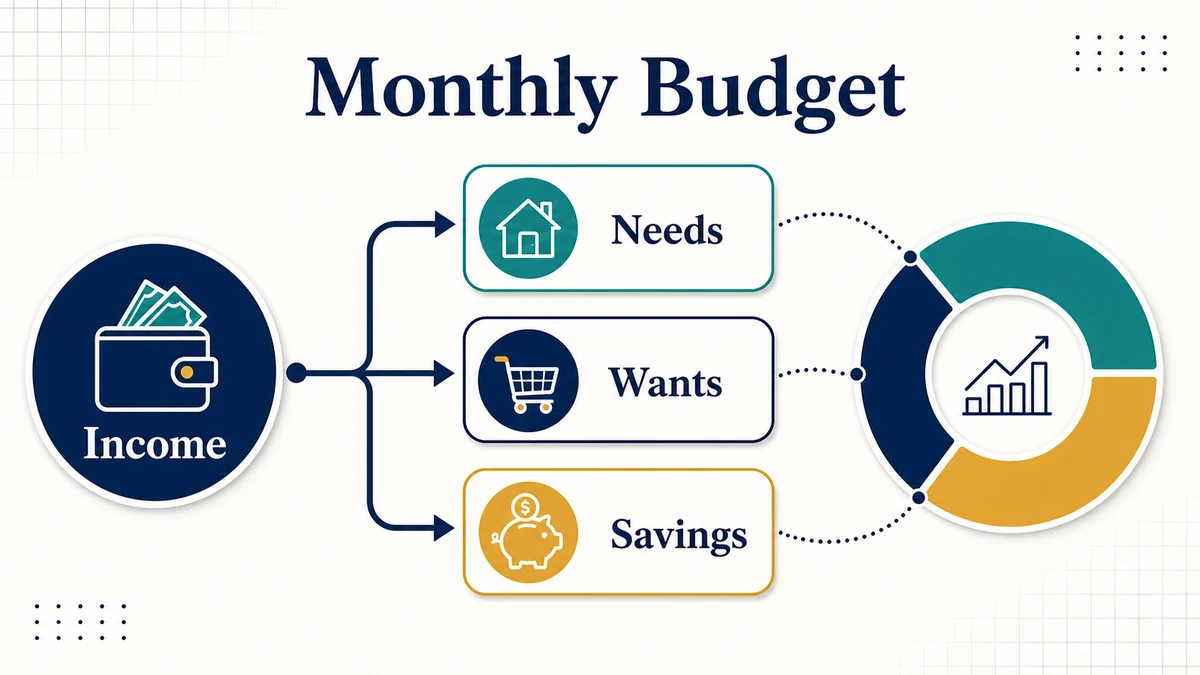
A Budget Calculator creates a snapshot of money coming in and money going out during one consistent period. It totals income and expenses, then shows whether the plan produces a surplus, breaks even, or runs short. The value is not a prescribed spending ratio—it is a complete, checkable cash-flow picture.
Pick one time period before entering amounts
Monthly budgeting is usually easiest. Convert weekly income by multiplying by 52 and dividing by 12; convert annual amounts by dividing by 12. Use take-home income for a spending plan unless the tool specifically requests gross income.
Build the expense side in three passes
- Fixed obligations: housing, insurance, minimum debt payments, childcare, subscriptions.
- Variable essentials: food, utilities, fuel, medicine, household supplies.
- Irregular costs: annual fees, repairs, gifts, school costs, and other bills that do not arrive monthly.
Convert an annual $1,200 insurance bill into a $100 monthly sinking-fund amount rather than letting the bill disappear from the plan.
The core cash-flow equations
Remaining balance = total income − total expenses
Savings rate = remaining balance ÷ total income × 100
If monthly income is $4,200 and total planned expenses are $3,650, the remaining balance is $550 and the mathematical savings rate is about 13.1%. Assign that $550 to named goals; an unassigned surplus is easy to spend twice.
Use actual statements to correct the first draft
A plan built from memory often misses small recurring charges and uneven categories. Compare it with recent bank, card, and bill records, while protecting account details. Update the Budget Calculator when income varies, a debt ends, or a periodic cost changes.
What a negative result is telling you
A shortfall means the entered plan spends more than it receives. Test changes one at a time: remove an optional expense, renegotiate a bill, increase income, or adjust the timing of a goal. Do not erase required debt payments or essential costs merely to make the total positive.
Turn the snapshot into decisions
Direct a buffer toward the Emergency Fund Calculator, compare debt strategies with the Debt Payoff Calculator, or set a dated target with the Savings Goal Calculator.
Budget Calculator FAQ
Should credit-card purchases and payments both be expenses?
Do not double-count. Choose a consistent method that captures new spending and debt repayment separately.
How do I handle variable income?
Build a cautious baseline and keep higher-income months as a separate scenario.
Is a surplus the same as savings?
Only after it is deliberately assigned and retained.
Official worksheet
The Consumer Financial Protection Bureau monthly budget worksheet uses income minus spending as the core structure.
Use categories that lead to action
Categories should be detailed enough to reveal a decision but not so granular that maintenance stops. “Food” may be enough for one household; another may separate groceries, work meals, and restaurants. Keep transfers between your own accounts out of spending unless they represent a real allocation such as savings.
Reconcile planned and actual amounts
At month end, compare the Budget Calculator plan with what actually occurred. Label one-time surprises, recurring underestimates, and timing differences. Adjust the next plan rather than editing the historical plan until it appears perfect. A truthful variance is useful information.
Special cases
- For biweekly pay, use 26 paychecks per year, not two checks for every month.
- For shared costs, include only the household share covered by the income entered.
- For reimbursements, show the expense and reimbursement consistently.
- For credit-card debt, distinguish new purchases from balance repayment.
- For annual subscriptions, reserve one-twelfth each month.
The calculator supports arithmetic; priorities and tradeoffs remain personal decisions. Keep a separate note for cash spending and pending transactions so the closing balance can be reconciled with the plan.