
Wallpaper Calculator
Estimate wallpaper rolls, wall area, strips, pattern repeat allowance, waste allowance, and optional material cost for room wallpaper projects.
Results
Wallpaper estimates are approximate. Real roll needs can vary by pattern matching, half-drop designs, wall layout, trimming, damaged strips, alcoves, windows, doors, and whether rolls are sold as single, double, or European-size rolls.
The Wallpaper Calculator estimates rolls by counting full-height strips, not just dividing wall area by roll area. It uses wall height, total width or room perimeter, roll dimensions, trimming allowance, and vertical pattern repeat. Matching, corners, defects, and product packaging determine the practical order.
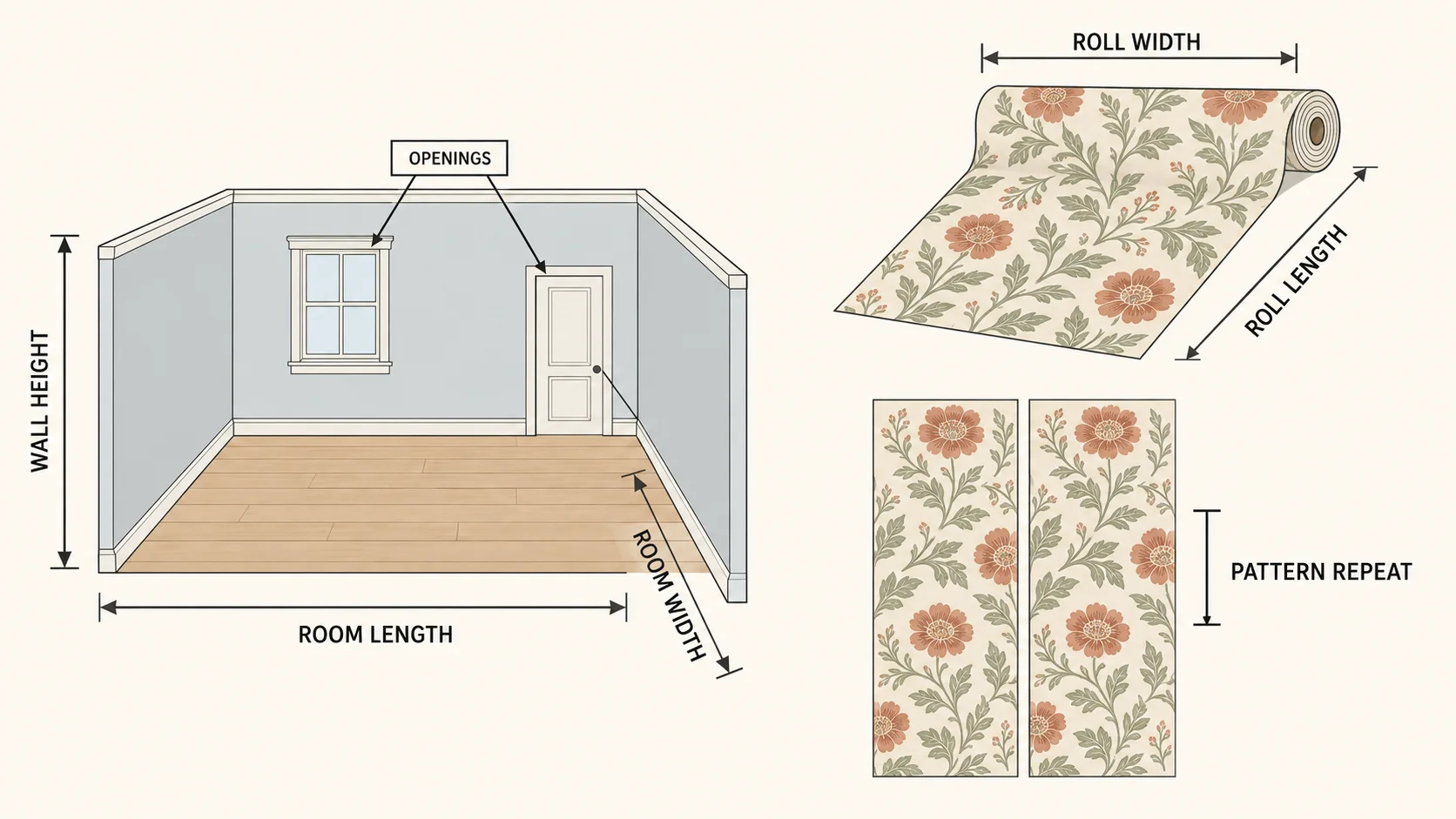
Count the widths that must be covered
For a rectangular room, wall width is the perimeter:
Perimeter = 2 × (room length + room width)
Strips required = ceiling(net wall width ÷ usable roll width)
For an accent wall, enter that wall’s width instead. Deduct large openings cautiously because narrow areas above, below, and beside openings may still consume full pattern-matched strips.
Pattern repeat changes the cut length
Add top and bottom trimming to the measured wall height. For a straight vertical repeat, round that length upward to the next full repeat:
Cut length = ceiling((wall height + trim) ÷ repeat) × repeat
With no repeat, use wall height plus trimming. Drop matches, offset matches, murals, and random matches follow different layouts; use the manufacturer’s matching instructions.
Find strips per roll before rolls required
Strips per roll = floor(usable roll length ÷ cut length)
Rolls = ceiling(strips required ÷ strips per roll)
A roll that appears generous by total area may yield only three full-height matched strips, with a remainder too short for another wall drop. That is why area-only estimates often understate patterned wallpaper.
Roll labels can be confusing
Some markets price or describe wallpaper as single rolls while packaging and coverage are supplied as double rolls or bolts. Use the physical width, usable length, and units per package on the exact product label. The Wallpaper Calculator cannot translate ambiguous retail terminology without those dimensions.
Separate products, lots and wall heights
Calculate rooms or elevations separately when wall heights, patterns, colors, or lot numbers differ. Stairwells, sloped ceilings, arches, and large focal motifs require a drawn layout. Extra matching material can be valuable for later repair because dye lots and print runs may change.
Installation planning beyond rolls
Wall preparation, primer, paste, booking, seam placement, corner wrapping, substrate moisture, and removability depend on wallcovering type. Do not use the roll count to decide whether a surface is suitable. Check the product instructions and test where required.
Measuring checklist
- Record each wall width and the greatest finished height.
- Use exact roll width, usable length, and repeat.
- Identify straight, drop, offset, mural, or random matching.
- Plan doors, windows, corners, and focal alignment.
- Round up to whole packages in the same production lot.
Related wall calculations
Measure openings with the Door and Window Area Calculator, compare coating quantity with the Paint Calculator, or verify surfaces using the Room Size Calculator.
Match the calculation to the roll label
Wallpaper may be sold as single-roll equivalents while physically packaged as double rolls, so compare usable length and width rather than relying on the product name. Straight, drop, and free matches produce different usable strips. Record the pattern number, dye lot, repeat, and match type before combining rooms. Murals and panels should follow their supplied layout instead of a roll formula. Keep an unopened matching roll when later repairs would otherwise expose a shade difference.
Wallpaper Calculator FAQ
Why not divide wall area by roll area?
Full-height strips and pattern alignment can leave roll remnants that cannot cover another drop.
Should doors and windows be subtracted?
Large openings may reduce quantity, but surrounding matched strips still create cuts; review the actual layout.
Can rolls from different lots be mixed?
Visible shade variation is possible, so obtain enough material from one matching lot when the manufacturer identifies lots.