Stride Length Calculator
Settings
Inputs
Action
Results
Use this Stride Length Calculator to estimate walking or running stride length from measured steps and distance, from height, or from pace and cadence. It also shows step length, making it useful for walking analysis, running form checks, pedometer calibration, step-based distance estimates, and general fitness tracking.
Reviewed by: AjaxCalculators Editorial Team
Last updated: May 3, 2026
Method source: Distance-per-step method, height-based estimation, and pace-plus-cadence estimation for walking and running stride analysis
Editorial standards: AjaxCalculators Editorial Policy
What This Stride Length Calculator Calculates
This calculator estimates:
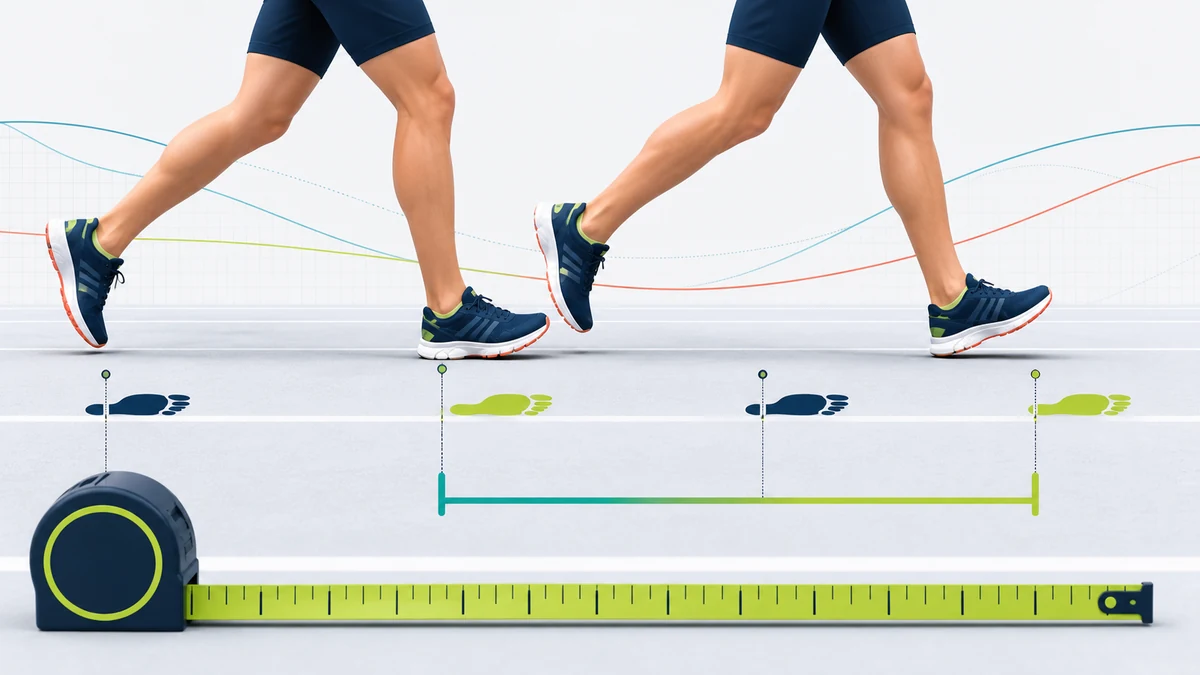
- Stride length: distance covered in one full gait cycle, usually from one foot contact to the next contact of the same foot
- Step length: distance covered in one step, usually from one foot contact to the opposite foot contact
- Method used: the calculation method selected for the estimate
It supports three methods:
- Distance + Steps: estimate stride from measured distance and total steps
- Height-based estimate: estimate stride from body height with walking or running selection
- Pace + Cadence: estimate stride from distance, time, and cadence
Step Length vs Stride Length
Step length and stride length are related, but they are not the same.
| Term | Meaning | Simple Relationship |
|---|---|---|
| Step length | Distance covered in one step, usually from one foot contact to the opposite foot contact | Distance ÷ total steps |
| Stride length | Distance covered in one full gait cycle, usually from one foot contact to the next contact of the same foot | About 2 × step length |
For simple walking and running estimates, one stride is often treated as roughly two steps. For example, if your step length is 0.75 m, your stride length is about 1.50 m.
How the Stride Length Calculator Works
The calculator uses one of three methods depending on the information you have available. The measured distance-plus-steps method is usually the strongest personal estimate because it uses your actual movement over a known distance.
1) Distance + Steps Method
This is the most practical method when you know the distance covered and the total number of steps taken.
Step length = distance ÷ total steps
Stride length ≈ 2 × step length
This method is useful for pedometer calibration, walking-route checks, treadmill checks, and personal stride measurement because it is based on measured distance and counted steps.
2) Height-Based Estimate
This method uses body height as a rule-of-thumb predictor of stride length. On the live page, sex and activity type are used only in this estimation mode.
Height-based estimates are helpful when you do not know your actual steps over a known distance. However, height alone cannot capture all gait differences. Two people with the same height can have different stride lengths because of speed, leg length proportions, cadence, mobility, running style, terrain, footwear, and fatigue.
3) Pace + Cadence Method
This method uses movement speed and cadence instead of a body-size rule.
First, speed is derived from distance and time:
Speed = distance ÷ time
Then cadence gives steps per minute, so the calculator estimates total steps:
Total steps = cadence × time in minutes
Then it estimates step length and stride length:
Step length = distance ÷ total steps
Stride length ≈ 2 × step length
This method is useful when you know how fast you moved and how many steps per minute you were taking.
Formula Summary
| Method | Formula | Best Use |
|---|---|---|
| Distance + Steps | Step length = distance ÷ steps; stride length ≈ 2 × step length | Measured walking or running calibration |
| Height-based estimate | Stride length estimated from height and activity type | Quick estimate when measured step data are unavailable |
| Pace + Cadence | Total steps = cadence × time; step length = distance ÷ total steps | Running or walking analysis when cadence is known |
| Stride from step length | Stride length ≈ 2 × step length | Convert step length to full gait-cycle length |
Which Method Should You Use?
| Available Information | Recommended Method | Why |
|---|---|---|
| Known distance and counted steps | Distance + Steps | Uses your actual measured movement |
| Only your height is known | Height-based estimate | Provides a quick rule-of-thumb estimate |
| Known distance, time, and cadence | Pace + Cadence | Uses movement speed and steps per minute |
| Clinical gait concern | Professional gait analysis | Calculator estimates cannot diagnose gait problems |
For personal device calibration, the distance-plus-steps method is usually the best starting point.
Worked Example A: Distance + Steps
Suppose you walk 1 kilometer and take 1,250 total steps.
Step 1: Convert distance to meters
1 kilometer = 1000 meters
Step 2: Find step length
Step length = 1000 meters ÷ 1250 steps
Step length = 0.80 m
Step 3: Find stride length
Stride length ≈ 2 × 0.80 = 1.60 m
Result: A 1 km walk completed in 1,250 steps corresponds to a step length of about 0.80 m and a stride length of about 1.60 m.
Worked Example B: Pace + Cadence
Suppose you cover 5 km in 30 minutes at a cadence of 160 steps per minute.
Step 1: Convert distance to meters
5 km = 5000 meters
Step 2: Find total steps
Total steps = 160 × 30 = 4800 steps
Step 3: Find step length
Step length = 5000 meters ÷ 4800 steps
Step length ≈ 1.04 m
Step 4: Find stride length
Stride length ≈ 2 × 1.04 ≈ 2.08 m
Result: The estimated step length is about 1.04 m, and the estimated stride length is about 2.08 m.
Worked Example C: Pedometer Calibration
Suppose you want to calibrate a walking app or pedometer. You walk a measured 400 meters and count 520 steps.
Step 1: Find step length
Step length = 400 meters ÷ 520 steps
Step length ≈ 0.769 m
Step 2: Find stride length
Stride length ≈ 2 × 0.769 = 1.538 m
Result: Your estimated step length is about 0.77 m, and your estimated stride length is about 1.54 m.
For better calibration, measure at your normal walking speed and repeat the test several times, then average the results.
Worked Example D: Why Speed Changes Stride Length
Stride length is not fixed. Many people naturally increase both cadence and stride length as they move faster.
| Situation | Likely Change | Practical Meaning |
|---|---|---|
| Slow walking | Shorter step length and lower cadence | Useful for casual movement estimates |
| Brisk walking | Longer step length and/or higher cadence | May need a separate calibration from slow walking |
| Running | Stride pattern changes substantially | Walking stride estimates should not be reused for running |
| Fatigue | Stride length or cadence may change | Late-run estimates may differ from fresh estimates |
This is why a single height-based estimate may not match every walking or running situation.
Factors That Affect Stride Length
Stride length varies between people and even within the same person across different conditions.
| Factor | How It Can Affect Stride |
|---|---|
| Height and leg length | Taller people often have longer average step and stride lengths, but not always |
| Walking or running speed | Faster movement often changes step length, stride length, and cadence |
| Cadence | Higher cadence can change distance covered per step |
| Terrain | Hills, trails, sand, grass, and uneven ground can shorten or alter stride |
| Footwear | Shoes, sandals, spikes, boots, or barefoot movement can change gait mechanics |
| Fatigue | Step length and cadence can change as you become tired |
| Injury or mobility limits | Pain, stiffness, weakness, or balance issues can change gait pattern |
Walking vs Running Stride Length
Walking and running are different movement patterns. Running usually includes a flight phase where both feet are briefly off the ground, while walking generally does not.
| Activity | Stride Pattern | Calibration Advice |
|---|---|---|
| Normal walking | Usually shorter stride and lower cadence than running | Measure using your normal daily walking pace |
| Brisk walking | Often longer or quicker steps than casual walking | Use a separate calibration if your app tracks brisk walks |
| Jogging | Different pattern from walking, often with longer stride | Do not rely on a walking estimate |
| Running | Stride length changes with pace, cadence, fatigue, and form | Use pace + cadence or measured distance + steps when possible |
How to Measure Your Stride Length More Accurately
For a more useful personal estimate, measure your stride length instead of relying only on height.
- Choose a flat, measured distance such as 100 m, 200 m, 400 m, or a known track distance.
- Walk or run at the pace you want to calibrate.
- Count total steps or use a reliable step counter.
- Calculate step length as distance divided by total steps.
- Calculate stride length as about two times step length.
- Repeat the test two or three times and average the results.
Use separate measurements for casual walking, brisk walking, jogging, and running because stride length can change with speed.
How to Use This Stride Length Calculator
- Choose the method you want to use: Distance + Steps, Height-based estimate, or Pace + Cadence.
- Enter the inputs required for that method.
- If using the distance-plus-steps method, enter the distance and total steps taken.
- If using the height estimate, enter height and choose the relevant walking or running option.
- If using pace plus cadence, enter distance, time, and cadence in steps per minute.
- Click Calculate if the tool requires it.
- Review stride length, step length, and the method used.
- Use the result as an estimate and recalibrate when your pace, terrain, or activity type changes.
How to Interpret the Result
Step length is the distance covered in one step.
Stride length is the distance covered in one full gait cycle, which is usually about two steps.
A longer stride does not automatically mean better performance. Real stride length changes with speed, cadence, body size, terrain, and running or walking style. For training or pedometer calibration, consistency of measurement often matters more than chasing one “ideal” number.
| Result Pattern | Possible Meaning | What to Check |
|---|---|---|
| Measured result differs from height estimate | Your actual gait differs from the rule-of-thumb estimate | Prefer measured distance-plus-steps for personal calibration |
| Running stride is much longer than walking stride | Activity type changed the gait pattern | Use separate estimates for walking and running |
| Pace + cadence result looks unusual | Cadence, time, or distance may be entered incorrectly | Confirm cadence is in steps per minute |
| Step length changes across sessions | Speed, fatigue, terrain, or footwear may have changed | Compare sessions under similar conditions |
When This Calculator Is Useful
This calculator is useful for general walking, running, and fitness tracking estimates.
- Estimate walking stride length
- Estimate running stride length
- Calculate step length from distance and steps
- Calibrate a pedometer or step-based distance estimate
- Compare step length and stride length side by side
- Use cadence and pace to understand movement patterns
- Get a rough stride estimate from height when measured data are unavailable
- Check whether stride length changes at different speeds
When You May Need More Than This Calculator
A stride length calculator is useful for general estimates, but it does not replace professional assessment when gait or mobility matters medically.
Consider professional gait analysis, physical therapy, or medical guidance if you have:
- pain while walking or running
- limping or major left-right differences
- frequent falls or balance problems
- sudden gait changes
- post-surgery or injury rehabilitation needs
- neurological, orthopedic, or mobility conditions
- running injuries that keep returning
- performance goals requiring detailed biomechanical assessment
Common Mistakes to Avoid
- Confusing step length and stride length: step length is one step, while stride length is roughly two steps.
- Using a walking estimate for running: walking and running have different stride patterns.
- Trusting height estimates too much: height-based results are only rough starting points.
- Entering cadence incorrectly: cadence should usually be entered as steps per minute, not strides per minute.
- Measuring on uneven terrain: hills, trails, and turns can change stride length.
- Counting only one foot’s steps: distance-plus-steps mode usually expects total steps from both feet.
- Ignoring speed: stride length changes when walking or running faster or slower.
- Expecting one ideal stride length: the best stride length depends on body, speed, terrain, comfort, and purpose.
Assumptions and Important Notes
- This calculator gives an estimate, not a lab-grade gait analysis.
- Step length and stride length are not the same. One stride is roughly two steps.
- The distance-plus-steps method is usually more directly measured than the height-based estimate.
- Height-based results are only rough starting estimates and will not fit every individual equally well.
- Pace-plus-cadence results depend on accurate distance, time, and cadence input.
- Stride length can change with walking speed, running speed, cadence, terrain, fatigue, and footwear.
- Cadence should be interpreted carefully because some devices or sources may report steps per minute while others may report strides per minute.
- The calculator does not diagnose gait abnormalities, injury risk, or mobility problems.
Practical Uses of a Stride Length Calculator
- Estimate personal walking stride length
- Estimate running stride length from pace and cadence
- Calibrate pedometer or step-based distance settings
- Convert total steps and distance into step length
- Compare stride length at different speeds
- Understand the relationship between cadence and distance per step
- Check whether a height-based estimate is close to measured movement
- Support general fitness tracking and training review
References
- AjaxCalculators live tool: visible methods, inputs, and step-versus-stride output framing
- Assessment of Physical Activity and Energy Expenditure: stride length, height, and walking speed context
- Treadmill vs. overground walking: cadence and step length change together at a given speed
- Effects of walking speed on cadence, step length, and stride length
- Physiopedia: gait terminology and gait parameters
Related Calculators
- Pace Calculator
- Running Split Calculator
- Marathon Pace Calculator
- Calories Burned Calculator
- VO₂ Max Calculator
- Heart Rate Zone Calculator
- Target Heart Rate Calculator
Frequently Asked Questions
What does this Stride Length Calculator estimate?
It estimates stride length and step length using distance and steps, height-based estimation, or pace and cadence.
What is stride length?
Stride length is the distance covered in one full gait cycle, usually from one foot contact to the next contact of the same foot.
What is step length?
Step length is the distance covered in one step, usually from one foot contact to the opposite foot contact.
Is stride length the same as step length?
No. Step length is one step. Stride length is roughly two steps or one full gait cycle.
How do I calculate step length from distance and steps?
Use step length = distance ÷ total steps. Make sure the distance and steps use the same walking or running session.
How do I calculate stride length from step length?
Use stride length ≈ 2 × step length for a simple walking or running estimate.
Which method is most accurate?
The distance-plus-steps method is usually the most useful for personal calibration because it uses your measured distance and counted steps.
Is the height-based method accurate?
It is only a rough estimate. Height can help approximate stride length, but real stride also depends on speed, cadence, terrain, footwear, fatigue, and gait style.
What does cadence mean?
Cadence usually means steps per minute. In pace-plus-cadence mode, make sure you enter cadence as steps per minute unless the tool states otherwise.
Can I use walking stride length for running?
Not reliably. Walking and running have different movement patterns, so it is better to measure or estimate them separately.
Does stride length change with speed?
Yes. Stride length, step length, and cadence often change when walking or running speed changes.
Can stride length help calibrate a pedometer?
Yes. Measuring distance and total steps can help estimate step length or stride length for step-based distance tracking.
Why is my stride length different on different days?
Stride length can change because of speed, terrain, footwear, fatigue, warm-up, injury, cadence, or measurement error.
Does a longer stride mean better running form?
Not automatically. Overstriding can be inefficient or uncomfortable for some runners. Running form should be evaluated in context.
Can this calculator diagnose gait problems?
No. It only estimates stride and step length. It cannot diagnose gait abnormalities, injury risk, neurological issues, or mobility problems.
When should I get professional gait analysis?
Consider professional help if you have pain, limping, falls, sudden gait changes, rehabilitation needs, recurring running injuries, or mobility concerns.
Disclaimer: This Stride Length Calculator provides educational walking and running estimates from distance and steps, height-based rules of thumb, or pace and cadence. Results depend on the method selected, distance accuracy, step count accuracy, time entry, cadence measurement, height, sex/activity assumptions, unit selection, rounding, walking or running speed, terrain, footwear, fatigue, and individual gait pattern. Step length and stride length are not the same: step length is the distance covered in one step, while stride length is roughly two steps or one full gait cycle. The distance-plus-steps method is usually more useful for personal calibration because it uses measured movement data, while height-based results are only rough estimates. Pace-plus-cadence results depend heavily on accurate cadence in steps per minute. This calculator is not a clinical gait analysis tool and cannot diagnose walking abnormalities, injury risk, neurological conditions, balance problems, or running-form issues. For pain, limping, falls, major gait changes, rehabilitation, mobility concerns, or medical conditions, consult a qualified healthcare professional, physical therapist, or gait specialist.