Target Heart Rate Calculator
Settings
Inputs
Results
Action
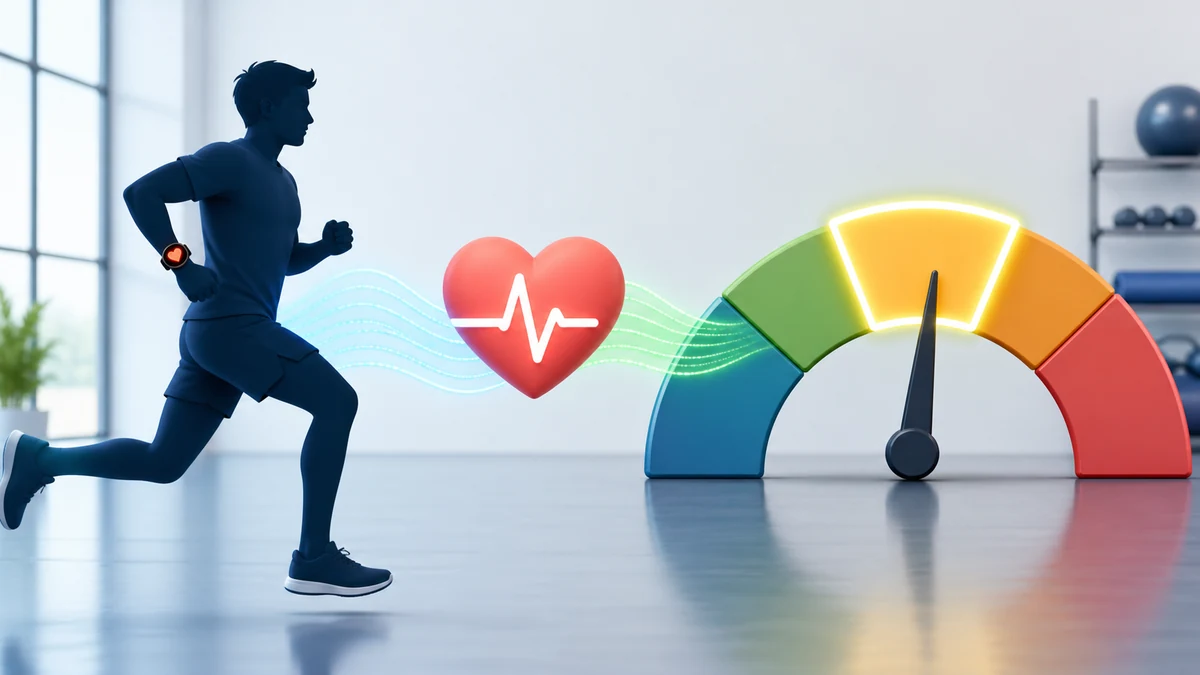
Use this Target Heart Rate Calculator to find your workout target BPM by intensity. It supports both the simple percentage-of-max method and the more personalized Karvonen heart rate reserve (HRR) method, making it useful for cardio training, aerobic exercise, interval sessions, and general fitness planning.
Reviewed by: AjaxCalculators Editorial Team
Last updated: May 2, 2026
Method source: Percentage of maximum heart rate and Karvonen heart rate reserve (HRR) formulas for target exercise intensity
Editorial standards: AjaxCalculators Editorial Policy
What This Target Heart Rate Calculator Calculates
This calculator estimates a target heart rate for exercise from your selected intensity. It is useful when you want a specific BPM target or BPM range instead of a full five-zone training table.
This calculator can estimate:
- Target heart rate: a single BPM target for a chosen exercise intensity
- Target heart rate range: a BPM range for an intensity span
- Maximum heart rate used: either estimated from age or entered manually
- Resting heart rate used: included when using Karvonen / HRR mode
- Heart rate reserve: the difference between maximum heart rate and resting heart rate
The calculator is helpful for cardio sessions, treadmill workouts, running, cycling, rowing, elliptical training, interval planning, and general fitness tracking.
What Target Heart Rate Means
Target heart rate is an estimated beats-per-minute range that corresponds to a selected exercise intensity. Instead of exercising by speed, distance, or pace alone, you can use target BPM to guide how hard you are working.
For example, a lower target BPM may be used for easy aerobic exercise, while a higher target BPM may be used for vigorous workouts or interval-style training.
Target heart rate is an estimate. Your real exercise intensity can also depend on breathing, perceived effort, symptoms, temperature, terrain, sleep, hydration, and medications.
How the Target Heart Rate Calculator Works
1) Percentage of Maximum Heart Rate Method
This method uses a percentage of your maximum heart rate:
Target BPM = Max HR × intensity %
If you do not enter a custom maximum heart rate, the calculator estimates maximum heart rate using:
Max HR ≈ 220 − age
This is a common quick estimate, but it is only a rough guide. Your real maximum heart rate may be higher or lower.
2) Karvonen / Heart Rate Reserve (HRR) Method
The Karvonen method includes your resting heart rate for a more individualized target.
HRR = Max HR − Resting HR
Target BPM = (HRR × intensity %) + Resting HR
Because it includes resting heart rate, HRR often gives a more personalized target than the simple percentage-of-max method.
Formula Summary
| Method or Result | Formula | Known Values Needed |
|---|---|---|
| Estimated maximum heart rate | Max HR ≈ 220 − age | Age in years |
| % of max target | Target BPM = Max HR × intensity % | Maximum heart rate and selected intensity |
| Heart rate reserve | HRR = Max HR − Resting HR | Maximum heart rate and resting heart rate |
| Karvonen / HRR target | Target BPM = (HRR × intensity %) + Resting HR | HRR, resting heart rate, and selected intensity |
| Target range | Low BPM to High BPM | Lower and upper intensity percentages |
Common Exercise Intensity Ranges
Target heart rate calculators often use intensity percentages to estimate moderate or vigorous exercise ranges.
| Intensity Type | Common % of Max HR Range | Typical Use |
|---|---|---|
| Light to easy | Below about 50% | Very easy movement, warm-ups, cool-downs, and gentle recovery |
| Moderate | About 50–70% | Steady aerobic exercise and general cardio training |
| Vigorous | About 70–85% | Harder cardio workouts and more demanding training sessions |
| Very high intensity | Above about 85% | Short, demanding efforts that may not be appropriate for everyone |
These ranges are general training references. They do not prove that a given intensity is safe or appropriate for every person.
% Max HR Method vs Karvonen Method
The two methods can produce different target BPM values because they use different formulas.
| Method | Uses Resting Heart Rate? | Main Advantage | Main Limitation |
|---|---|---|---|
| % of Max HR | No | Simple, quick, and easy to understand | Does not account for resting heart rate or personal heart-rate range |
| Karvonen / HRR | Yes | More individualized because it uses heart rate reserve | Requires a reasonable resting heart rate and maximum heart rate estimate |
If you know your resting heart rate and have a more reliable maximum heart rate estimate, the Karvonen method may provide a more personalized target. If you only need a quick estimate, the percentage-of-max method is simpler.
Single Target vs Target Range
This calculator may be used for either a single intensity percentage or a range of intensities.
| Input Type | Example | Result Type | Best Use |
|---|---|---|---|
| Single intensity | 70% | One target BPM | Specific workout target or interval goal |
| Intensity range | 60–70% | Low-to-high BPM range | Training window for steady cardio or aerobic work |
A range is often more practical than one exact number because heart rate naturally moves during exercise.
Worked Example: Estimate Maximum Heart Rate
Suppose you are 35 years old.
Step 1: Use the age-based formula
Max HR ≈ 220 − age
Step 2: Substitute the age
Max HR ≈ 220 − 35
Step 3: Calculate
Max HR ≈ 185 bpm
Result: The calculator uses an estimated maximum heart rate of 185 bpm for this example.
Worked Example: % of Max Heart Rate Target
Suppose you are 35 years old and want a 70% target intensity.
Step 1: Estimate maximum heart rate
Max HR ≈ 220 − 35 = 185 bpm
Step 2: Apply the target formula
Target BPM = Max HR × intensity
Step 3: Substitute the values
Target BPM = 185 × 0.70
Step 4: Calculate
Target BPM = 129.5 bpm
Step 5: Round if needed
Target BPM ≈ 130 bpm
Result: Using the percentage-of-max method, a 70% target is about 130 bpm.
Worked Example: Karvonen / HRR Target
Suppose the same person is 35 years old, has an estimated max HR of 185 bpm, and has a resting heart rate of 60 bpm.
Step 1: Find heart rate reserve
HRR = Max HR − Resting HR
HRR = 185 − 60 = 125 bpm
Step 2: Apply the HRR target formula
Target BPM = (HRR × intensity) + Resting HR
Step 3: Substitute the values
Target BPM = (125 × 0.70) + 60
Step 4: Calculate
Target BPM = 87.5 + 60 = 147.5 bpm
Step 5: Round if needed
Target BPM ≈ 148 bpm
Result: Using the Karvonen / HRR method, a 70% target is about 148 bpm.
This example shows why Karvonen targets are often higher and more individualized than simple percentage-of-max targets.
Worked Example: Target Range at 60–70%
Suppose a 35-year-old wants a 60–70% target range. The estimated maximum heart rate is 185 bpm, and resting heart rate is 60 bpm.
| Method | Lower End | Upper End | Target Range |
|---|---|---|---|
| % of Max HR | 185 × 0.60 = 111 bpm | 185 × 0.70 = 129.5 bpm | 111–130 bpm |
| Karvonen / HRR | (125 × 0.60) + 60 = 135 bpm | (125 × 0.70) + 60 = 147.5 bpm | 135–148 bpm |
Result: The same 60–70% intensity range can produce different BPM ranges depending on the selected method.
Worked Example: Using a Custom Maximum Heart Rate
Suppose you have a tested or personally known maximum heart rate of 192 bpm and want a 75% target using the percentage-of-max method.
Step 1: Use the custom max HR
Max HR = 192 bpm
Step 2: Apply the formula
Target BPM = 192 × 0.75
Step 3: Calculate
Target BPM = 144 bpm
Result: With a custom maximum heart rate of 192 bpm, a 75% target is 144 bpm.
A tested or well-established custom max HR may be more useful than the age-based estimate, especially if you know the 220 − age formula does not match your real heart-rate response.
How to Use This Target Heart Rate Calculator
- Choose % of Max Heart Rate or Karvonen / HRR.
- Select whether to estimate max HR from age or enter a custom max HR.
- Enter your age if using the age-based max HR estimate.
- Enter your resting heart rate if using HRR mode.
- Choose either a single intensity percentage or an intensity range.
- Click Calculate if the tool requires it.
- Review the target BPM result or BPM range.
- Use the result as an estimated training target, not as medical clearance.
How to Interpret the Result
Your result tells you the approximate BPM target or BPM range to aim for during exercise at the selected intensity.
| Result Type | Meaning | Practical Use |
|---|---|---|
| Single target BPM | One estimated heart rate for a chosen intensity | Useful for a specific workout target |
| Target BPM range | A lower and upper heart rate boundary | Useful for steady training windows |
| Lower target | Usually easier intensity | Often used for warm-ups, recovery, or moderate exercise |
| Higher target | Usually harder intensity | Used for vigorous sessions and should be approached carefully |
If your watch, treadmill, or coach gives you a different number, that does not automatically mean this calculator is wrong. Different formulas, different max-HR assumptions, different resting heart rate values, and different training systems can give different targets.
Target Heart Rate and the Talk Test
Target heart rate is useful, but it should not be the only way you judge effort. The talk test can help you cross-check intensity.
| Effort Cue | General Intensity | What It Suggests |
|---|---|---|
| You can talk comfortably | Easy to moderate | May fit lower-intensity cardio or recovery work |
| You can talk, but not sing | Moderate | Often aligns with steady aerobic exercise |
| You can only speak a few words at a time | Vigorous | Harder exercise that may require more recovery |
| You feel chest pain, dizziness, or unusual shortness of breath | Warning sign | Stop exercising and seek appropriate medical guidance |
Using both heart rate and perceived effort can be more practical than relying on BPM alone.
Why Maximum Heart Rate Estimates Can Differ
The 220 − age formula is convenient, but it is not a direct measurement. People of the same age can have different real maximum heart rates.
| Reason | How It Can Affect Target BPM |
|---|---|
| Individual variation | Your true max HR may be higher or lower than the estimate |
| Fitness level | Resting heart rate and exercise response can change with training |
| Medication | Some medicines can lower, raise, or blunt heart-rate response |
| Health conditions | Heart, lung, endocrine, and other conditions can affect exercise heart rate |
| Testing method | A field test, lab test, or watch estimate may differ from age-based formulas |
If you have a reliable custom maximum heart rate from appropriate testing, entering it may give a more useful target than using the age-based estimate.
Resting Heart Rate in Karvonen Mode
The Karvonen method uses resting heart rate, so the resting value should be reasonable and current.
For a more consistent resting heart rate estimate, many people measure it:
- after waking up
- before caffeine or exercise
- while relaxed and still
- over several days and then averaged
Resting heart rate can change because of sleep, stress, dehydration, illness, training fatigue, heat, caffeine, and medications. A single reading may not represent your usual resting heart rate.
Factors That Can Change Exercise Heart Rate
Your heart rate can vary even when your speed, resistance, or pace stays similar.
| Factor | Possible Effect |
|---|---|
| Heat and humidity | May raise heart rate at the same pace or effort |
| Dehydration | May increase cardiovascular strain and heart rate |
| Fatigue | May make normal target ranges feel harder |
| Sleep and stress | Can affect resting and exercise heart rate |
| Caffeine and stimulants | Can raise heart rate in some people |
| Altitude | Can increase breathing effort and heart-rate response |
| Medication | Some medicines can raise, lower, or blunt heart-rate response |
| Illness | Can raise resting heart rate and make exercise feel harder |
This is why target BPM should be combined with effort, symptoms, and training context.
Target Heart Rate vs Heart Rate Zones
A target heart rate calculator gives a specific BPM target or range. A heart rate zone calculator usually gives a full set of zones.
| Tool Type | Typical Output | Best Used For |
|---|---|---|
| Target Heart Rate Calculator | One BPM target or one BPM range | A specific workout intensity target |
| Heart Rate Zone Calculator | Multiple training zones | Building a structured cardio plan across intensities |
If you want one training target, use this calculator. If you want a full zone table, use a heart rate zone calculator.
When This Calculator Is Useful
This calculator is useful when you need a quick estimated BPM target for cardio training.
- Set a target BPM for cardio workouts
- Plan moderate or vigorous exercise intensity
- Compare simple % max-HR targets with HRR targets
- Use a tested custom max HR instead of an age estimate
- Build more structured running, cycling, rowing, or treadmill workouts
- Choose a target window for steady aerobic exercise
- Estimate a target BPM for interval sessions
- Cross-check heart-rate targets from a watch, treadmill, app, or training plan
When You May Need More Than This Calculator
A target heart rate calculator may not be enough when health, medication, or high-intensity exercise risk matters.
Use professional guidance when working with:
- heart disease or cardiovascular risk
- chest pain, dizziness, fainting, or unusual shortness of breath
- known rhythm problems or palpitations
- high blood pressure or blood-pressure medication
- diabetes or blood-sugar management
- pregnancy or postpartum exercise
- chronic illness or medication-managed conditions
- returning to exercise after illness, injury, surgery, or a long break
- high-intensity interval training or race preparation
- clinical rehabilitation or medically supervised exercise
Common Mistakes to Avoid
- Treating 220 − age as exact: it is only a rough maximum-heart-rate estimate.
- Using target BPM as medical clearance: a calculated number does not prove exercise intensity is safe for every person.
- Ignoring resting heart rate in HRR mode: the Karvonen method depends on a reasonable resting heart-rate value.
- Training too hard too soon: higher targets are more demanding and may require gradual progression.
- Ignoring symptoms: chest pain, dizziness, fainting, or unusual shortness of breath should not be ignored.
- Forgetting medication effects: some medications can change heart-rate response during exercise.
- Assuming one exact BPM is required: heart rate naturally changes during a workout, so a range is often more practical.
- Comparing methods without checking formulas: % max HR and Karvonen targets can differ substantially.
- Relying only on wrist sensor readings: sensor fit, movement, temperature, and activity type can affect heart-rate accuracy.
Important Assumptions and Limitations
- This calculator gives an estimate, not a medical clearance or a lab-tested exercise prescription.
- The formula 220 − age is only a rough estimate of maximum heart rate.
- Karvonen / HRR mode depends on the maximum heart rate and resting heart rate values entered.
- Generic target heart rates may not fit people with heart disease, rhythm problems, medication effects, or clinical exercise restrictions.
- Some medicines, especially certain heart and blood-pressure drugs, can change heart-rate response during exercise.
- Heart-rate monitors and watches can produce inaccurate readings in some conditions.
- Target BPM should be interpreted together with perceived effort, breathing, symptoms, and training context.
- This calculator does not replace medical advice, exercise testing, personalized coaching, or clinical rehabilitation guidance.
Practical Uses of a Target Heart Rate Calculator
- Estimate a target BPM for a workout
- Estimate a BPM range for moderate or vigorous exercise
- Compare % max HR and Karvonen / HRR methods
- Use a custom maximum heart rate when available
- Plan running, cycling, rowing, treadmill, or elliptical workouts
- Set heart-rate targets for cardio intervals
- Cross-check numbers from watches, apps, treadmills, and training plans
- Support safer progression from lower to higher exercise intensity
References
- American Heart Association: Target Heart Rates Chart
- Cleveland Clinic: Heart Rate Reserve and Karvonen Method
- CDC: Measuring Physical Activity Intensity
- American Heart Association: Physical Activity Recommendations for Adults
- Cleveland Clinic: Heart Rate Overview
Related Calculators
- Heart Rate Zone Calculator
- Max Heart Rate Calculator
- Calories Burned Calculator
- Pace Calculator
- VO₂ Max Calculator
- Running Split Calculator
Frequently Asked Questions
What is target heart rate?
Target heart rate is an estimated BPM target or range that corresponds to a selected exercise intensity.
What formula does this Target Heart Rate Calculator use?
It can use either the percentage-of-maximum-heart-rate method or the Karvonen heart rate reserve method.
What is the percentage-of-max-heart-rate method?
This method multiplies maximum heart rate by the chosen intensity percentage. The formula is Target BPM = Max HR × intensity %.
What is the Karvonen method?
The Karvonen method uses heart rate reserve. The formula is Target BPM = (HRR × intensity %) + Resting HR.
What is heart rate reserve?
Heart rate reserve is the difference between maximum heart rate and resting heart rate. The formula is HRR = Max HR − Resting HR.
How do I estimate maximum heart rate?
A common quick estimate is Max HR ≈ 220 − age. This is only a rough estimate and may differ from your real maximum heart rate.
Why is the Karvonen result higher than the simple % max result?
Karvonen uses heart rate reserve and then adds resting heart rate back into the result. This often produces a higher target BPM than the simple percentage-of-max method.
Should I use a single target or a range?
A single target is useful for a specific intensity goal. A range is often more practical because heart rate naturally changes during exercise.
What is a moderate target heart rate?
Moderate intensity is often estimated around 50–70% of maximum heart rate, but your personal response may vary.
What is a vigorous target heart rate?
Vigorous intensity is often estimated around 70–85% of maximum heart rate, but it may not be appropriate for everyone.
Can medication affect target heart rate?
Yes. Some medications, especially heart and blood-pressure medicines, can raise, lower, or blunt heart-rate response during exercise.
Can this calculator replace medical advice?
No. This calculator is for educational and training-planning use only. If you have symptoms, medical conditions, or take heart-rate-affecting medication, ask a qualified healthcare professional what exercise intensity is appropriate.
Disclaimer: This Target Heart Rate Calculator provides educational and training-planning estimates using either a percentage of maximum heart rate or the Karvonen heart rate reserve method. Results depend on the age, estimated or custom maximum heart rate, resting heart rate, selected intensity percentage or range, calculation method, and rounding choices entered. The common 220 − age maximum-heart-rate formula is only a rough estimate and may differ from your real maximum heart rate. Target BPM can also be affected by fitness level, heat, hydration, fatigue, sleep, stress, caffeine, altitude, illness, and medications, especially heart or blood-pressure medicines. These results are not medical clearance, a diagnosis, or a personalized exercise prescription. If you have heart disease, chest pain, dizziness, fainting, unusual shortness of breath, rhythm problems, high blood pressure, diabetes, pregnancy, chronic illness, or take medication that affects heart rate, ask a healthcare professional what target range is appropriate before using heart-rate-based training targets.