Calories Burned Calculator
Results
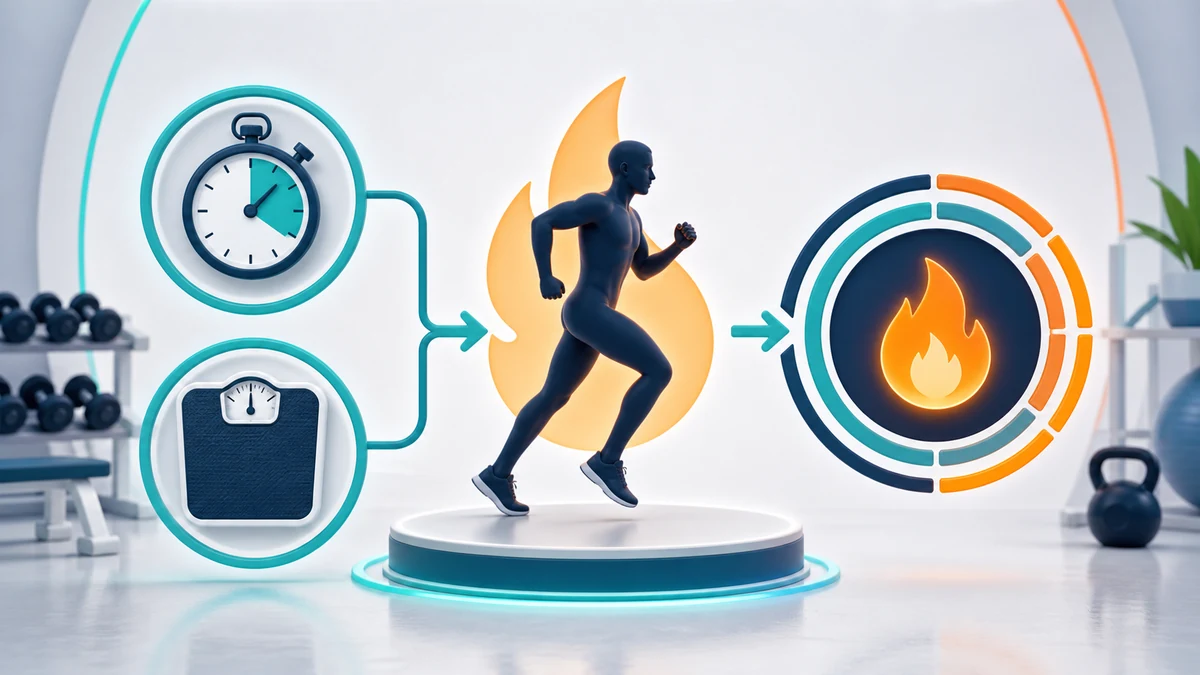
Use this Calories Burned Calculator to estimate how many calories you burn during exercise based on activity type, body weight, workout duration, and MET value. It is a practical tool for walking, running, cycling, swimming, gym workouts, and many other activities when you want a quick calorie-burn estimate.
Reviewed by: AjaxCalculators Editorial Team
Last updated: May 2, 2026
Method source: MET-based calorie estimate using body weight in kilograms and activity duration in hours
Editorial standards: AjaxCalculators Editorial Policy
What This Calories Burned Calculator Calculates
This calculator estimates exercise calorie burn from body weight, activity duration, and activity intensity. It can calculate:
- Total calories burned: estimated energy used during the selected workout
- Calories burned per hour: estimated hourly calorie burn at the selected MET level
- MET used: the metabolic equivalent value for the selected activity or custom input
The calculator is designed for general fitness planning, cardio tracking, workout comparison, and basic weight-management estimates. It is not a direct measurement of calorie burn.
What MET Means
MET stands for metabolic equivalent of task. It compares the energy cost of an activity with resting quietly.
A MET value of 1 represents resting energy use. A MET value of 4 means the activity is estimated to use about four times the energy of resting quietly.
In practical calorie calculations, 1 MET is commonly treated as approximately:
1 kcal per kilogram of body weight per hour
That is why the calculator can estimate calories burned from MET, body weight, and duration.
How the Calories Burned Calculator Works
This calculator uses a MET-based calorie estimate:
Calories burned = MET × body weight(kg) × duration(hours)
In this formula:
- MET = metabolic equivalent of the activity
- body weight = your weight converted to kilograms
- duration = workout time converted to hours
The calculator converts your weight into kilograms, converts workout duration into hours, applies the selected MET value, and then displays the estimated calories burned.
Formula Summary
| Result | Formula | Known Values Needed |
|---|---|---|
| Total calories burned | Calories = MET × weight(kg) × time(hours) | MET, body weight, and duration |
| Calories per hour | Calories/hour = MET × weight(kg) | MET and body weight |
| Duration in hours | Hours = minutes ÷ 60 | Workout minutes |
| Weight in kilograms | kg = lb ÷ 2.20462 | Body weight in pounds |
Alternative MET Formula
You may also see a MET calorie formula written using oxygen uptake:
Calories/minute = MET × 3.5 × body weight(kg) ÷ 200
Then:
Total calories = calories/minute × duration(minutes)
This version comes from the common convention that 1 MET is approximately 3.5 ml of oxygen per kilogram per minute. Different calculators may use slightly different MET formulas, rounding methods, or correction factors, so results may not match exactly across tools.
MET Intensity Guide
Higher MET values generally mean higher exercise intensity and higher estimated calorie burn for the same body weight and duration.
| MET Range | General Intensity | Example Interpretation |
|---|---|---|
| 1.0 to 1.5 METs | Resting or very light | Sitting quietly or very low-effort activity |
| Below 3 METs | Light intensity | Easy movement or slow walking-style activities |
| 3 to 5.9 METs | Moderate intensity | Brisk walking, moderate cycling, general fitness activity |
| 6 METs or higher | Vigorous intensity | Running, hard cycling, intense swimming, or high-effort workouts |
These categories are general. Your personal effort may feel easier or harder depending on fitness level, health status, environment, and training background.
Common Activity MET Examples
MET values vary by activity type and intensity. The examples below are general reference points, not exact values for every person or every workout.
| Activity | Example MET Range | Why It Can Vary |
|---|---|---|
| Walking | About 2 to 5 METs | Speed, incline, terrain, and load carried |
| Running | About 6 to 14+ METs | Pace, hills, surface, and fitness level |
| Cycling | About 4 to 12+ METs | Speed, resistance, wind, terrain, and bike type |
| Swimming | About 5 to 11+ METs | Stroke, pace, technique, and rest time |
| Weight training | About 3 to 6+ METs | Load, rest periods, exercise selection, and circuit style |
| Yoga or stretching | About 2 to 4+ METs | Style, flow speed, holds, and intensity |
For the most accurate estimate from this calculator, choose the activity or custom MET value that best matches the actual intensity of your workout.
Gross Calories vs Active Calories
This calculator uses a MET-based estimate that is commonly interpreted as gross energy expenditure. Gross calories include the estimated energy cost of the activity period, including the resting energy you would have used during that time.
| Calorie Type | Meaning | Why It Matters |
|---|---|---|
| Gross calories | Total estimated calories used during the activity time | Often used in MET-based formulas |
| Active calories | Calories above resting energy use | Often shown by fitness watches and apps |
| Resting calories | Calories your body would use even at rest | Included in gross calories but subtracted from active calories |
If a fitness watch shows a lower number than this calculator, one reason may be that the watch is displaying active calories instead of gross calories.
Worked Example: Calories Burned From MET
Suppose you weigh 70 kg and do an activity with a MET value of 4.8 for 45 minutes.
Step 1: Convert duration to hours
45 minutes = 45 ÷ 60 = 0.75 hours
Step 2: Apply the formula
Calories burned = MET × body weight(kg) × duration(hours)
Step 3: Substitute the values
Calories burned = 4.8 × 70 × 0.75
Step 4: Calculate
Calories burned = 252 kcal
Result: This workout burns an estimated 252 calories in 45 minutes.
Worked Example: Calories Burned Per Hour
Using the same person and MET value:
- Body weight: 70 kg
- MET: 4.8
Step 1: Use the hourly formula
Calories per hour = MET × body weight(kg)
Step 2: Substitute the values
Calories per hour = 4.8 × 70
Step 3: Calculate
Calories per hour = 336 kcal/hour
Result: At 4.8 METs and 70 kg body weight, the estimated burn rate is about 336 calories per hour.
Worked Example: Same Activity, Different Body Weight
Suppose two people perform the same 5.0 MET activity for 30 minutes.
| Body Weight | Formula | Estimated Calories |
|---|---|---|
| 60 kg | 5.0 × 60 × 0.5 | 150 kcal |
| 80 kg | 5.0 × 80 × 0.5 | 200 kcal |
| 100 kg | 5.0 × 100 × 0.5 | 250 kcal |
Result: At the same MET level and duration, a higher body weight usually produces a higher calorie estimate.
Worked Example: Same Body Weight, Different Duration
Suppose a 70 kg person does a 6.0 MET activity for different durations.
| Duration | Formula | Estimated Calories |
|---|---|---|
| 15 minutes | 6.0 × 70 × 0.25 | 105 kcal |
| 30 minutes | 6.0 × 70 × 0.5 | 210 kcal |
| 60 minutes | 6.0 × 70 × 1.0 | 420 kcal |
Result: If MET and body weight stay the same, doubling workout duration doubles the estimated calorie burn.
Worked Example: Compare Two Activities
Suppose a 70 kg person compares two 30-minute workouts:
| Activity Intensity | MET | Formula | Estimated Calories |
|---|---|---|---|
| Moderate activity | 4.0 | 4.0 × 70 × 0.5 | 140 kcal |
| Vigorous activity | 8.0 | 8.0 × 70 × 0.5 | 280 kcal |
Result: At the same body weight and duration, the higher-MET activity produces the higher calorie estimate.
How to Use This Calories Burned Calculator
- Select an activity preset or choose a custom MET value.
- Enter your body weight.
- Select the correct weight unit, such as kilograms or pounds.
- Enter your workout duration in hours, minutes, or both.
- Click Calculate if the tool requires it.
- Review the total calories burned estimate.
- Review the calories per hour estimate.
- Check the MET value used so you understand the intensity assumption behind the result.
How to Interpret the Result
Your result is a practical estimate of how much energy the activity likely used based on your weight, workout time, and selected MET level.
| Result Pattern | What It Usually Means | Important Reminder |
|---|---|---|
| Higher calories burned | Higher MET, longer duration, higher body weight, or a combination of these | Not automatically better or safer |
| Lower calories burned | Lower MET, shorter duration, lower body weight, or a combination of these | May still be useful for health and consistency |
| Different from fitness watch | Different formulas, heart-rate data, active calories, or device assumptions | Small or large differences are common |
| Different from another calculator | Different MET values, rounding, or formula versions | Use estimates consistently rather than treating one number as exact |
A calorie-burn estimate can help with planning, but it should not be treated as a precise measurement of energy expenditure.
Why Fitness Watches May Show Different Calories
Fitness watches and apps may estimate calorie burn differently from a MET calculator.
| Reason | How It Can Change the Number |
|---|---|
| Heart-rate data | Devices may use heart rate to estimate effort |
| Active vs gross calories | Active calories may subtract resting energy |
| Age, sex, and fitness inputs | Some devices use profile data not included in this calculator |
| Activity detection | Device algorithms may classify movement differently |
| Sensor error | Wrist movement, fit, and optical heart-rate limits can affect estimates |
| Different MET assumptions | Preset activity intensity may not match the calculator’s selected MET |
A watch number and a calculator number can both be estimates using different assumptions.
Factors That Affect Real Calorie Burn
The actual number of calories burned during a workout can vary widely from the calculator estimate.
| Factor | Why It Matters |
|---|---|
| Intensity | Faster pace, heavier resistance, or harder effort usually increases energy use |
| Duration | Longer sessions usually burn more total calories |
| Body weight | Higher body weight usually increases estimated energy cost for many activities |
| Fitness level | Efficiency and conditioning can affect the energy cost of movement |
| Body composition | Muscle mass, fat mass, and body size can influence energy expenditure |
| Terrain and incline | Hills, trails, sand, and stairs can increase effort |
| Weather and temperature | Heat, humidity, wind, and cold can change effort and performance |
| Technique and equipment | Running form, bike setup, swim technique, and equipment efficiency can matter |
| Rest periods | Workout sessions with long rest periods may burn fewer calories than continuous activity |
Calories Burned and Weight Management
Exercise calorie estimates can support weight-management planning, but they should not be used alone. Body weight changes depend on total calorie intake, total daily energy expenditure, sleep, stress, medical context, consistency, and many other factors.
| Use Case | How This Calculator Helps | Important Limitation |
|---|---|---|
| General fitness tracking | Estimates calorie burn from workouts | Not a direct measurement |
| Weight-loss planning | Shows estimated exercise energy expenditure | Does not replace nutrition planning or medical guidance |
| Workout comparison | Compares activities by MET, duration, and body weight | MET values may not match your real intensity |
| Calorie budgeting | Provides a rough activity-energy estimate | Eating back exercise calories can be inaccurate if estimates are high |
For safer and more individualized weight-management guidance, speak with a doctor or registered dietitian, especially if you have medical conditions, a history of disordered eating, or a prescribed nutrition plan.
Using Custom MET Values
A custom MET value can be useful when you know a more specific activity intensity than the calculator’s preset provides.
Custom MET may be helpful when:
- your activity is not listed in the presets
- your workout intensity is clearly higher or lower than the preset
- you are using a published MET value from a reliable activity compendium
- you want to compare several activities using the same formula
Use custom MET carefully. A small change in MET can noticeably change the calorie estimate, especially for longer workouts.
When This Calculator Is Useful
This calculator is useful when you want a quick estimate of calories burned during a workout or activity.
- Estimate calories burned during walking, running, cycling, swimming, or gym sessions
- Compare workouts by time and intensity
- Plan exercise sessions for general fitness tracking
- Understand how duration affects total calorie burn
- Use a custom MET value for a more specific activity estimate
- Compare calories per hour across different activities
- Support general weight-management planning
- Cross-check fitness-watch or app estimates
When You May Need More Than This Calculator
A simple MET-based calculator may not be enough when medical, performance, or clinical accuracy matters.
Use more individualized guidance when working with:
- heart disease or cardiovascular risk
- diabetes or blood-sugar management
- pregnancy or postpartum exercise
- eating disorder history or recovery
- injury rehabilitation
- chronic illness or medication-managed conditions
- clinical weight-management programs
- elite athletic training
- very high-intensity exercise plans
- returning to exercise after illness, surgery, or a long break
Common Mistakes to Avoid
- Assuming calories burned is exact: MET formulas estimate average energy expenditure, not your measured calorie burn.
- Choosing the wrong activity intensity: the same activity can have different MET values depending on effort.
- Forgetting to convert minutes to hours: 45 minutes equals 0.75 hours.
- Entering body weight in the wrong unit: pounds must be converted to kilograms if the formula uses kg.
- Comparing gross calories with active calories: these are not always the same.
- Eating back all estimated exercise calories automatically: calorie-burn estimates can be inaccurate.
- Ignoring rest time: long rest periods can lower the average energy cost of a workout.
- Using one MET value for all workouts: pace, incline, resistance, and intensity can change MET substantially.
- Using calorie burn as the only workout goal: fitness, strength, endurance, mobility, recovery, and enjoyment also matter.
Important Assumptions and Limitations
- This calculator uses a MET-based calorie estimate.
- The result is an estimate, not a direct measurement of calorie burn.
- The result depends heavily on the selected MET value.
- Different versions or intensities of the same activity can have different MET values.
- The calculator does not directly measure heart rate, oxygen use, power output, or individual metabolism.
- The calculator may estimate gross energy expenditure unless otherwise stated.
- Fitness apps may show different results because they may estimate active calories or use device-specific algorithms.
- The calculator does not diagnose fitness level, prescribe exercise, or replace professional guidance.
- People with medical conditions, pregnancy, injury recovery, eating disorder history, or clinical weight-management needs should seek qualified guidance.
Practical Uses of a Calories Burned Calculator
- Estimate calories burned during exercise
- Compare walking, running, cycling, swimming, and gym workouts
- Estimate calories per hour for different activities
- Understand how workout duration affects total energy expenditure
- Use custom MET values for specific activities
- Plan general fitness or weight-management routines
- Compare workout intensity assumptions
- Cross-check numbers from watches, apps, or gym machines
References
- Compendium of Physical Activities: MET Definitions and Activity Values
- Compendium of Physical Activities: Compendium Calculator
- CDC: How to Measure Physical Activity Intensity
- Mayo Clinic: Exercise for Weight Loss — Calories Burned in 1 Hour
- Mayo Clinic: Exercise Intensity — How to Measure It
Related Calculators
- Pace Calculator
- Heart Rate Zone Calculator
- Target Heart Rate Calculator
- Max Heart Rate Calculator
- VO₂ Max Calculator
- Maintenance Calorie Calculator
- Calorie Deficit Calculator
Frequently Asked Questions
What does MET mean?
MET means metabolic equivalent of task. It compares the energy cost of an activity with resting quietly.
What formula does this Calories Burned Calculator use?
The calculator uses the MET-based formula Calories burned = MET × body weight(kg) × duration(hours).
What is 1 MET?
One MET is commonly treated as resting energy use, approximately 1 kcal per kilogram of body weight per hour.
How do I calculate calories burned per hour?
Use Calories per hour = MET × body weight(kg). For example, 4.8 METs at 70 kg equals 336 kcal/hour.
Why do heavier people burn more calories in the calculator?
The formula multiplies MET by body weight. At the same MET and duration, a higher body weight usually produces a higher estimated calorie burn.
Why does intensity change the result?
Intensity changes the MET value. A higher MET value increases the calorie estimate for the same weight and duration.
Why does my fitness watch show a different number?
Fitness watches may use heart-rate data, active calories, age, sex, device algorithms, or sensor estimates. This calculator uses a MET-based formula, so the numbers may differ.
What is the difference between gross calories and active calories?
Gross calories include the estimated total energy used during the activity period. Active calories usually subtract the resting energy you would have used anyway.
Can I use this calculator for weight loss?
You can use it as a rough planning tool, but it should not be used as a medical or nutrition prescription. Weight management also depends on food intake, total daily activity, health status, sleep, consistency, and professional guidance when needed.
Is the calorie burn estimate exact?
No. It is an estimate based on average MET values. Real calorie burn varies by pace, effort, body composition, fitness level, terrain, equipment, and individual physiology.
Should I eat back all exercise calories?
Not automatically. Exercise calorie estimates can be inaccurate, and nutrition needs depend on your goals, health, training load, and overall diet. Consider professional guidance for weight-management plans.
Can people with medical conditions use this calculator?
People with heart disease, diabetes, chronic illness, pregnancy, injury recovery, eating disorder history, or clinical weight-management needs should seek guidance from a qualified healthcare or exercise professional.
Disclaimer: This Calories Burned Calculator provides educational and general fitness-planning estimates using a MET-based calorie formula. Results depend on the selected activity, MET value, body weight, workout duration, unit selections, and intensity assumptions entered. MET values are population-based estimates, not direct measurements, and the same activity can burn different amounts of energy depending on pace, effort, fitness level, body composition, terrain, incline, temperature, equipment, technique, rest time, and individual physiology. This calculator estimates gross exercise energy expenditure unless otherwise stated; fitness watches and apps may show different numbers because they may estimate active calories, use heart-rate data, or apply device-specific formulas. Do not use this calculator as a medical, nutrition, or weight-loss prescription. For pregnancy, heart disease, diabetes, eating disorders, chronic illness, injury recovery, very high-intensity training, clinical weight management, or major changes in exercise routine, consult a doctor, registered dietitian, or qualified exercise professional.