Pace Calculator

Distance • Time • Pace • Calculate the missing value
IQ
The selected mode disables the field that will be calculated.
Quick summary
Enter the known values, then click Calculate.
Distance must be greater than 0.
Hour
Minute
Second
Enter any combination. Total time must be greater than 0.
Use mm:ss or hh:mm:ss. Pace must be greater than 0.

Results

Distance
km
Time
Pace
min/km
Distance is shown in the selected distance unit, and pace is shown in the selected pace unit.

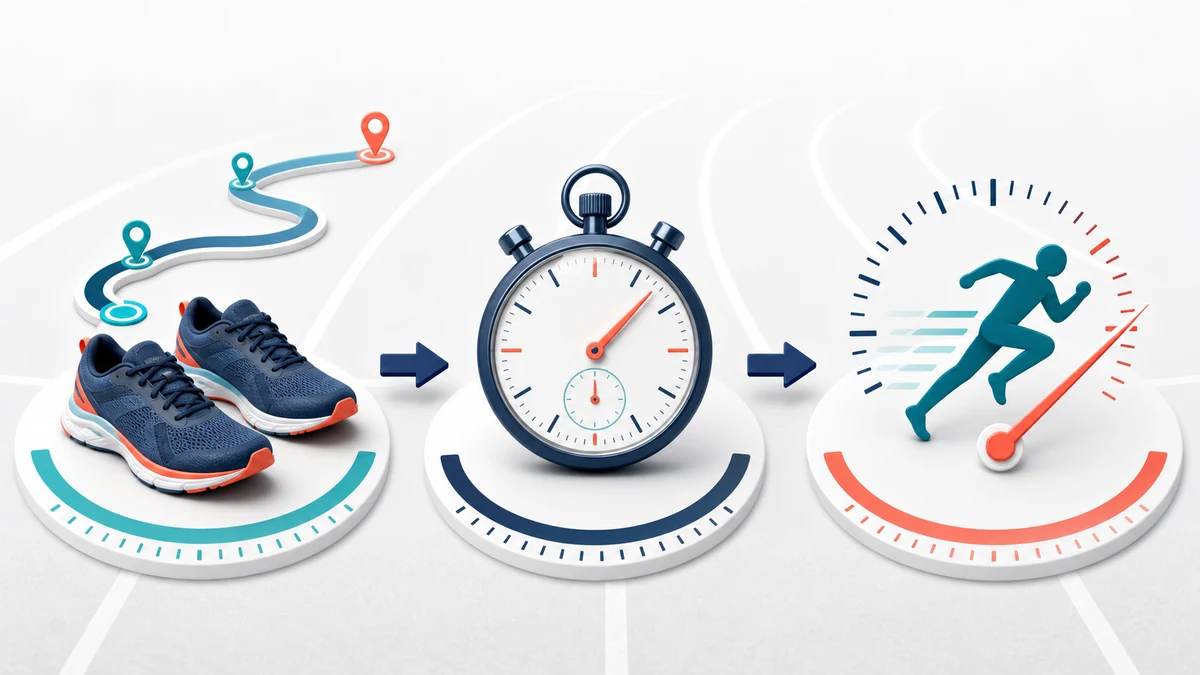
Use this Pace Calculator to find your running pace, finish time, or distance from any two known values. It is useful for race planning, training runs, treadmill sessions, and pacing goals whether you prefer min/km or min/mile.

Reviewed by: AjaxCalculators Editorial Team
Last updated: May 2, 2026
Method source: Standard pace relationship using time per unit distance, with conversion between min/km and min/mile
Editorial standards: AjaxCalculators Editorial Policy

What This Pace Calculator Calculates

This calculator solves one missing running metric from the other two. It can calculate:

  • Pace: from distance and time
  • Time: from distance and pace
  • Distance: from time and pace

It supports common running formats such as:

  • distance in kilometers, miles, or meters
  • pace in min/km or min/mile
  • time entered as hours, minutes, and seconds

The calculator is designed for runners, walkers, race planners, coaches, and anyone who wants a quick average-pace estimate.

What Running Pace Means

Pace means the amount of time it takes to cover one unit of distance. Runners usually express pace as minutes per kilometer or minutes per mile.

For example:

  • 5:00 min/km means each kilometer takes 5 minutes on average.
  • 8:00 min/mile means each mile takes 8 minutes on average.

A lower pace number means a faster pace. A higher pace number means a slower pace.

How the Pace Calculator Works

Pace is time per unit distance:

Pace = Time ÷ Distance

From the same relationship, the calculator can rearrange the formula to solve for time or distance:

Time = Pace × Distance

Distance = Time ÷ Pace

This means:

  • if you know how far you ran and how long it took, you can calculate pace
  • if you know your target pace and race distance, you can calculate finish time
  • if you know your available time and goal pace, you can estimate distance covered

Formula Summary

What You Want to Find Formula Known Values Needed
Pace Pace = Time ÷ Distance Total time and total distance
Finish time Time = Pace × Distance Pace and distance
Distance Distance = Time ÷ Pace Time and pace
Average speed Speed = Distance ÷ Time Distance and time

Pace vs Speed

Pace and speed describe similar performance from opposite directions.

Metric Formula Pattern Running Meaning
Pace Time ÷ distance How long it takes to cover one kilometer or one mile
Speed Distance ÷ time How much distance you cover per hour, minute, or second

Runners usually use pace because it is easier to plan training and race goals as minutes per kilometer or minutes per mile.

Common Running Distance Reference Table

Use these common distances when planning race pace or finish time.

Event or Distance Kilometers Miles Typical Use
1 kilometer 1 km 0.6214 mi Short interval or pace check
1 mile 1.6093 km 1 mi Mile pace and track-style goals
5K 5 km 3.1069 mi Common short road race
10K 10 km 6.2137 mi Common road race and fitness benchmark
Half marathon 21.0975 km 13.1094 mi Long-distance race planning
Marathon 42.195 km 26.2188 mi Full marathon race planning

Min/km and Min/mile Conversion

The calculator can convert pace between min/km and min/mile. The conversion is based on the relationship between kilometers and miles:

1 mile = 1.609344 kilometers

Conversion Formula Example
min/km to min/mile min/mile = min/km × 1.609344 5:00 min/km ≈ 8:03 min/mile
min/mile to min/km min/km = min/mile ÷ 1.609344 8:00 min/mile ≈ 4:58 min/km

Because running pace is usually shown as minutes and seconds, small rounding differences can appear when converting between pace formats.

Worked Example: Find Pace From Distance and Time

Suppose you run 10 km in 50 minutes.

Step 1: Use the pace formula
Pace = Time ÷ Distance

Step 2: Substitute the values
Pace = 50 minutes ÷ 10 km

Step 3: Calculate pace per kilometer
Pace = 5:00 min/km

Step 4: Convert to pace per mile
5:00 min/km × 1.609344 ≈ 8.0467 minutes per mile

Step 5: Convert decimal minutes to minutes and seconds
0.0467 minutes × 60 ≈ 2.8 seconds

Result: A 10 km finish time of 50:00 equals about 5:00 min/km or 8:03 min/mile.

Worked Example: Find Finish Time From Pace and Distance

Suppose your goal pace is 6:00 min/km and your race distance is 5 km.

Step 1: Use the time formula
Time = Pace × Distance

Step 2: Substitute the values
Time = 6:00 per km × 5 km

Step 3: Calculate
Time = 30:00

Result: Running 5 km at 6:00 min/km gives an estimated finish time of 30 minutes.

Worked Example: Find Distance From Time and Pace

Suppose you run for 45 minutes at an average pace of 5:00 min/km.

Step 1: Use the distance formula
Distance = Time ÷ Pace

Step 2: Substitute the values
Distance = 45 minutes ÷ 5 minutes per km

Step 3: Calculate
Distance = 9 km

Result: At 5:00 min/km, you would cover about 9 kilometers in 45 minutes.

Worked Example: Half Marathon Finish Time

Suppose your target pace is 5:30 min/km for a half marathon.

Step 1: Convert pace to decimal minutes
5:30 min/km = 5.5 minutes per km

Step 2: Use the half marathon distance
Half marathon = 21.0975 km

Step 3: Calculate time
Time = 5.5 × 21.0975 = 116.03625 minutes

Step 4: Convert to hours, minutes, and seconds
116.03625 minutes = 1 hour, 56 minutes, and about 2 seconds

Result: A 5:30 min/km pace gives an estimated half marathon finish time of about 1:56:02.

Worked Example: Marathon Finish Time

Suppose your target pace is 8:00 min/mile for a marathon.

Step 1: Use the marathon distance in miles
Marathon distance ≈ 26.2188 miles

Step 2: Calculate time
Time = 8 minutes per mile × 26.2188 miles

Step 3: Calculate
Time = 209.7504 minutes

Step 4: Convert to hours, minutes, and seconds
209.7504 minutes ≈ 3 hours, 29 minutes, and 45 seconds

Result: An 8:00 min/mile pace gives an estimated marathon finish time of about 3:29:45.

Common Race Pace Examples

The table below shows approximate finish times for common race distances at different paces.

Pace 5K Time 10K Time Half Marathon Time Marathon Time
4:00 min/km 20:00 40:00 1:24:23 2:48:47
5:00 min/km 25:00 50:00 1:45:29 3:30:58
6:00 min/km 30:00 1:00:00 2:06:35 4:13:10
7:00 min/km 35:00 1:10:00 2:27:41 4:55:22

These estimates assume perfectly steady average pace from start to finish.

Average Pace vs Split Pace

This calculator focuses on average pace. A running split calculator may be better when you want to break a race into repeated segments.

Pace Type Meaning Example Use
Average pace Total time divided by total distance Overall 10K pace or marathon goal pace
Split pace Pace for one section of a run or race Each kilometer, mile, lap, or segment
Instant pace Moment-to-moment pace estimate GPS watch display during a run

A runner can have the same average pace with very different split patterns. For example, one runner may hold steady pace, while another starts fast, slows down, and finishes with the same average.

Steady Pace, Negative Split, and Positive Split

Race pacing strategy can affect how a finish-time estimate feels in real life.

Pacing Pattern Meaning Common Interpretation
Steady pace Similar pace throughout the run Often useful for controlled race execution
Negative split Second half faster than first half Can indicate controlled early pacing and strong finish
Positive split Second half slower than first half May happen from starting too fast, fatigue, terrain, or conditions

The calculator estimates average pace only. It does not decide which pacing strategy is best for your training, fitness, course, or race conditions.

How to Use This Pace Calculator

  1. Choose the mode: calculate pace, time, or distance.
  2. Enter the two values you already know.
  3. Select the correct distance unit, such as kilometers, miles, or meters.
  4. Select the pace unit, such as min/km or min/mile.
  5. Enter time using hours, minutes, and seconds if needed.
  6. Click Calculate if the tool requires it.
  7. Review the calculated result in the selected format.
  8. Check whether the result is realistic for your current fitness, course, and conditions.

How to Interpret the Result

Your pace result tells you how long it takes to cover one kilometer or one mile on average.

Result Meaning How to Interpret It
Pace Time per kilometer or mile Lower pace number means faster running
Finish time Total time for the distance Assumes the same average pace is maintained
Distance Estimated distance covered Assumes the entered pace is held for the full time
min/km Minutes per kilometer Common in metric-based training plans
min/mile Minutes per mile Common in mile-based training plans

A calculated finish time is a steady-pace estimate. Real results may differ because of course profile, weather, fueling, pacing discipline, fatigue, training history, and race conditions.

Factors That Can Change Real Pace

A calculator can estimate average pace, but real running pace is affected by many practical factors.

Factor How It Can Affect Pace
Terrain Trails, grass, sand, or uneven surfaces can slow pace
Elevation Uphills usually slow pace; downhills can change effort and impact
Weather Heat, humidity, wind, rain, or cold can affect performance
Fatigue Pace may slow late in long runs or races
Stops and walking breaks Total elapsed pace includes pauses unless they are removed
GPS accuracy Tree cover, tall buildings, and watch settings can affect distance estimates
Treadmill calibration Treadmill speed and distance may not perfectly match outdoor running

Elapsed Pace vs Moving Pace

Some running apps show both elapsed pace and moving pace. They are not always the same.

Metric Includes Stops? Best Used For
Elapsed pace Yes Race finish-time planning and official event-style timing
Moving pace Usually no Training analysis when stop time is intentionally excluded

For race planning, elapsed pace is usually more realistic because official finish time includes all time from start to finish.

Treadmill Pace Notes

A treadmill session can be useful for controlled pacing, but treadmill results may differ from outdoor running.

  • Treadmill calibration may not be perfectly accurate.
  • Indoor conditions remove wind and some terrain variation.
  • Incline setting changes effort.
  • Running form can feel different indoors.
  • Heat buildup indoors may affect effort at the same pace.

Use treadmill pace as a training reference, not a perfect prediction of outdoor race performance.

When This Calculator Is Useful

This calculator is useful when you need a quick average-pace, finish-time, or distance estimate.

  • Plan realistic race goals
  • Estimate 5K, 10K, half marathon, or marathon finish times
  • Convert between min/km and min/mile
  • Build training runs around target pace
  • Check whether a recent race result matches a training goal
  • Estimate treadmill or outdoor running pace
  • Plan long-run, tempo-run, or easy-run targets
  • Understand average pace from total distance and time

When You May Need More Than This Calculator

A simple pace calculator may not be enough when you need a personalized training or race strategy.

Use more individualized guidance when working with:

  • injury recovery or pain while running
  • heart, breathing, or medical conditions
  • very aggressive race goals
  • marathon or ultramarathon fueling strategy
  • heat, altitude, or challenging terrain
  • structured interval training
  • race tapering and peak-week planning
  • elite or high-volume training
  • return-to-running after illness, surgery, or long layoff

Common Mistakes to Avoid

  • Mixing min/km and min/mile: a pace in min/km is not the same as the same number in min/mile.
  • Using distance zero: pace requires distance greater than zero.
  • Using time zero: pace and speed calculations require time greater than zero.
  • Ignoring seconds: small seconds can matter over longer race distances.
  • Assuming a steady pace is always realistic: fatigue, hills, heat, and course conditions can change pace.
  • Using moving time for race prediction: official races use elapsed time, not paused watch time.
  • Trusting GPS distance without context: GPS can overestimate or underestimate distance.
  • Using treadmill results as exact outdoor predictions: treadmill calibration and outdoor conditions can differ.
  • Starting too fast based on goal pace alone: race execution matters, especially for long distances.

Important Assumptions and Limitations

  • This calculator uses average pace, not instant pace.
  • Distance must be greater than zero when used as an input.
  • Total time must be greater than zero when used as an input.
  • Pace must be greater than zero when used as an input.
  • The result assumes a steady average pace over the full distance or time.
  • The calculator does not model elevation, terrain, weather, wind, heat, humidity, fatigue, fueling, stops, or race-day crowding.
  • The calculator does not account for GPS error, treadmill calibration, or course measurement variation.
  • The calculator does not replace medical advice, coaching, injury assessment, or personalized training plans.

Practical Uses of a Pace Calculator

  • Calculate running pace from distance and time
  • Estimate finish time from pace and distance
  • Estimate distance from time and pace
  • Convert pace between min/km and min/mile
  • Plan 5K, 10K, half marathon, and marathon goals
  • Set training targets for easy runs, long runs, and tempo runs
  • Compare race results across different distances
  • Plan treadmill sessions around target pace

References

  1. OpenStax Physics: Speed and Velocity
  2. OpenStax College Physics 2e: Time, Velocity, and Speed
  3. World Athletics: Marathon Distance
  4. World Athletics: Half Marathon Distance

Related Calculators

Frequently Asked Questions

What is running pace?

Running pace is the time it takes to cover one unit of distance, usually shown as minutes per kilometer or minutes per mile.

What is the formula for pace?

The formula is Pace = Time ÷ Distance. For example, 50 minutes divided by 10 km equals 5:00 min/km.

How do I calculate finish time from pace?

Use Time = Pace × Distance. For example, 6:00 min/km for 5 km gives a finish time of 30:00.

How do I calculate distance from pace and time?

Use Distance = Time ÷ Pace. For example, 45 minutes at 5:00 min/km gives 9 km.

What is the difference between min/km and min/mile?

Min/km shows how long it takes to run one kilometer. Min/mile shows how long it takes to run one mile. One mile is about 1.609344 kilometers.

How do I convert min/km to min/mile?

Multiply the min/km pace by 1.609344. For example, 5:00 min/km is about 8:03 min/mile.

How do I convert min/mile to min/km?

Divide the min/mile pace by 1.609344. For example, 8:00 min/mile is about 4:58 min/km.

Is a lower pace number faster?

Yes. A lower min/km or min/mile number means you are covering the same distance in less time.

Does this calculator use average pace?

Yes. This calculator uses average pace over the full distance or time entered. It does not model instant pace or split-by-split changes.

Can I use this calculator for walking?

Yes. The same pace, time, and distance formulas work for walking, jogging, and running.

Can this calculator predict my race time exactly?

No. It estimates finish time from steady average pace. Real race results can change because of terrain, weather, fatigue, training, pacing strategy, fueling, and race conditions.

Should I use elapsed time or moving time?

For race planning, elapsed time is usually more realistic because official race time includes all time from start to finish. Moving time can be useful for training analysis when stops are intentionally excluded.

Disclaimer: This Pace Calculator provides educational and training-planning estimates using average pace, time, and distance relationships. It calculates steady average pace, finish time, or distance from the values entered, but it does not model moment-to-moment pace changes, terrain, elevation, wind, heat, humidity, fatigue, walking breaks, aid-station stops, GPS error, treadmill calibration, race-day crowding, or course measurement variation. Distance, time, and pace must be greater than zero where used as inputs. A calculated race finish time assumes you can hold the same average pace for the full distance, which may not match real performance. Use this calculator for planning, training estimates, and unit conversion between min/km and min/mile, and use personalized coaching, medical guidance, and real training feedback for injury risk, health conditions, aggressive race goals, or high-intensity training plans.

More of our calculators...

Target Heart Rate Calculator

Use our Target Heart Rate Calculator to find workout BPM targets by intensity using % max heart rate or Karvonen heart rate reserve.

Max Heart Rate Calculator

Use our Max Heart Rate Calculator to estimate HRmax by age with Fox, Tanaka, Gellish, and Nes formulas. Compare max heart rate estimates in bpm fast.

Winning Percentage Calculator

Use our Winning Percentage Calculator to find win percentage from wins, losses, and optional ties. Supports standard and tie-aware formulas for sports records.

Calories Burned Calculator

Use our Calories Burned Calculator to estimate exercise calories from activity, weight, time, and MET value. Supports common workouts and custom MET input.

Heart Rate Zone Calculator

Use our Heart Rate Zone Calculator to find 5 training zones by % max heart rate or Karvonen HRR. Get personalized target BPM ranges for cardio workouts.

VO₂ Max Calculator

Use our VO₂ Max Calculator to estimate cardio fitness with the Rockport 1-mile walk test using age, sex, weight, walk time, and post-walk heart rate.

Running Split Calculator

Use our Running Split Calculator to find even pace splits by mile or kilometer from total distance and finish time. Great for race pacing and training plans.

Marathon Pace Calculator

Use our Marathon Pace Calculator to convert marathon finish time to pace per mile, pace per km, and speed, or estimate finish time from your target pace.

Bench Press 1RM Calculator

Use our Bench Press 1RM Calculator to estimate your one-rep max with Epley, Brzycki, Lombardi, and O’Conner formulas in kg or lb.