Steps to Miles Calculator
Settings
Inputs
Action
Results
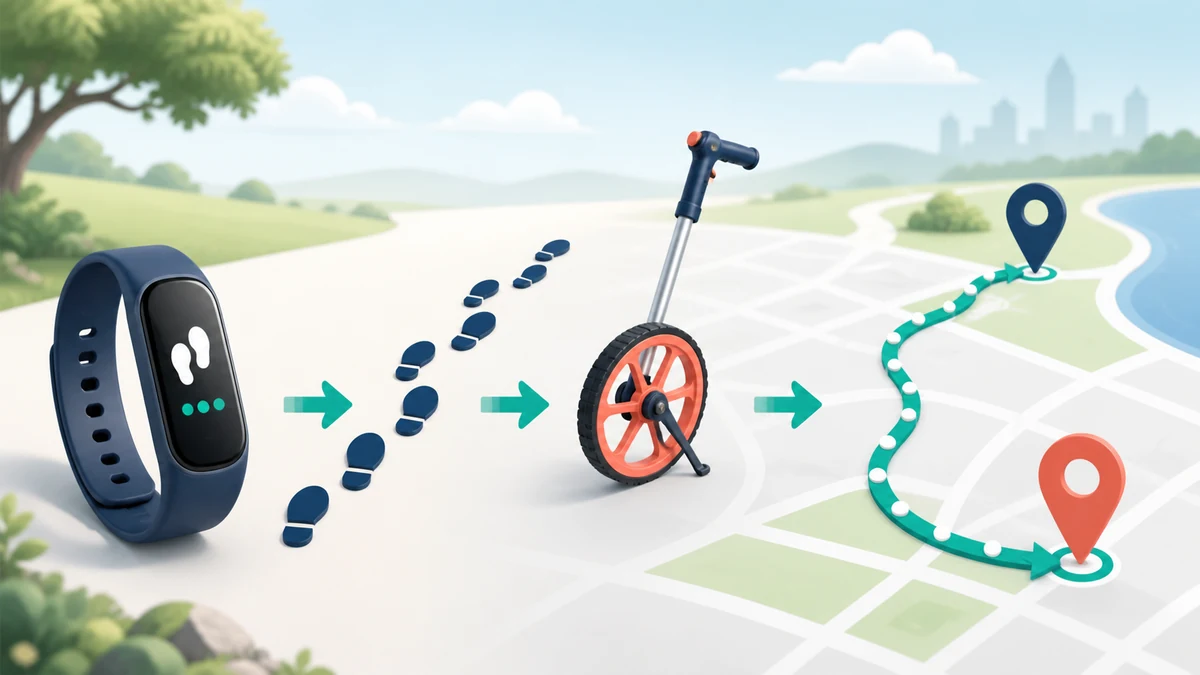
Use this Steps to Miles Calculator to convert steps into miles or kilometers quickly. It works with a measured stride-based method or a rough height-based estimate, making it useful for pedometer tracking, walking goals, treadmill logging, running estimates, and everyday activity planning.
Reviewed by: AjaxCalculators Editorial Team
Last updated: May 3, 2026
Method source: Step-count distance estimation using a measured length-per-step method or a height-based estimate
Editorial standards: AjaxCalculators Editorial Policy
What This Steps to Miles Calculator Calculates
This calculator converts between:
- Steps to distance: estimate miles or kilometers from a step count
- Distance to steps: estimate how many steps are needed for a target distance
It supports:
- distance in miles or kilometers
- a measured step or stride length method
- a height-based estimate method
- walking and running style assumptions where supported
It also shows the effective length used for the conversion so you can understand the assumption behind the result.
What Steps to Miles Means
Steps to miles conversion estimates how much distance a step count represents. The basic idea is simple: the farther you travel with each step, the fewer steps you need to cover one mile.
For example, a person with a longer effective step length covers more distance in 10,000 steps than a person with a shorter effective step length.
Because step length changes with walking speed, running speed, terrain, fatigue, and individual gait style, steps-to-distance results are estimates unless you use your own measured step length consistently.
Step Length vs Stride Length
Step length and stride length are often confused. For accurate step-to-distance conversion, the calculator needs a consistent distance-per-step assumption.
| Term | Meaning | Simple Relationship |
|---|---|---|
| Step length | Distance covered in one step | Distance ÷ total steps |
| Stride length | Distance covered in one full gait cycle, usually about two steps | About 2 × step length |
| Distance per step | The effective length used to convert steps into distance | Total distance ÷ total steps |
If a tool asks for step length, enter the distance covered by one step. If a tool asks for stride length, remember that one stride is usually about two steps. Always follow the live tool label carefully.
How the Steps to Miles Calculator Works
This calculator estimates distance from the number of steps and an assumed length per step.
Distance = steps × length per step
The reverse calculation is:
Steps = distance ÷ length per step
On the live page, this can be done in two main ways:
- Measured-length method: best when you know your actual step or stride value from measurement
- Height-based estimate: a rough estimate when you do not know your measured length
Formula Summary
| Calculation | Formula | Use |
|---|---|---|
| Steps to distance | Distance = steps × length per step | Convert a step count into miles, kilometers, meters, or feet |
| Distance to steps | Steps = distance ÷ length per step | Estimate steps needed for a target distance |
| Step length from measured walk | Step length = measured distance ÷ total steps | Calibrate step-based distance personally |
| Stride length from step length | Stride length ≈ 2 × step length | Convert one-step length to full gait-cycle length |
| Miles from feet | Miles = feet ÷ 5280 | Convert feet into miles |
| Kilometers from meters | Kilometers = meters ÷ 1000 | Convert meters into kilometers |
Measured Method vs Height-Based Estimate
The method you choose affects how personalized the result is.
| Method | What It Uses | Strength | Limitation |
|---|---|---|---|
| Measured length | Your measured step or stride over a known distance | Usually better for personal calibration | Requires a measured distance and reliable step count |
| Height-based estimate | Your height and a general walking or running assumption | Fast and convenient | Less personalized and can be wrong for your real gait |
For pedometer calibration, the measured method is usually the better choice because it uses your actual movement rather than a generic height shortcut.
Worked Example A: Steps to Miles with Measured Step Length
Suppose you walk 10,000 steps and your measured effective step length is 0.80 meters.
Step 1: Convert steps to meters
Distance = 10,000 × 0.80 = 8,000 meters
Step 2: Convert meters to kilometers
8,000 meters = 8.0 km
Step 3: Convert kilometers to miles
8.0 km ≈ 4.97 miles
Result: 10,000 steps at an effective 0.80 m per step corresponds to about 8.0 km or 4.97 miles.
Worked Example B: Miles to Steps
Suppose you want to know how many steps are needed to walk 3 miles with an effective step length of 2.5 feet.
Step 1: Convert miles to feet
3 miles × 5280 feet per mile = 15,840 feet
Step 2: Divide by step length
Steps = 15,840 ÷ 2.5 = 6,336 steps
Result: At 2.5 feet per step, 3 miles is about 6,336 steps.
Worked Example C: Pedometer Calibration
Suppose you walk a measured 400 meters and count 520 steps.
Step 1: Find your measured step length
Step length = 400 meters ÷ 520 steps
Step length ≈ 0.769 meters per step
Step 2: Use that step length for future estimates
If you later walk 7,500 steps:
Distance = 7,500 × 0.769 = 5,767.5 meters
5,767.5 meters ≈ 5.77 km
5.77 km ≈ 3.58 miles
Result: Your measured walking step length can help personalize step-to-distance estimates.
Worked Example D: Why Walking and Running Need Different Estimates
Walking and running usually produce different effective step lengths.
| Activity | Possible Step Pattern | Practical Meaning |
|---|---|---|
| Casual walking | Shorter step length and lower cadence | Good for daily activity estimates |
| Brisk walking | Step length and cadence may increase | May need separate calibration |
| Running | Different gait pattern and often longer distance per step | Do not rely on a casual-walking estimate |
| Fatigued walking or running | Step length may shorten or cadence may change | Distance estimate may drift over long sessions |
For best results, measure separate step lengths for casual walking, brisk walking, treadmill walking, jogging, and running if you use the calculator for different activities.
How Many Steps Are in a Mile?
There is no single exact number of steps in a mile because step length varies by person and activity. A common rough estimate is around 2,000 steps per mile when step length is about 2.64 feet, but your real value may be higher or lower.
| Effective Step Length | Approx. Steps per Mile | Interpretation |
|---|---|---|
| 2.0 ft | 2,640 | Shorter step length |
| 2.2 ft | 2,400 | Moderately short step length |
| 2.5 ft | 2,112 | Common walking estimate |
| 2.64 ft | 2,000 | Simple round-number estimate |
| 3.0 ft | 1,760 | Longer step length |
| 4.0 ft | 1,320 | Running or very long effective step length |
Use your own measured value when accuracy matters.
Factors That Affect Steps to Miles Conversion
Steps-to-distance conversion depends on many factors.
| Factor | How It Can Affect Distance Estimate |
|---|---|
| Height and leg length | Taller people often have longer average step lengths, but not always |
| Walking or running speed | Step length and cadence often change as speed changes |
| Terrain | Hills, trails, sand, grass, and uneven ground can change step length |
| Footwear | Different shoes can alter gait and step length |
| Fatigue | Step length may shorten or cadence may change during long sessions |
| Device accuracy | Smartwatch, phone, and pedometer step counts may vary |
| Counting method | Counting only one foot instead of total steps can double the error |
How to Measure Your Step Length
The most practical way to improve steps-to-miles accuracy is to measure your own step length.
- Choose a flat, known distance such as 100 m, 200 m, 400 m, or a measured walking route.
- Walk or run at the pace you want to calibrate.
- Count total steps from both feet or use a step counter.
- Divide distance by total steps.
- Repeat the test two or three times.
- Average the results for a more stable estimate.
Measure walking and running separately because the distance covered per step can change a lot between activities.
How to Use This Steps to Miles Calculator
- Choose the conversion direction by entering either steps or distance.
- Select the method: measured length or height-based estimate.
- If using the measured method, enter the length value and unit carefully.
- If using the height estimate, enter your height and select walking or running if the option is available.
- Choose miles or kilometers for the distance display.
- Click Calculate if the tool requires it.
- Review the estimated distance, estimated steps, and the length assumption used.
- Use a measured value when you need better personal accuracy.
How to Interpret the Result
The result tells you how far a given number of steps likely covers under the selected assumption.
A larger effective step length means the same number of steps covers more distance. A shorter effective step length means the same number of steps covers less distance.
| Result Pattern | Possible Meaning | What to Check |
|---|---|---|
| Measured method differs from height estimate | Your real step length differs from the generic estimate | Trust the measured method for personal calibration |
| Running distance estimate differs from walking estimate | Running changes distance per step | Use separate walking and running values |
| Distance seems too high | Step length may be too large or steps may be overcounted | Check units and measured step length |
| Distance seems too low | Step length may be too short or steps may be undercounted | Re-measure over a known route |
When This Calculator Is Useful
This calculator is useful for general activity tracking and step-based distance estimates.
- Convert daily step goals into miles or kilometers
- Estimate walking distance from a pedometer or smartwatch
- Back-calculate how many steps a planned distance may require
- Calibrate step-based fitness tracking with a measured value
- Compare walking and running distance assumptions
- Estimate treadmill or indoor-walking distance from steps
- Convert a step challenge into distance targets
- Understand why two people can walk the same steps but different distances
When You May Need More Than This Calculator
This calculator is useful for simple fitness estimates, but it should not replace professional gait or medical assessment when movement quality matters.
Consider professional guidance if you have:
- pain while walking or running
- limping or major left-right differences
- frequent falls or balance problems
- sudden gait changes
- rehabilitation needs after surgery or injury
- neurological, orthopedic, or mobility conditions
- running injuries that keep returning
- medical restrictions on activity
Common Mistakes to Avoid
- Using a generic 2,000 steps per mile for everyone: real steps per mile vary by step length and activity.
- Confusing step length and stride length: one stride is usually about two steps.
- Using walking calibration for running: running often changes distance per step.
- Entering the wrong unit: feet, inches, meters, centimeters, miles, and kilometers must be handled consistently.
- Counting only one foot: most step counters count total steps from both feet.
- Measuring on uneven terrain: hills and rough surfaces can change step length.
- Trusting height estimates too much: height-based estimates are convenient but less personalized.
- Ignoring device error: phone, watch, and pedometer step counts may not always match.
Assumptions and Important Notes
- This calculator gives an estimate, not a lab-grade gait measurement.
- The most accurate results usually come from a measured step or stride-based value, not a height-only estimate.
- Walking and running can have very different effective step and stride lengths.
- Real step length changes with speed, fatigue, terrain, footwear, and individual gait style.
- Height-based estimates are useful for convenience, but they are less personalized than measured values.
- For pedometer calibration, measuring your own typical steps over a known distance is usually better than relying on a generic formula.
- Step-count devices can overcount or undercount depending on placement, motion, algorithm, and activity type.
- This calculator does not diagnose gait problems, fitness level, injury risk, or medical conditions.
Practical Uses of a Steps to Miles Calculator
- Convert steps to miles
- Convert steps to kilometers
- Estimate steps needed for a planned walk
- Estimate distance from a pedometer count
- Convert step challenges into distance goals
- Calibrate step length for fitness tracking
- Compare walking and running distance per step
- Track treadmill, indoor walking, or outdoor route estimates
References
- AjaxCalculators live tool inputs and outputs
- NCBI Bookshelf: Gait Analysis
- Gait Analysis Methods: step length, stride length, and walking speed parameters
- Effects of walking speed on cadence, step length, and stride length
- Walking cadence context for step-based movement estimation
- CDC: Adult physical activity guidance
Related Calculators
- Stride Length Calculator
- Pace Calculator
- Running Split Calculator
- Marathon Pace Calculator
- Calories Burned Calculator
- VO₂ Max Calculator
- Heart Rate Zone Calculator
Frequently Asked Questions
What does this Steps to Miles Calculator do?
It converts steps into miles or kilometers, and it can also estimate how many steps are needed for a target distance.
What formula converts steps to distance?
The basic formula is distance = steps × length per step.
What formula converts distance to steps?
The reverse formula is steps = distance ÷ length per step.
How many steps are in a mile?
There is no exact number for everyone. A common rough estimate is about 2,000 steps per mile, but your real number depends on step length, speed, terrain, and activity type.
Is 10,000 steps always 5 miles?
No. 10,000 steps is about 5 miles only when the effective step length is close to 2.64 feet. A shorter or longer step length changes the distance.
What is step length?
Step length is the distance covered in one step.
What is stride length?
Stride length is the distance covered in one full gait cycle, usually about two steps.
Should I use step length or stride length?
Use the input requested by the live calculator. If it asks for step length, enter one-step distance. If it asks for stride length, remember that one stride is usually about two steps.
Which method is most accurate?
The measured-length method is usually best for personal use because it uses your own step count over a known distance.
Is the height-based estimate accurate?
It is only a rough shortcut. Real distance per step depends on speed, terrain, footwear, fatigue, and individual gait style.
Can I use the same step length for walking and running?
Not reliably. Walking and running usually have different effective step lengths, so separate estimates are better.
Why does my smartwatch distance differ from this calculator?
Devices use their own sensors, GPS data, algorithms, and stride estimates. Differences can come from step-count error, GPS error, or different stride assumptions.
How can I improve accuracy?
Measure your steps over a known flat distance, calculate your step length, repeat the test, and use the average measured value.
Does terrain affect steps-to-miles conversion?
Yes. Hills, trails, sand, grass, stairs, and uneven surfaces can change step length and distance-per-step estimates.
Can this calculator diagnose gait problems?
No. It only estimates distance from steps. It cannot diagnose gait abnormalities, injury risk, balance problems, or medical conditions.
When should I seek professional gait advice?
Seek professional guidance for pain, limping, falls, sudden gait changes, rehabilitation needs, recurring injuries, or medical movement concerns.
Disclaimer: This Steps to Miles Calculator provides educational walking and running distance estimates from step count and an assumed distance per step. Results depend on the conversion direction, step count, measured step or stride value, height-based estimate, unit selection, walking or running mode, rounding, speed, terrain, footwear, fatigue, and individual gait pattern. The measured-length method is usually better for personal calibration because it uses your own movement over a known distance, while height-based estimates are only rough shortcuts. Step length and stride length are often confused: step length is the distance covered in one step, while stride length is roughly two steps or one full gait cycle. Walking and running can have different effective step lengths, so one estimate should not be reused for every activity. This calculator is not a clinical gait analysis tool and cannot diagnose walking abnormalities, mobility issues, injury risk, or fitness level. For pain, limping, falls, major gait changes, rehabilitation, or medical conditions, consult a qualified healthcare professional, physical therapist, or gait specialist.