
Net Worth Calculator
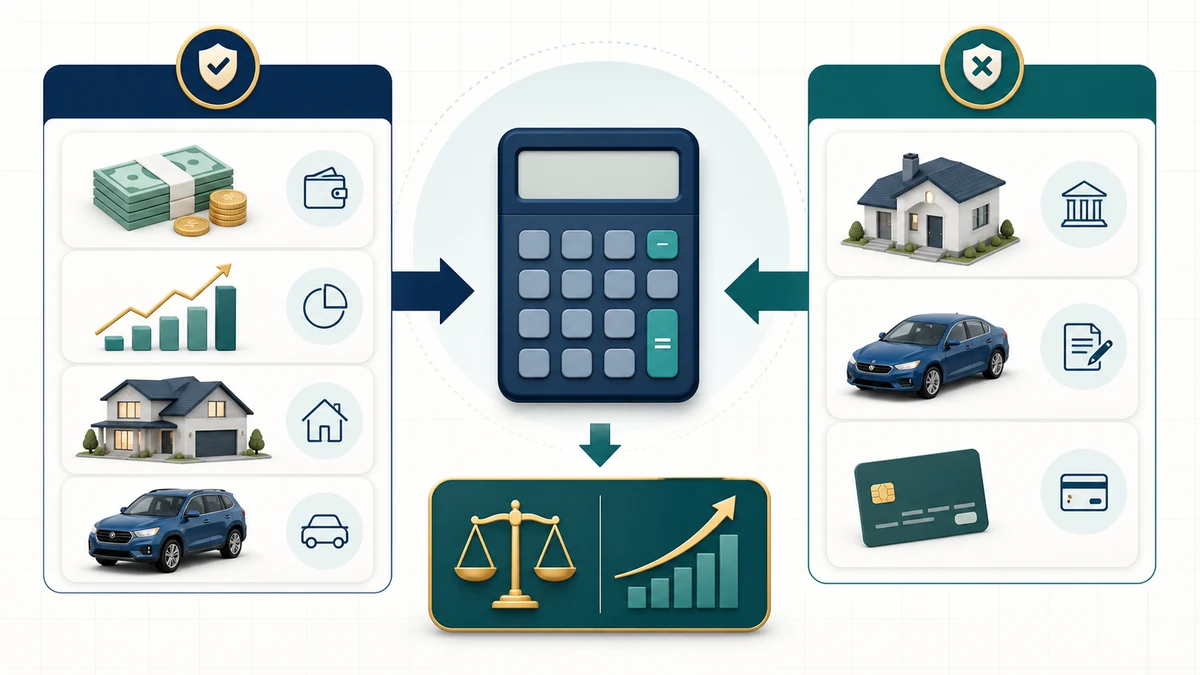
Calculate your estimated net worth by adding assets and subtracting liabilities.
Assets
Add cash, savings, investments, property value, vehicles, business value, and other owned assets.
Liabilities
Add mortgages, loans, credit card balances, student loans, unpaid bills, and other debts.
Net Worth Results
This calculator provides an estimate only. Asset values, property values, investment balances, taxes, selling costs, loan balances, and currency values can change. The currency selector only changes the displayed symbol and does not convert exchange rates.
A Net Worth Calculator creates a balance-sheet snapshot for a person or household. List what is owned at reasonable current values, list outstanding obligations, and subtract liabilities from assets. The result is more useful when the categories and valuation date are saved for the next comparison.
The equation is simple; the inventory is the work
Net worth = total assets − total liabilities
Assets may include cash, deposit accounts, investments, retirement accounts, real estate equity values, vehicles, and valuable property. Liabilities may include mortgages, cards, student debt, vehicle loans, personal loans, taxes due, and other enforceable obligations.
Build the asset side without inflating it
Use the value that could reasonably be realized on the snapshot date, not the original purchase price. Avoid listing the full property value and its equity as two assets. If the full market value is recorded, list the mortgage separately as a liability.
Make liabilities complete
Use current payoff balances where possible. A liabilities calculator subtotal should include small revolving balances and personal obligations as well as large loans. Monthly payments belong in cash flow; outstanding balances belong in net worth.
Total net worth versus liquid net worth
Total net worth includes assets that may be difficult or costly to sell. Liquid net worth focuses on assets available relatively quickly, minus liabilities, and may apply discounts or exclude property. State your definition before comparing the two.
A compact example
Cash of $12,000, investments of $48,000, and property valued at $260,000 create $320,000 of assets. A $205,000 mortgage, $9,000 vehicle loan, and $3,000 card balance create $217,000 of liabilities. Net worth is $103,000. It does not mean $103,000 is available to spend.
Track direction with consistent snapshots
Repeat the Net Worth Calculator monthly, quarterly, or annually using the same categories. Record contributions, debt reduction, and major valuation changes separately. A rising home estimate or volatile market balance is not the same as improved monthly cash flow.
Interpret a negative number correctly
Negative net worth means liabilities exceed listed assets on that date. It is a measurement, not a character judgment. Focus on accurate records, affordable cash flow, and changes that reduce costly debt or build resilient assets.
Related financial views
Plan monthly cash flow with the Budget Calculator, organize repayment using the Debt Payoff Calculator, and project long-term invested assets with the Investment Calculator.
Net Worth Calculator FAQ
Is income an asset?
Not until it has been received and remains in an asset account; income is measured in cash flow.
Should jointly owned assets be included?
Use the ownership share consistent with the household scope and avoid double-counting.
How often should values change?
Update on a consistent schedule and when reliable statements or reasonable market evidence are available.
Valuation methods should stay consistent
Changing from conservative resale values to optimistic listing values can create artificial growth. Note the source of major estimates, such as a recent statement, reasonable market comparison, or professional valuation. For a private business or collectible, uncertainty may be large enough to show a range.
Do not net balances too early
List assets and liabilities separately before calculating equity. Showing a home only as “home equity” can be valid, but then the property value and mortgage must not also appear elsewhere. The Net Worth Calculator is easiest to audit when gross values remain visible.
Useful companion metrics
Debt-to-asset ratio equals total liabilities divided by total assets. It shows leverage, not affordability. Liquid coverage compares accessible assets with near-term obligations. Monthly surplus belongs to the budget. No single measure replaces the others.
Protect account numbers and personal records. The calculation needs category totals, not credentials or identifying details.