Emergency Fund Calculator
Calculate your emergency fund target, current coverage, remaining amount needed, and estimated time to reach your goal.
Emergency Fund Results
This calculator provides an estimate only. A practical emergency fund depends on job stability, dependents, debt, insurance coverage, rent or mortgage obligations, health costs, and how quickly you can access your savings.
An Emergency Fund Calculator measures how long a dedicated cash reserve could cover essential expenses after an unexpected bill or loss of income. It multiplies the monthly essentials you identify by a target number of months, then compares that target with current emergency savings.
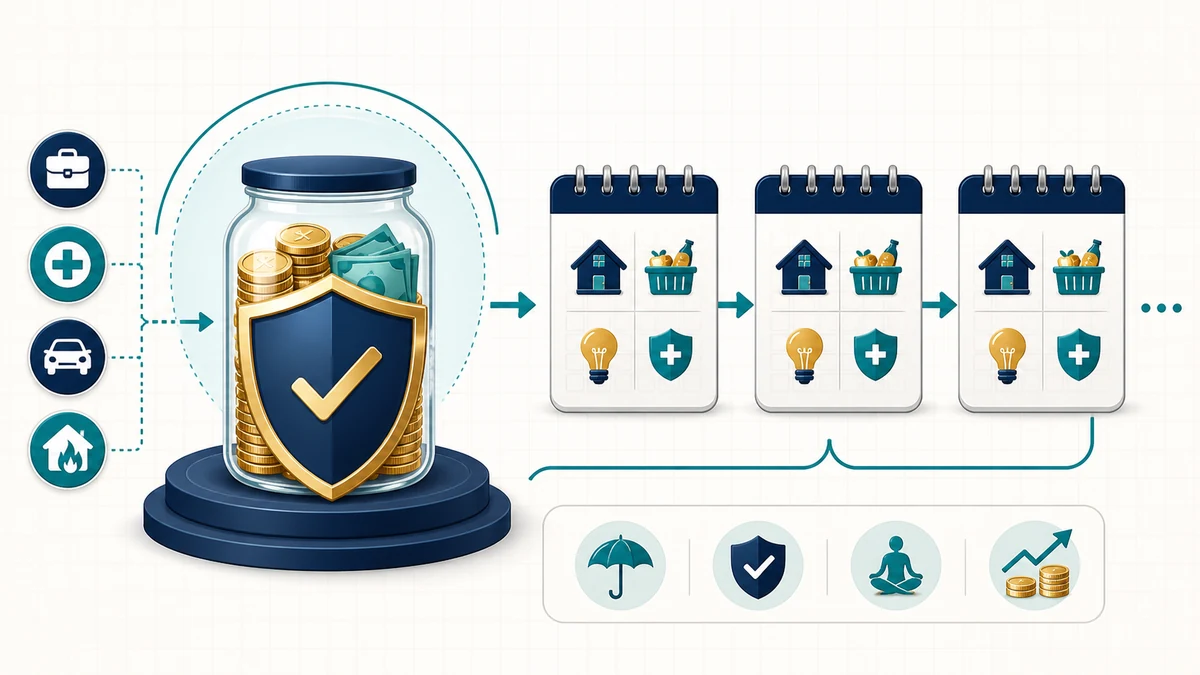
Separate essentials from the ordinary budget
Start with costs that would continue during a disruption: housing, basic utilities, groceries, insurance, medicine, minimum debt payments, essential transport, and necessary care. Optional subscriptions, travel, and discretionary shopping may be reduced in an emergency scenario.
Three numbers describe the buffer
Target fund = essential monthly expenses × target months
Current coverage = emergency savings ÷ essential monthly expenses
Funding gap = target fund − current emergency savings
If essentials total $2,400 per month and the target is six months, the goal is $14,400. With $5,000 saved, coverage is 2.08 months and the remaining gap is $9,400.
Choose coverage from household risk—not a slogan
A stable household with multiple reliable incomes may select a different buffer from a household with variable work, dependents, high deductibles, specialized medical needs, or a single income. Test several targets in the Emergency Fund Calculator rather than assuming that one number fits everyone.
Convert the gap into a funding date
With a $9,400 gap and $400 saved monthly, the no-interest timeline is 23.5 months, so 24 complete monthly deposits are required. Treat uncertain bonuses or refunds as separate accelerators instead of building them into the baseline.
Keep emergency money usable
The CFPB describes an emergency fund as a cash reserve for unplanned expenses and notes that the storage choice should be safe and accessible. Consider account access, deposit protection, withdrawal restrictions, and the temptation to spend. Investment volatility can be unsuitable for money needed on short notice.
Define what counts before the emergency
Write simple rules for job loss, urgent repair, medical cost, or another genuine disruption. After using the fund, recalculate the gap and make rebuilding part of the recovery plan.
Connect the reserve to cash flow
Find a sustainable deposit with the Budget Calculator, compare the timeline with the Savings Goal Calculator, and avoid overlooking required payments with the Debt Payoff Calculator.
Emergency Fund Calculator FAQ
Should retirement savings count?
Usually not as immediately available emergency cash; access, taxes, penalties, and market value may differ.
Do credit cards replace a reserve?
Borrowing can add interest and fees to the original shock, so it is not equivalent to saved cash.
Should irregular income change the target?
It may justify testing a longer interruption and a more cautious monthly contribution.
Consumer reference
CFPB guide to building an emergency fund.
Use a two-stage target when the full goal feels distant
Stage one can cover a common deductible or one month of essentials; stage two extends coverage toward the selected number of months. The Emergency Fund Calculator can show both gaps. Smaller checkpoints provide progress without implying that the partial reserve is the final target.
Recalculate after a life change
Housing, dependents, employment, insurance deductibles, health needs, and essential transportation can change the cost of a disruption. Update the monthly essential total after a move, job change, birth, caregiving responsibility, or new debt. Also update current savings after a real emergency rather than continuing to report the pre-withdrawal buffer.
Avoid false precision
An estimate of 4.27 months does not guarantee that every future emergency unfolds on a smooth monthly schedule. Keep individual deductibles and likely one-time shocks visible beside the monthly coverage result. Round the savings target upward when a practical transfer or account balance requires whole currency units. The Emergency Fund Calculator is a planning boundary, not a promise that every shock will fit it.