

Taco Bar Calculator
Plan protein, toppings, and sides for your crowd.
🧀 Main ingredients
🥣 Pick your dips
🥬 Pick your vegetables
🍚 Choose your side
⚡ Quick summary
📎 Serving assumptions per person (tap to view)
| Item | Per person (oz) | Notes |
|---|---|---|
| Ground beef / Shrimp | 6.5 | Protein portion |
| Hamburger | 5.0 | Protein portion |
| Chicken | 5.5 | Protein portion |
| Pork (Carnitas) | 7.0 | Protein portion |
| Cheddar cheese | 1.0 | Shown separately to mix or pick one |
| Monterey cheese | 1.0 | Shown separately to mix or pick one |
| Sour cream | 1.0 | Dip |
| Guacamole | 1.5 | Dip |
| Taco sauce | 1.0 | Dip |
| Pico de Gallo | 1.0 | Dip |
| Lettuce | 1.3 | Veg portion |
| Onions | 0.5 | Veg portion |
| Beans | 2.6 | Veg/side |
| Refried beans | 2.6 | Veg/side |
| Tomatoes | 1.8 | Veg portion |
| Olives | 0.5 | Veg portion |
| Bell pepper | 1.0 | Veg portion |
| Taco shells | — | 2 pieces per person |
| Tortillas | — | 1 piece per person |
| Rice (cooked) | 4.0 | ~½ cup cooked per person |
Practical serving averages from common recipe/party guidelines; adjust to your crowd.
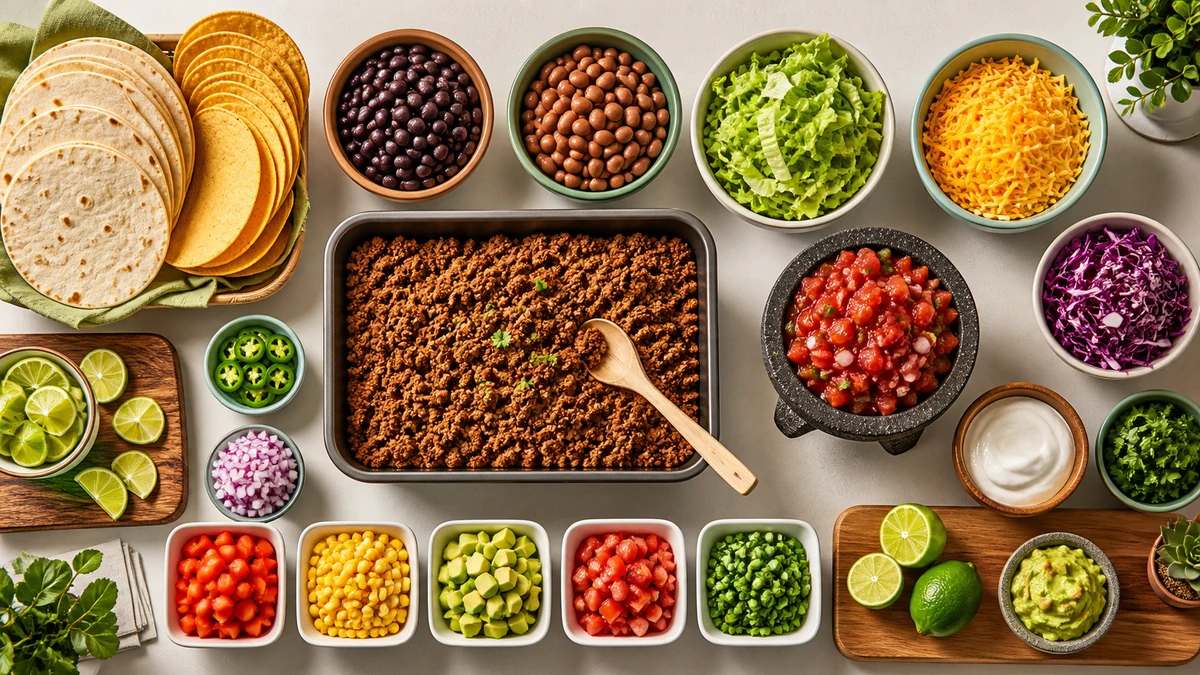
Running out of taco meat midway through a party is awkward, but buying every topping in excess creates unnecessary waste. The Taco Bar Calculator turns your guest count and menu choices into practical starting quantities for protein, cheese, dips, vegetables, taco shells, tortillas, and cooked rice.
Select the protein and serving unit, enter the number of adult-equivalent guests, and choose the ingredients you plan to serve. The results update automatically as you change the menu.
What the Taco Bar Calculator Estimates
The calculator can estimate quantities for a complete build-your-own taco bar, including:
- Ground beef, hamburger, chicken, pork, carnitas, or shrimp
- Cheddar and Monterey cheese
- Sour cream, guacamole, taco sauce, and pico de gallo
- Lettuce, onions, beans, tomatoes, olives, and bell peppers
- Taco shells, tortillas, and cooked rice
Each selected ingredient is calculated separately. If you select two cheeses or both shells and tortillas, the calculator provides the full planned quantity for each selection rather than dividing one serving between them.
How to Use the Taco Bar Calculator
- Estimate the number of adult-equivalent guests attending.
- Enter that number in the guest field.
- Select the type of meat or protein you plan to serve.
- Choose ounces, pounds, grams, or kilograms as your preferred unit.
- Select the cheeses, dips, vegetables, shells, tortillas, and sides on your menu.
- Review the automatically updated ingredient quantities.
- Adjust the results for appetites, dietary needs, package sizes, and menu variety.
If you need help converting ingredients while shopping or preparing recipes, use the Grams to Cups Converter or mL to Grams Converter.
Counting Adults and Children
Younger children often eat less than adults, so the calculator can be used with an adult-equivalent guest count. One simple planning method is:
Adult-equivalent guests = adults + (younger children × 0.5)
For example, a party with 16 adults and 8 younger children would equal:
16 + (8 × 0.5) = 20 adult-equivalent guests
You would enter 20 in the calculator. This is only a planning shortcut. Teenagers, older children, athletes, and especially hungry guests may need to be counted as full adults.
How Taco Bar Quantities Are Calculated
The Taco Bar Calculator multiplies its internal serving allowance by the entered guest count:
Ingredient quantity = serving amount per person × adult-equivalent guests
The current protein assumptions range from approximately 5 to 7 ounces per person, depending on the selected meat. Ground beef and shrimp use 6.5 ounces per person, chicken uses 5.5 ounces, hamburger uses 5 ounces, and pork or carnitas uses 7 ounces.
Other important planning assumptions include:
- Cheddar cheese: 1 ounce per guest
- Monterey cheese: 1 ounce per guest
- Guacamole: 1.5 ounces per guest
- Most dips: 1 ounce per guest
- Taco shells: 2 per guest
- Tortillas: 1 per guest
- Cooked rice: 4 ounces, or roughly one-half cup, per guest
These are internal calculator assumptions rather than official catering standards. Actual consumption depends on the crowd and the rest of the menu.
Example Taco Bar for 20 Guests
Suppose you are planning a taco bar for 20 adult-equivalent guests and select ground beef, taco shells, tortillas, and cooked rice.
- Ground beef: 6.5 oz × 20 = 130 oz, or approximately 8.13 lb
- Taco shells: 2 × 20 = 40 shells
- Tortillas: 1 × 20 = 20 tortillas
- Cooked rice: 4 oz × 20 = 80 oz, or 5 lb
Because shells and tortillas were both selected, the calculator provides the full quantity of each. If guests will choose between the two, you may decide to reduce those amounts or divide the total according to expected preferences.
Raw Meat Versus Serving Quantity
The meat result should be treated as a planned serving quantity. The amount of raw meat you need to purchase may be higher because meat can lose water and fat during cooking. Bone content, trimming, preparation method, and the selected cut also affect yield.
Check the expected yield for your recipe or ask your butcher or caterer when purchasing meat for a large event. Adding a modest buffer may also help when the taco bar is the main meal.
Adjust the Estimate for Your Party
No taco meat calculator can predict every guest’s appetite. Consider increasing the estimate when:
- The taco bar is the only substantial food being served
- The event lasts several hours
- Many guests are teenagers or have larger appetites
- You want leftovers
- The tacos are larger than standard serving sizes
You may need less food when appetizers, desserts, rice, beans, salads, or other main dishes are available. Package sizes should also be considered because the calculator does not automatically round results to complete bags, containers, or meat packages.
Dietary Needs and Allergies
Ask guests about allergies and dietary restrictions before shopping. A flexible taco bar may include vegetarian beans, dairy-free toppings, corn tortillas, or a separate plant-based protein.
Label ingredients clearly and use separate serving utensils where practical to reduce cross-contact. Guests with serious allergies may require more controlled preparation than a shared buffet can provide.
Taco Bar Food Safety
Keep cooked meat and other hot foods at 140°F (60°C) or warmer. Keep sour cream, cheese, guacamole, and other cold perishable foods at 40°F (4.4°C) or colder.
Perishable food should generally not remain at room temperature for more than two hours, or more than one hour when the temperature is above 90°F (32°C). Refill the buffet with smaller containers instead of leaving the entire supply out at once.
Formal catering, school events, and public functions may also be subject to local food-handling requirements.
Taco Bar Calculator FAQs
How much taco meat should I prepare per person?
This calculator uses approximately 5 to 7 ounces per adult-equivalent guest, depending on the selected protein. Increase the amount for larger appetites or when tacos are the only main dish.
How many tacos should I plan per person?
The calculator allows 2 taco shells per guest. If tortillas are selected, it also calculates 1 tortilla per guest. Selecting both provides the full quantity of both rather than splitting the total.
How should children be counted?
As a simple planning method, count each younger child as approximately half an adult serving. Older children and teenagers may need to be counted as full adults.
Does the calculator show raw or cooked meat?
The result is best treated as an estimated serving quantity. You may need to purchase additional raw meat to account for trimming and moisture or fat lost during cooking.
Can I use this calculator for professional catering?
The Taco Bar Calculator provides a useful preliminary estimate, but professional catering quantities should also consider recipe yield, service style, event length, guest demographics, package sizes, and local food-safety requirements.
Related Food Calculators
Source
This calculator provides planning estimates only. Actual food requirements vary with serving sizes, appetites, recipes, menu variety, and event conditions.
Plan Portions Around the Guest Mix
A taco count should account for adults, children, appetite, meal timing, side dishes, and dietary choices. Offer a buffer of tortillas and flexible fillings rather than multiplying one serving size blindly. Keep hot foods hot and cold foods cold, label allergens, provide separate utensils, and store leftovers promptly. For large events, round ingredients to practical package sizes.
Serving Taco Meat Safely
Quantity planning and food safety work together. Keep raw ingredients separate from ready-to-eat toppings, use clean utensils, and check cooked meat with a food thermometer rather than relying on color. The USDA safe-temperature chart lists 160°F (71.1°C) for ground meats and 165°F (73.9°C) for ground poultry. During service, replenish smaller trays instead of leaving the full batch exposed for a long period.
How do I keep taco meat safe during service?
Cook it to the USDA minimum internal temperature for the meat used, keep hot food hot, use clean serving utensils, and refrigerate leftovers promptly. For long events, replace small serving pans from a safely held reserve.