
Benadryl Dosage Calculator for Dogs
Educational weight-based diphenhydramine estimate for dogs. The calculator uses 1 mg per lb, approximately 2.2 mg/kg. Any repeat schedule, frequency, product choice, and final dose should be confirmed with your veterinarian.
- Common veterinary rule of thumb: diphenhydramine ≈ 1 mg per pound body weight (≈ 2.2 mg/kg).
- Liquid example concentration used here: 12.5 mg per 5 mL (= 2.5 mg/mL).
- Rounded tablet counts are for convenience only—confirm with your veterinarian.
- This tool is for educational use and not a substitute for professional advice.
This Benadryl dosage calculator for dogs is an arithmetic aid, not a prescription or a substitute for veterinary care. Ask a veterinarian whether diphenhydramine is appropriate for your dog, which product is safe, and what amount and schedule to use before entering any values.
Before Using the Dog Benadryl Calculator
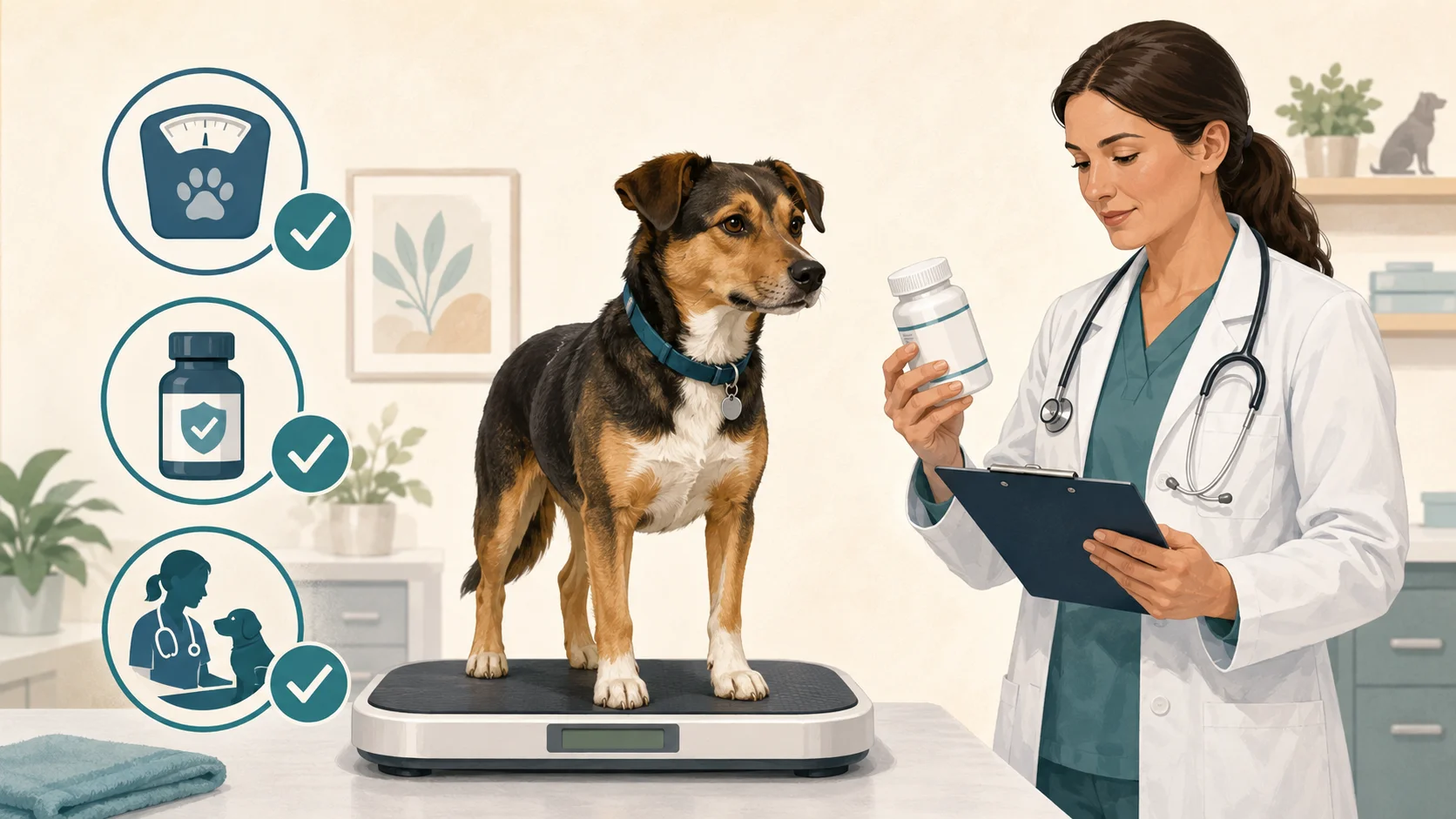
Confirm four details with a veterinary professional: your dog’s current weight, the reason for treatment, the exact product and concentration, and the approved dose and interval. A familiar brand name does not guarantee that two packages contain the same ingredients or strength.
Do not use an old weight from memory for a puppy, a small dog, or an animal whose weight has recently changed. A small measurement error can represent a much larger percentage of the intended amount in a small animal.
What the Calculator Does
The calculator converts a veterinarian-approved weight-based instruction into an estimated amount. It helps reduce multiplication and unit-conversion errors. It cannot determine whether a drug is suitable, diagnose an allergy, account for every disease or interaction, or select a safe formulation.
Record the result with the product concentration and measurement unit. Milligrams describe the active drug; milliliters describe liquid volume. They are not interchangeable without a concentration such as milligrams per milliliter.
Check the Entire Ingredient Label
Use only the exact product your veterinarian approves. Some human allergy or cold products combine an antihistamine with a decongestant or other medicine. Liquid, chewable, dissolving, and sugar-free products may also contain inactive ingredients that are unsuitable for dogs.
The ASPCA advises direct veterinary supervision and warns that combination antihistamines can include decongestants. The FDA warns that xylitol is toxic to dogs and may appear in liquid medicines and other human products.
When Benadryl May Be the Wrong Choice
Itching, swelling, coughing, vomiting, restlessness, or breathing changes can have many causes. A calculator cannot distinguish a mild skin reaction from poisoning, infection, airway trouble, or anaphylaxis. It also cannot assess pregnancy, age-related risk, glaucoma, urinary problems, heart disease, seizures, or the effects of other medicines.
Tell the veterinarian about prescriptions, over-the-counter products, supplements, and recent medications. Sedating drugs and products with overlapping ingredients can change the risk.
Emergency Signs Need Immediate Help
Do not wait for an online calculation if your dog has trouble breathing, collapses, has a seizure, develops rapidly worsening facial or throat swelling, cannot stand, or may have swallowed a toxic or combination product. Contact a veterinarian, emergency animal hospital, or animal poison control service immediately.
How to Measure a Vet-Approved Amount
- Read the active ingredient and concentration directly from the package.
- Use the dog’s current measured weight and select the correct unit.
- Enter only the dose instruction supplied by the veterinarian.
- For liquid, use an oral syringe marked in the required volume unit.
- Write down the time and amount to prevent an accidental repeat dose.
If the calculated amount cannot be measured accurately with the product on hand, call the veterinarian or pharmacist instead of estimating.
Weight and Unit Conversions
One kilogram is approximately 2.2046 pounds. A calculator can perform the conversion, but the selected unit must match the veterinary instruction. Confusing pounds with kilograms or milligrams with milliliters can produce a serious error. For a general weight conversion, use the weight converter, then return here and recheck every entry.
After Giving a Veterinarian-Approved Dose
Follow the monitoring instructions your veterinarian provides. Keep the package available so a clinician can verify the exact formulation if a reaction occurs. Do not give an extra amount because symptoms persist, and do not shorten the interval without professional direction.
Benadryl for Dogs FAQs
Can I use any product labeled Benadryl?
No. Formulations vary, and some contain additional active or inactive ingredients. Use only the exact single-ingredient product and concentration approved by your veterinarian.
Why does the dog’s weight matter?
Veterinary instructions are often weight-based. An outdated weight or the wrong pounds/kilograms setting changes the arithmetic, but weight alone does not establish a safe dose.
What if my dog may have received too much?
Call a veterinarian, emergency clinic, or animal poison control service now. Provide the product name, ingredient list, concentration, estimated amount, time, and dog’s weight. Do not wait for symptoms or attempt a home remedy unless a professional directs you.