
Stride Length Calculator
Settings
Inputs
Action
Results
Use this Stride Length Calculator to estimate step length and full stride length from a measured distance and step count, from pace and cadence, or from a general height-based estimate.
Important: Stride length changes with walking or running speed, terrain, fatigue, footwear, mobility, and individual gait mechanics. Measuring your own distance and steps is generally more useful than relying on a height-based estimate.
Step Length and Stride Length
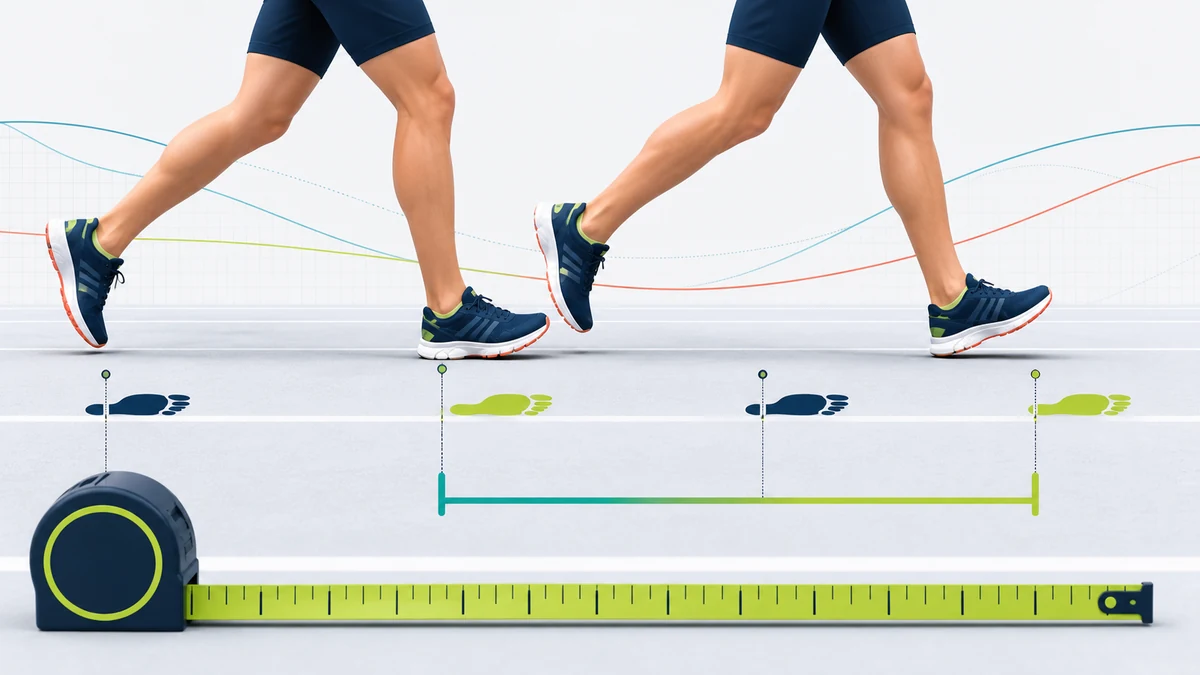
Step length and stride length are related but are not the same measurement.
Step length is the distance covered by one step.
Stride length is the distance covered during one complete gait cycle, usually from one contact of a foot to the next contact of the same foot.
For a simple calculation with approximately equal left and right steps:
Stride length ≈ 2 × step length
Distance and Steps Method
If you know the distance traveled and total number of steps:
Step length = distance ÷ total steps
Estimated stride length = 2 × distance ÷ total steps
This method uses your actual walking or running data and is usually the most useful option for personal calibration.
Pace and Cadence Method
If cadence is entered in steps per minute:
Total steps = cadence × time in minutes
Then:
Step length = distance ÷ total steps
Estimated stride length = 2 × step length
Cadence must be entered as steps per minute, not complete strides per minute.
Height-Based Estimate
The calculator can also provide a general estimate using height, sex, and walking or running activity.
This method should be treated as a rough shortcut only. Height can be associated with gait dimensions, but it does not uniquely determine an individual’s stride length. Speed, leg proportions, biomechanics, mobility, and activity type can all change the result.
Worked Example
Suppose you walk 100 meters and count 132 steps.
Average step length:
100 ÷ 132 ≈ 0.758 meters per step
Estimated stride length:
0.758 × 2 ≈ 1.516 meters per stride
The estimated result is therefore:
- Step length: approximately 0.758 m
- Stride length: approximately 1.516 m
Important Notes
- For better personal accuracy, measure a known distance and count every individual step.
- Using a longer measured distance can reduce the effect of starting, stopping, and counting errors.
- Repeat the measurement several times and compare or average the results when accuracy matters.
- Walking and running should generally be measured separately because pace and movement mechanics affect step length.
- Left and right step lengths may not be identical, so twice the average step length is a simplified estimate of a full stride.
- Cadence must be entered as steps per minute when using the pace-and-cadence method.
- GPS watches, phones, treadmills, and pedometers may produce different results because they use different sensors, calibration methods, and algorithms.
- Hills, trails, stairs, fatigue, footwear, injury, and changes in pace can alter stride length during the same activity.
- Do not intentionally lengthen your stride simply to match a calculator result. Natural running and walking mechanics differ between individuals.
- This calculator is for general fitness and distance estimation. Persistent gait changes, pain, balance problems, or mobility concerns require appropriate clinical assessment rather than calculator-based interpretation.
How to Use the Stride Length Calculator
Begin with one clearly defined workout, event, test, or record. Gather the requested values: known distance and step count or height-based estimation inputs. Use the same measurement method throughout and choose the displayed units before calculating. When a value comes from a watch, treadmill, pedometer, scorebook, or field test, record the device or protocol as well. Consistent inputs make later comparisons far more useful.
Enter the values, review them for unit or time-format errors, and calculate. The main results are average stride or step length in chosen units. Save both the result and the assumptions behind it. If you are comparing training plans or performance scenarios, change one important variable at a time so the effect of distance, duration, intensity, body weight, pace, or repetitions remains clear.
How to Interpret the Result
This calculator is designed to estimate the distance covered per step from measured walking or running data. Treat the answer as an estimate or mathematical summary, not a promise of performance, a medical diagnosis, or a substitute for a qualified coach or health professional. A precise-looking number can still be limited by the quality of the measurements and the assumptions built into the formula.
Use the result as a starting point and compare it with repeated real-world observations. For pace and distance tools, compare similar routes and conditions. For heart-rate or aerobic tools, consider perceived effort and the same testing protocol. For calorie estimates, remember that population-based activity values cannot measure one person’s metabolism exactly. For strength estimates, keep exercise technique and repetition standards consistent.
Practical Measurement Checklist
Before relying on the result, confirm the units, distinguish elapsed time from moving time, check whether a value is measured or predicted, and repeat unusual readings. Warm up appropriately, use calibrated equipment when available, and avoid comparing results collected under very different conditions. Record the date, surface, weather, equipment, and relevant recovery factors when they could affect performance.
Important limitation: stride varies with speed, terrain, footwear, fatigue, mobility, measurement method, and whether the calculator defines a stride as one or two steps. Stop exercise and seek appropriate medical guidance if you experience concerning symptoms. People with health conditions, injuries, pregnancy, or medicines that affect exercise response should follow individualized professional advice rather than a general calculator result.
Use the Result for Better Comparisons
Create a realistic baseline, then test a conservative and an ambitious scenario. Look for the point where a target becomes impractical rather than focusing only on the most attractive result. Review the Bench Press 1RM Calculator and Steps to Miles Calculator when those measurements help explain the same workout or performance goal.
Step length and stride length are not interchangeable
A step runs from contact of one foot to contact of the other; a full gait stride returns to the same foot and contains two steps. Check which definition your watch, app or research source uses before comparing values.
Measure over enough distance
A short trial magnifies start, stop and counting errors. Use a measured course, settle into the intended pace before the timing segment, count consistently and repeat the test. Walking and running values should be calibrated separately.
Frequently Asked Questions
What does the Stride Length Calculator calculate?
It uses known distance and step count or height-based estimation inputs to estimate average stride or step length in chosen units. The exact fields and formula depend on the calculator mode and the units selected.
Which inputs have the biggest effect on the result?
The most influential inputs are usually the main distance, time, intensity, body-weight, heart-rate, score, or repetition values. Change one of them at a time and compare the output to identify the most sensitive assumption.
How accurate is the Stride Length Calculator?
The arithmetic is accurate for the values entered, but real-world accuracy depends on measurement quality, the selected formula, consistent technique, and whether the conditions match the assumptions. Repeated measurements are usually more informative than one isolated result.
Can I compare results from different days or devices?
Yes, but use the same units, device settings, route, test protocol, and definitions whenever possible. Device algorithms and environmental conditions can differ, so treat small changes cautiously unless they repeat over time.
Should I use the estimate as a training target?
It can help with planning and scenario comparison, but targets should match current fitness, recovery, technique, health, and conditions. Progress gradually and adjust using real performance and appropriate professional guidance.
Is this calculator medical or coaching advice?
No. It is an educational planning tool. A clinician, qualified coach, or official sport organization can account for symptoms, medical history, testing standards, competition rules, and individual goals that a general calculator cannot evaluate.