
Calories Burned Calculator
Results
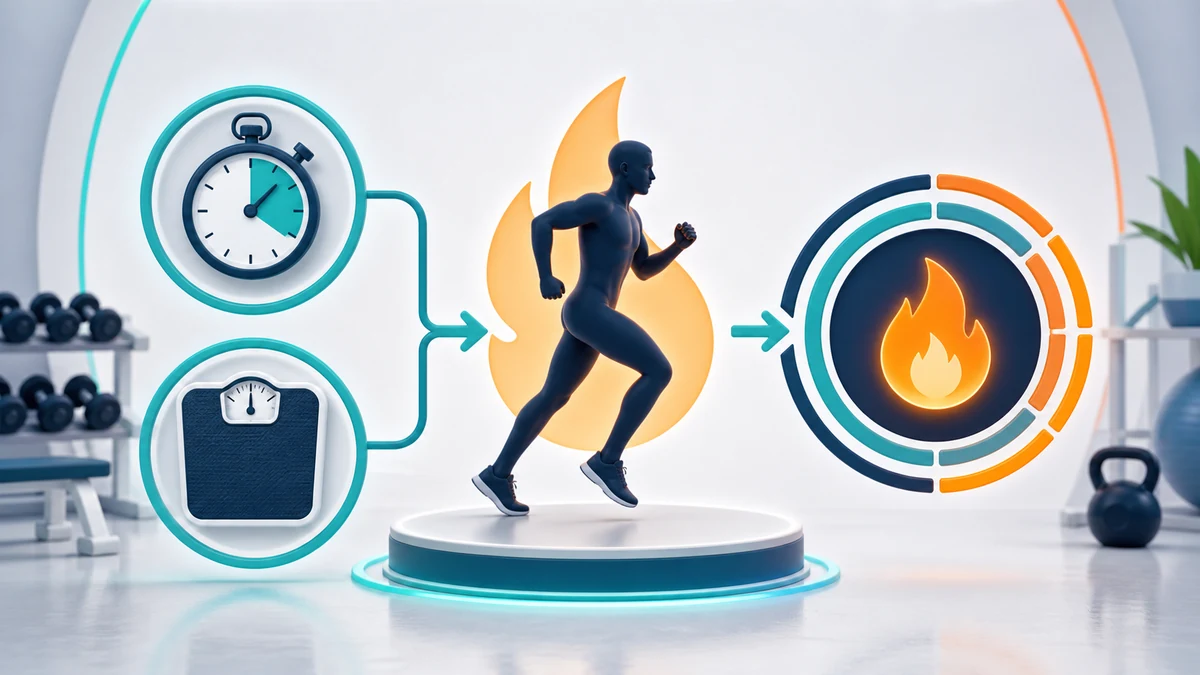
Use this Calories Burned Calculator to estimate the gross calories used during an activity based on its MET value, your body weight, and the amount of time performed.
Important: This is a population-based estimate rather than a direct measurement. Actual energy expenditure can vary considerably between individuals.
Calories Burned Formula
The calculator uses the following simplified MET formula:
Estimated calories burned = MET × body weight in kilograms × duration in hours
Estimated calories per hour are:
Calories per hour = MET × body weight in kilograms
If weight is entered in pounds, it is converted to kilograms:
Weight in kilograms = weight in pounds ÷ 2.20462
If duration is entered in minutes:
Duration in hours = minutes ÷ 60
In nutrition and exercise contexts, the word “calorie” normally refers to a kilocalorie, written as kcal.
What MET Means
MET means metabolic equivalent of task. It compares an activity’s estimated energy cost with resting energy expenditure.
- 1 MET: approximately the energy used while resting quietly
- 3 METs: approximately three times resting energy expenditure
- 6 METs: approximately six times resting energy expenditure
Select the activity and intensity that most closely match what you actually performed. Pace, resistance, incline, terrain, technique, and rest periods can substantially change the appropriate MET value.
Worked Example
Suppose a person weighs 70 kg and performs an activity rated at 4.8 METs for 45 minutes.
Convert the duration to hours:
45 ÷ 60 = 0.75 hours
Calculate estimated calories:
4.8 × 70 × 0.75 = 252 kcal
Estimated calories per hour:
4.8 × 70 = 336 kcal per hour
The estimated gross energy expenditure is therefore 252 kcal during the 45-minute activity.
Gross vs. Active Calories
This calculator estimates gross calories, which include the energy your body would have used at rest during the same period.
Fitness watches and applications may instead display active calories, which attempt to exclude resting energy expenditure. This is one reason their results may differ from this calculator.
Important Notes
- MET values describe typical energy costs for an activity and do not directly measure your metabolism.
- The calculation assumes the selected MET intensity is maintained for the entire entered duration.
- Rest periods during resistance training, intervals, sports, or classes can lower the session’s average intensity.
- Body composition, fitness, age, movement efficiency, health, medication, temperature, terrain, and equipment can affect actual calorie expenditure.
- At the same activity and duration, the formula produces a higher estimate for a person with greater body weight.
- Exercise machines, fitness watches, and applications may use heart rate, movement sensors, personal data, or proprietary formulas and can show different results.
- Do not automatically replace all estimated exercise calories through additional food intake, particularly when using the result for weight management.
- The Adult Compendium’s MET values may not be appropriate for children or individualized clinical exercise prescriptions.
- People with medical conditions, pregnancy, injury recovery, eating-disorder history, or clinical nutrition needs should seek individualized professional guidance.
How to Use the Calories Burned Calculator
Begin with one clearly defined workout, event, test, or record. Gather the requested values: body weight, activity type or MET value, intensity, and duration. Use the same measurement method throughout and choose the displayed units before calculating. When a value comes from a watch, treadmill, pedometer, scorebook, or field test, record the device or protocol as well. Consistent inputs make later comparisons far more useful.
Enter the values, review them for unit or time-format errors, and calculate. The main results are estimated exercise energy expenditure in calories. Save both the result and the assumptions behind it. If you are comparing training plans or performance scenarios, change one important variable at a time so the effect of distance, duration, intensity, body weight, pace, or repetitions remains clear.
How to Interpret the Result
This calculator is designed to estimate energy use from body mass, activity intensity, and time. Treat the answer as an estimate or mathematical summary, not a promise of performance, a medical diagnosis, or a substitute for a qualified coach or health professional. A precise-looking number can still be limited by the quality of the measurements and the assumptions built into the formula.
Use the result as a starting point and compare it with repeated real-world observations. For pace and distance tools, compare similar routes and conditions. For heart-rate or aerobic tools, consider perceived effort and the same testing protocol. For calorie estimates, remember that population-based activity values cannot measure one person’s metabolism exactly. For strength estimates, keep exercise technique and repetition standards consistent.
Practical Measurement Checklist
Before relying on the result, confirm the units, distinguish elapsed time from moving time, check whether a value is measured or predicted, and repeat unusual readings. Warm up appropriately, use calibrated equipment when available, and avoid comparing results collected under very different conditions. Record the date, surface, weather, equipment, and relevant recovery factors when they could affect performance.
Important limitation: MET values are population estimates and individual physiology, efficiency, fitness, devices, and environmental conditions can change actual energy use. Stop exercise and seek appropriate medical guidance if you experience concerning symptoms. People with health conditions, injuries, pregnancy, or medicines that affect exercise response should follow individualized professional advice rather than a general calculator result.
Use the Result for Better Comparisons
Create a realistic baseline, then test a conservative and an ambitious scenario. Look for the point where a target becomes impractical rather than focusing only on the most attractive result. Review the Winning Percentage Calculator and Heart Rate Zone Calculator when those measurements help explain the same workout or performance goal.
Intensity labels cover wide ranges
“Cycling,” “walking” or “strength training” can describe very different workloads. Select the closest available speed, grade or effort category and run a lower and upper case when uncertain. Do not assume machine displays use the same body-weight or resting-energy convention.
Health context matters more than one number
Energy expenditure varies with fitness, movement economy, environment and physiology. Avoid compensatory eating based on a precise-looking estimate. The CDC discusses measuring activity intensity.
Frequently Asked Questions
What does the Calories Burned Calculator calculate?
It uses body weight, activity type or MET value, intensity, and duration to estimate estimated exercise energy expenditure in calories. The exact fields and formula depend on the calculator mode and the units selected.
Which inputs have the biggest effect on the result?
The most influential inputs are usually the main distance, time, intensity, body-weight, heart-rate, score, or repetition values. Change one of them at a time and compare the output to identify the most sensitive assumption.
How accurate is the Calories Burned Calculator?
The arithmetic is accurate for the values entered, but real-world accuracy depends on measurement quality, the selected formula, consistent technique, and whether the conditions match the assumptions. Repeated measurements are usually more informative than one isolated result.
Can I compare results from different days or devices?
Yes, but use the same units, device settings, route, test protocol, and definitions whenever possible. Device algorithms and environmental conditions can differ, so treat small changes cautiously unless they repeat over time.
Should I use the estimate as a training target?
It can help with planning and scenario comparison, but targets should match current fitness, recovery, technique, health, and conditions. Progress gradually and adjust using real performance and appropriate professional guidance.
Is this calculator medical or coaching advice?
No. It is an educational planning tool. A clinician, qualified coach, or official sport organization can account for symptoms, medical history, testing standards, competition rules, and individual goals that a general calculator cannot evaluate.