
Waist-to-Height & Waist-to-Hip Calculator
Calculate both waist ratios in one tool using stable source-value unit switching.
Important Note : These ratios are screening indicators only. They do not diagnose obesity, heart disease, diabetes, or overall health risk.” NHS says waist-to-height ratio can help understand whether someone may be carrying too much fat around the tummy, but its calculator should not be used to diagnose conditions.
Interpretation Table by Sex (Approximate Sizes)
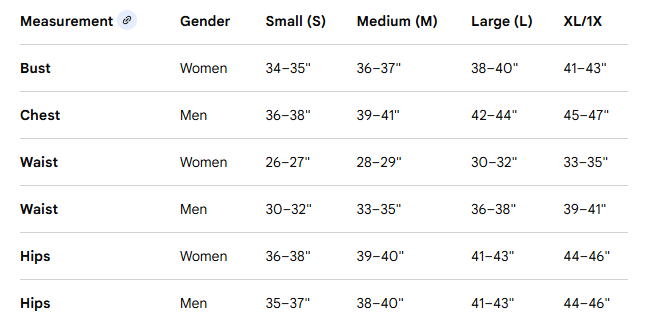
Use this calculator to find your waist-to-height ratio (WHtR) and waist-to-hip ratio (WHR). These measurements provide simple screening information about waist size and body-fat distribution.
Calculation Method
Waist-to-height ratio = waist circumference ÷ height
Waist-to-hip ratio = waist circumference ÷ hip circumference
Use the same unit for both measurements in each calculation.
A simple waist-to-height reference is:
Half-height waist = height ÷ 2
For adults, keeping waist circumference below half of height corresponds to a waist-to-height ratio below 0.5.
Example
For someone with a waist of 80 cm, height of 170 cm, and hips of 95 cm:
WHtR = 80 ÷ 170 = 0.47
WHR = 80 ÷ 95 = 0.84
The waist-to-height value is below 0.5. Waist-to-hip interpretation can vary according to sex, population, and the reference used.
Important Limitations
These ratios are screening measures only. They do not diagnose obesity, diabetes, cardiovascular disease, or overall health status.
How to Use the Waist-to-Height & Waist-to-Hip Ratio Calculator
The Waist-to-Height & Waist-to-Hip Ratio Calculator is designed to calculate two waist-based body-shape ratios from circumference and height measurements. It is an educational planning tool: the result becomes useful only when the inputs are accurate, the units match, and the output is interpreted in the right personal or clinical context.
- Read each field label and enter waist circumference, height, hip circumference, and consistent units.
- Confirm dates, units, laboratory analytes, or measurement methods before calculating.
- Select Calculate and review the main result together with any range, category, or supporting values.
- Keep extra precision during the calculation, then round only to a level supported by the original measurements.
- Compare the result with the limitations and safety notes below before acting on it.
What the Result Means
The output represents screening ratios that describe central body-size distribution and can complement other health information. It should be treated as an estimate or standardized calculation, not as a complete assessment of health. A number can organize information and support a conversation, but it cannot account for symptoms, examination findings, laboratory quality, personal history, or every factor a qualified professional would consider.
When a category or range is displayed, first check which guideline, population, age group, sex, formula, or reference dataset the calculator uses. Different reputable methods may produce different results without either calculation being mathematically wrong.
Inputs, Units, and Measurement Quality
Good output begins with good input. Use current measurements, enter decimals carefully, and do not mix metric and U.S. customary units unless the calculator converts them explicitly. For body measurements, use the same technique each time. For dates, confirm the calendar entry. For laboratory values or medication quantities, copy the value, analyte, unit, concentration, and timing directly from the verified report or label.
If a result looks implausible, do not simply accept it. Recheck transposed digits, misplaced decimal points, unit selections, age, sex, dates, and whether the value belongs to the correct person. Recalculate from the original source rather than from a rounded previous result.
How the Estimate Is Derived
The calculator applies the equation, reference method, or conversion described in the existing formula section of this page. Some tools use a direct mathematical relationship, while others apply population averages, reference curves, or activity factors. A precise-looking answer can still carry substantial uncertainty when the underlying method is predictive rather than directly measured.
For a useful manual check, follow the displayed substitution step by step and confirm that the direction of the result makes sense. Changing one input at a time can also show which variable most strongly influences the estimate. Do not reverse a clinical formula or reuse a conversion factor for a different substance unless an authoritative reference specifically permits it.
Accuracy, Limitations, and Individual Variation
Tape position, breathing, clothing, recent meals, pregnancy, abdominal conditions, and muscularity can affect measurements. Ratios do not diagnose disease.
Repeated measurements under similar conditions are often more informative than a single isolated value. Record the date, method, units, and relevant circumstances so that later comparisons are meaningful. A change may reflect real physiology, measurement technique, hydration, timing, device variation, or ordinary day-to-day fluctuation.
Using the Result Responsibly
This page provides general educational information and does not diagnose a condition, prescribe treatment, or replace professional care. Do not start, stop, or change medication, supplements, fluid restrictions, nutrition therapy, anticoagulation, or pregnancy care because of an online result. Seek prompt medical help for severe or rapidly worsening symptoms, and use local emergency services when a situation may be life-threatening.
For additional context, consult the NIH body-measurement guidance. A clinician, pharmacist, registered dietitian, or other qualified professional can explain how the estimate applies to an individual situation and whether confirmatory testing is appropriate.
Related Health Calculators
Explore the Dose Calculator and mcg to IU Converter for related planning or measurement support. Use each calculator according to its own inputs and limitations rather than transferring a result or factor between tools.
Before You Compare Results Over Time
Use the same calculator, formula, units, device, and measurement technique for every comparison. Where practical, collect measurements at a similar time of day and under similar conditions. A small change may be caused by rounding or normal variation rather than a meaningful health change.
Look for a consistent pattern and keep the underlying values, not only the calculated output. If the direction of change is unexpected, first verify the original inputs. For clinical measurements, laboratory values, pregnancy dates, child growth, or medication-related calculations, ask the relevant professional how often the value should be reassessed and what size of change is important.
Frequently Asked Questions
What does the Waist-to-Height & Waist-to-Hip Ratio Calculator estimate?
It is designed to calculate two waist-based body-shape ratios from circumference and height measurements. The answer is screening ratios that describe central body-size distribution and can complement other health information. Read the method and limitations before interpreting the number.
Which inputs affect the result most?
The required inputs are waist circumference, height, hip circumference, and consistent units. The most influential field depends on the equation, so each value and unit should be checked rather than assuming one input is unimportant.
How accurate is this calculator?
The arithmetic is repeatable, but real-world accuracy depends on measurement quality and how well the selected formula or reference represents the person and situation. Predictive tools should be understood as estimates.
Can this result diagnose a health condition?
No. A calculator cannot evaluate symptoms, medical history, examination findings, test quality, or competing explanations. Use the result for education or discussion with an appropriate professional.
Why is my result different from another calculator?
The other tool may use a different equation, reference population, rounding rule, activity factor, laboratory convention, or unit conversion. Compare methods and inputs before comparing the final numbers.
When should I speak with a healthcare professional?
Ask for professional guidance when a result is unexpected, repeatedly outside a stated reference, linked to symptoms, used for medication or clinical decisions, or affected by pregnancy, childhood, chronic disease, or major body changes.