Blood Pressure Category Calculator
Enter systolic and diastolic blood pressure to classify the reading and estimate pulse pressure and mean arterial pressure.
Results
This calculator is for general education only. It does not diagnose hypertension, low blood pressure, or any medical condition. If a reading is very high, repeat it after resting; if it remains high or symptoms such as chest pain, shortness of breath, weakness, vision changes, or difficulty speaking occur, seek urgent medical help.
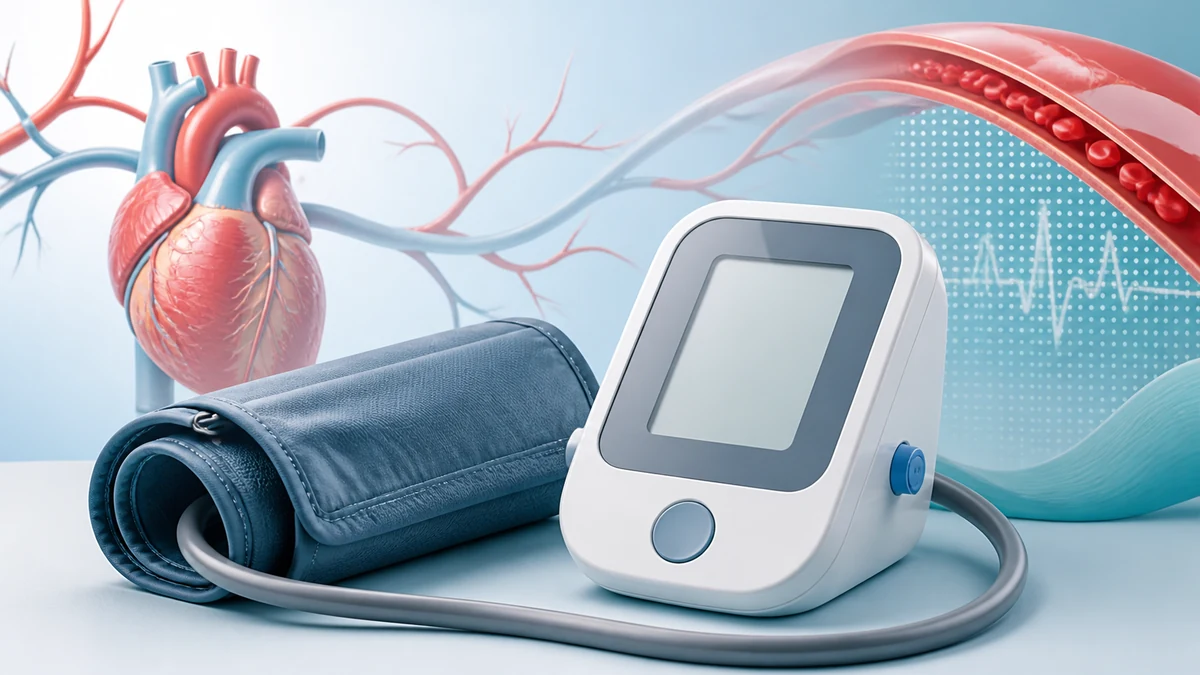
Use this Blood Pressure Category Calculator to classify a blood pressure reading and estimate pulse pressure and mean arterial pressure, also called MAP. Enter systolic pressure and diastolic pressure in mmHg, then choose the reading context to see a general blood pressure category and calculation details.
This calculator is designed for general education and blood pressure tracking support only. It does not diagnose hypertension, low blood pressure, cardiovascular disease, kidney disease, stroke risk, or any medical condition.
Last updated: July 10, 2026
Method used: Common adult blood pressure category thresholds, pulse pressure formula, and mean arterial pressure formula.
Important health note: A single blood pressure reading should not be used as a diagnosis. Blood pressure changes throughout the day and can be affected by stress, activity, caffeine, smoking, pain, illness, medication timing, body position, cuff size, and measurement technique. If a reading is very high, rest and repeat the reading. If blood pressure is above 180 systolic and/or above 120 diastolic with symptoms such as chest pain, shortness of breath, back pain, numbness, weakness, vision changes, confusion, fainting, or difficulty speaking, seek urgent medical help immediately.
What This Blood Pressure Category Calculator Estimates
This calculator classifies a blood pressure reading and calculates two additional values: pulse pressure and mean arterial pressure.
| Calculator Result | What It Means | Important Note |
|---|---|---|
| Blood pressure category | General category based on systolic and diastolic values. | Only a healthcare professional can diagnose hypertension. |
| Reading | The entered systolic/diastolic value, such as 120/80 mmHg. | Check that both numbers were entered correctly. |
| Pulse pressure | The difference between systolic and diastolic pressure. | Pulse pressure = systolic − diastolic. |
| Mean arterial pressure | An estimate of average arterial pressure during one cardiac cycle. | MAP is an estimate and does not replace clinical monitoring. |
| Systolic classification | Category based on the top blood pressure number. | High systolic pressure can influence the final category. |
| Diastolic classification | Category based on the bottom blood pressure number. | High diastolic pressure can also influence the final category. |
| Category rule used | Explains which number determined the final category. | The higher-risk category usually controls the final result. |
| General next step | A plain-language follow-up suggestion. | Not a diagnosis, prescription, or emergency triage tool. |
What Is Blood Pressure?
Blood pressure measures the force of blood pushing against artery walls. It is written as two numbers, such as 120/80 mmHg.
| Blood Pressure Number | Meaning | Example from 120/80 mmHg |
|---|---|---|
| Systolic pressure | The pressure when the heart contracts and pushes blood into the arteries. | 120 mmHg |
| Diastolic pressure | The pressure when the heart relaxes between beats. | 80 mmHg |
| mmHg | Millimeters of mercury, the standard blood pressure unit. | Both numbers are measured in mmHg. |
Adult Blood Pressure Categories
The table below shows common adult blood pressure categories. Some healthcare systems, countries, or clinical guidelines may use different thresholds, so follow your clinician’s advice for diagnosis and treatment.
| Category | Systolic Pressure | Diastolic Pressure | General Meaning |
|---|---|---|---|
| Normal | Less than 120 | And less than 80 | Reading is within the commonly used normal adult range. |
| Elevated | 120 to 129 | And less than 80 | Above the normal systolic range but not yet hypertension by this category system. |
| Stage 1 Hypertension | 130 to 139 | Or 80 to 89 | High blood pressure stage 1 range. |
| Stage 2 Hypertension | 140 or higher | Or 90 or higher | High blood pressure stage 2 range. |
| Severe hypertension / possible crisis range | Higher than 180 | And/or higher than 120 | Repeat after resting and seek professional guidance; emergency symptoms require urgent care. |
If systolic and diastolic values fall into different categories, the calculator generally uses the higher-risk category. For example, 128/86 is not simply “elevated” because the diastolic value falls in the stage 1 range.
Pulse Pressure Formula
Pulse pressure is the difference between systolic and diastolic pressure. It shows how far apart the top and bottom numbers are.
| Calculation | Formula | Example |
|---|---|---|
| Pulse pressure | Pulse pressure = systolic pressure − diastolic pressure | 120 − 80 = 40 mmHg |
Pulse pressure can be affected by age, artery stiffness, exercise, illness, measurement conditions, and cardiovascular status. This calculator reports the number only; it does not diagnose why pulse pressure is narrow or wide.
Mean Arterial Pressure Formula
Mean arterial pressure, or MAP, estimates average arterial pressure during one cardiac cycle. A common estimate is calculated from diastolic pressure and pulse pressure.
| Calculation | Formula | Example for 120/80 |
|---|---|---|
| Pulse pressure | PP = systolic − diastolic | 120 − 80 = 40 |
| Mean arterial pressure | MAP = diastolic + (pulse pressure ÷ 3) | 80 + (40 ÷ 3) = 93.3 mmHg |
| Alternative MAP formula | MAP ≈ (systolic + 2 × diastolic) ÷ 3 | (120 + 2 × 80) ÷ 3 = 93.3 mmHg |
MAP can be important in clinical settings, but this calculator’s MAP result is only an estimate from entered numbers. It should not be used for emergency care, intensive care, medication titration, or treatment decisions.
Formula Summary
| What You Want to Find | Formula or Rule |
|---|---|
| Blood pressure reading | Systolic / Diastolic, such as 120/80 mmHg |
| Pulse pressure | Pulse pressure = systolic − diastolic |
| Mean arterial pressure | MAP = diastolic + (pulse pressure ÷ 3) |
| Alternative MAP estimate | MAP ≈ (systolic + 2 × diastolic) ÷ 3 |
| Final category | Use the higher-risk category when systolic and diastolic values fall into different categories. |
How the Blood Pressure Category Calculator Works
| Step | What the Calculator Does | Purpose |
|---|---|---|
| Step 1 | Reads systolic and diastolic pressure. | Uses the two standard blood pressure numbers. |
| Step 2 | Classifies the systolic number. | Checks the top number against category thresholds. |
| Step 3 | Classifies the diastolic number. | Checks the bottom number against category thresholds. |
| Step 4 | Uses the higher-risk category as the final category. | Prevents a high systolic or high diastolic value from being ignored. |
| Step 5 | Calculates pulse pressure and MAP. | Adds extra educational interpretation. |
| Step 6 | Shows a general next-step note. | Provides educational follow-up guidance, not diagnosis. |
Reading Context Explained
The same blood pressure value can mean different things depending on how and where it was measured. The reading context helps users think about reliability.
| Reading Context | Meaning | Interpretation Note |
|---|---|---|
| Home reading | A reading taken outside a clinic, usually with a home monitor. | Home readings can be useful when taken with proper technique and repeated over time. |
| Clinic / office reading | A reading taken in a medical setting. | Some people have higher readings in clinic because of stress or anxiety. |
| Repeated average reading | An average from multiple readings. | Usually more useful than one isolated reading. |
| Single one-time reading | One measurement at one moment. | Should not be used alone to diagnose hypertension or make treatment decisions. |
How to Use This Blood Pressure Calculator
- Enter the systolic pressure, which is the top number.
- Enter the diastolic pressure, which is the bottom number.
- Select the reading context: home, clinic, repeated average, or single one-time reading.
- Click Calculate.
- Review the blood pressure category, pulse pressure, MAP, systolic classification, diastolic classification, category rule used, and general next step.
- Use the result as educational information only.
- Contact a healthcare professional if readings are repeatedly high, unusually low, or paired with symptoms.
Worked Example: Normal Reading
Suppose the entered blood pressure reading is 118/76 mmHg.
| Input | Example Value |
|---|---|
| Systolic pressure | 118 mmHg |
| Diastolic pressure | 76 mmHg |
| Reading context | Home reading |
| Step | Calculation or Rule | Result |
|---|---|---|
| Systolic classification | 118 is less than 120 | Normal systolic range |
| Diastolic classification | 76 is less than 80 | Normal diastolic range |
| Final category | Both values are in the normal range | Normal |
| Pulse pressure | 118 − 76 | 42 mmHg |
| MAP | 76 + (42 ÷ 3) | 90 mmHg |
Worked Example: Stage 1 Hypertension Reading
Suppose the entered blood pressure reading is 134/84 mmHg.
| Step | Calculation or Rule | Result |
|---|---|---|
| Systolic classification | 134 falls in 130–139 | Stage 1 range |
| Diastolic classification | 84 falls in 80–89 | Stage 1 range |
| Final category | Both values fall in the stage 1 range | Stage 1 Hypertension |
| Pulse pressure | 134 − 84 | 50 mmHg |
| MAP | 84 + (50 ÷ 3) | 100.7 mmHg |
This result does not diagnose hypertension. It means the entered reading falls within a stage 1 range and should be interpreted with repeated readings and clinical guidance.
Worked Example: Different Systolic and Diastolic Categories
Suppose the entered reading is 128/86 mmHg.
| Number | Value | Category |
|---|---|---|
| Systolic | 128 | Elevated range |
| Diastolic | 86 | Stage 1 range |
| Final category | Higher-risk category controls | Stage 1 Hypertension |
When the top and bottom numbers fall into different categories, the higher-risk category is usually used for the final classification.
How to Interpret the Results
| Output | What It Means | What It Does Not Mean |
|---|---|---|
| Blood pressure category | Shows where the entered reading falls in common adult categories. | It does not diagnose hypertension. |
| Pulse pressure | Shows the difference between the systolic and diastolic numbers. | It does not explain the cause of a wide or narrow pulse pressure. |
| Mean arterial pressure | Estimates average arterial pressure during one cardiac cycle. | It does not replace clinical monitoring or emergency assessment. |
| Systolic classification | Shows the category based on the top number. | It should be interpreted with the diastolic value too. |
| Diastolic classification | Shows the category based on the bottom number. | It should be interpreted with the systolic value too. |
| General next step | Gives a basic educational suggestion. | It is not a treatment plan or medication recommendation. |
Very High Blood Pressure Warning
A reading above 180 systolic and/or above 120 diastolic may fall into a severe hypertension or possible crisis range. The next step depends on symptoms and whether the reading remains high after resting and repeating.
| Situation | General Action | Important Warning |
|---|---|---|
| Reading is above 180 and/or 120, but no symptoms | Rest quietly and repeat the reading after a short interval. If still very high, contact a healthcare professional urgently. | Do not ignore repeated severe readings. |
| Reading is above 180 and/or 120 with chest pain | Seek emergency medical help immediately. | Do not wait for the calculator result. |
| Reading is above 180 and/or 120 with shortness of breath | Seek emergency medical help immediately. | This can be an emergency symptom. |
| Reading is above 180 and/or 120 with weakness, numbness, vision changes, confusion, or difficulty speaking | Seek emergency medical help immediately. | These may be stroke-like or emergency symptoms. |
| Reading is high and you are pregnant or recently postpartum | Contact a healthcare professional urgently or follow local emergency guidance. | High blood pressure in pregnancy/postpartum can be serious. |
Low Blood Pressure Note
This calculator is mainly designed to classify common high blood pressure ranges. Low blood pressure, sometimes called hypotension, is more symptom-dependent and may need clinical interpretation.
| Possible Low BP Situation | Why It Matters | What to Do |
|---|---|---|
| Low reading with no symptoms | Some people naturally have lower blood pressure. | Track readings and ask a clinician if unsure. |
| Low reading with dizziness or fainting | May indicate reduced blood flow, dehydration, medication effects, or other causes. | Seek medical advice, especially if recurrent or severe. |
| Low reading with chest pain, confusion, severe weakness, or shortness of breath | May be serious. | Seek urgent medical help. |
| Low reading after new medication or dose change | Medication may affect blood pressure. | Contact the prescribing clinician or pharmacist. |
Factors That Can Affect Blood Pressure Readings
Blood pressure can change from one reading to another. This is why repeated, properly measured readings are more useful than one isolated number.
| Factor | Possible Effect | Better Practice |
|---|---|---|
| Exercise | Can temporarily raise blood pressure. | Rest before measuring unless instructed otherwise. |
| Caffeine | May temporarily raise blood pressure in some people. | Avoid measuring right after caffeine if tracking routine readings. |
| Smoking or nicotine | Can affect blood pressure and cardiovascular risk. | Avoid measuring immediately after nicotine exposure. |
| Stress or anxiety | Can raise readings temporarily. | Rest quietly before measuring. |
| Pain or illness | Can change blood pressure. | Interpret readings with health context. |
| Talking during measurement | Can raise the reading. | Sit quietly during the measurement. |
| Incorrect cuff size | Can produce inaccurate readings. | Use a cuff that fits the arm correctly. |
| Arm position | Can change the result if the arm is too high or too low. | Support the arm around heart level. |
| Full bladder | Can affect the reading. | Use the bathroom before measuring if needed. |
| Time of day | Blood pressure often varies across the day. | Track at consistent times if monitoring trends. |
How to Measure Blood Pressure More Accurately at Home
| Measurement Step | Why It Helps |
|---|---|
| Sit quietly before measuring. | Resting helps reduce temporary activity-related changes. |
| Keep feet flat on the floor. | Crossed legs or poor posture can affect readings. |
| Support your back. | Unsupported posture can change blood pressure. |
| Support the arm at heart level. | Arm position affects the measured pressure. |
| Use the correct cuff size. | A cuff that is too small or too large can be inaccurate. |
| Place the cuff on bare skin when possible. | Measuring over thick clothing can affect accuracy. |
| Do not talk during measurement. | Talking can raise the reading. |
| Take more than one reading when tracking. | Averaging repeated readings gives a more reliable trend. |
| Record date, time, and context. | Helps clinicians interpret your readings. |
Home Reading vs Clinic Reading
Home and clinic readings can differ. Some people have higher readings in a clinic setting, while others may have normal clinic readings but higher home readings. A healthcare professional may recommend home monitoring or ambulatory monitoring when needed.
| Reading Type | Possible Advantage | Possible Limitation |
|---|---|---|
| Home blood pressure reading | Can show readings during normal daily life. | May be inaccurate if technique or monitor is poor. |
| Clinic blood pressure reading | Taken in a healthcare setting with professional support. | May be affected by anxiety, rushing, pain, or clinic stress. |
| Repeated average reading | More stable than one isolated reading. | Still depends on accurate technique and device quality. |
| Ambulatory blood pressure monitoring | Measures readings over many hours during normal activity and sleep. | Requires a prescribed or arranged monitoring device. |
Pulse Pressure Interpretation
Pulse pressure is not the same as blood pressure category, but it can provide additional context. The calculator reports pulse pressure for education only.
| Pulse Pressure Pattern | Possible Meaning | Important Caution |
|---|---|---|
| Typical range | The difference between systolic and diastolic is not unusually narrow or wide. | Interpret with overall blood pressure and health context. |
| Wide pulse pressure | Can occur with aging, artery stiffness, exercise, or certain medical conditions. | Do not self-diagnose; ask a clinician if persistent or concerning. |
| Narrow pulse pressure | Can occur in some clinical situations or measurement conditions. | Seek medical advice if paired with dizziness, fainting, chest pain, or shortness of breath. |
MAP Interpretation
Mean arterial pressure is sometimes used in clinical settings to understand perfusion pressure. In routine home use, MAP is mainly educational.
| MAP Result | General Meaning | Important Warning |
|---|---|---|
| Calculated MAP | Estimated average arterial pressure from systolic and diastolic values. | Do not use calculator MAP for emergency decisions or medication adjustment. |
| Unexpectedly low MAP | May reflect low blood pressure, measurement error, or clinical concern. | Seek medical advice if symptoms are present. |
| Unexpectedly high MAP | May reflect high blood pressure or measurement conditions. | Review repeated readings with a healthcare professional. |
When to Contact a Healthcare Professional
| Situation | Why It Matters |
|---|---|
| Repeated readings in the elevated or hypertension range | Repeated high readings may need professional evaluation. |
| Reading above 180 systolic and/or 120 diastolic | May require urgent guidance, especially if it remains high after rest. |
| Very high reading with emergency symptoms | Symptoms may indicate a hypertensive emergency or another urgent condition. |
| Very low reading with dizziness, fainting, confusion, or weakness | Low blood pressure with symptoms may need medical assessment. |
| Pregnancy or recent postpartum period with high readings | Blood pressure concerns during or after pregnancy can be serious. |
| Kidney disease, diabetes, heart disease, or stroke history | Blood pressure targets and treatment decisions may be individualized. |
| Medication side effects or missed doses | Medication timing, interactions, and dose changes need professional guidance. |
| Home monitor gives inconsistent readings | The device, cuff size, or technique may need review. |
Do Not Change Medication Based on This Calculator
Blood pressure medicine decisions require clinical judgment. Do not start, stop, skip, increase, or reduce medication based only on this calculator.
| Medication Situation | Why Calculator Output Is Not Enough | Better Action |
|---|---|---|
| Reading is high while taking medication | One reading may be affected by timing, stress, activity, or technique. | Record repeated readings and contact your clinician if advised or if readings remain high. |
| Reading is normal while taking medication | Normal reading may mean medication is working. | Do not stop medication unless your clinician tells you to. |
| Reading is low with symptoms | Medication may be one possible factor, but other causes are possible. | Contact a healthcare professional, especially with dizziness or fainting. |
| Missed dose | Advice depends on the medicine and timing. | Follow the prescription label or ask a pharmacist or clinician. |
Practical Uses
| Use Case | How the Calculator Helps |
|---|---|
| Understanding a blood pressure reading | Shows the category for systolic and diastolic values. |
| Home monitoring education | Helps users understand repeated readings and reading context. |
| Pulse pressure calculation | Calculates the difference between the top and bottom numbers. |
| MAP calculation | Estimates mean arterial pressure from systolic and diastolic values. |
| Checkup preparation | Helps users prepare questions for a healthcare professional. |
| Health education | Explains what systolic, diastolic, pulse pressure, and MAP mean. |
Common Mistakes to Avoid
| Mistake | Why It Causes Problems | Better Practice |
|---|---|---|
| Using one reading as a diagnosis | Blood pressure varies throughout the day. | Use repeated readings and professional evaluation. |
| Measuring immediately after exercise | Activity can temporarily raise blood pressure. | Rest before routine measurement. |
| Talking during measurement | Talking can affect the reading. | Sit quietly while measuring. |
| Using the wrong cuff size | Incorrect cuff size can produce inaccurate results. | Use the correct cuff for your arm size. |
| Measuring over thick clothing | Clothing can affect cuff pressure and accuracy. | Place the cuff on bare skin when possible. |
| Ignoring the higher category number | Either systolic or diastolic pressure can determine the final category. | Use the higher-risk category when values differ. |
| Changing medication because of one reading | Medication decisions require clinical review. | Contact your healthcare professional. |
| Ignoring emergency symptoms | Symptoms with very high readings can be urgent. | Seek emergency medical help immediately. |
Assumptions and Limitations
- This calculator assumes the systolic and diastolic values entered by the user are accurate.
- It is intended for general adult blood pressure education.
- It does not diagnose hypertension, low blood pressure, cardiovascular disease, kidney disease, stroke risk, or any medical condition.
- It does not replace repeated measurements, home blood pressure logs, ambulatory monitoring, clinician diagnosis, or medical evaluation.
- It does not account for age, pregnancy, kidney disease, diabetes, cardiovascular disease, medications, symptoms, medical history, or individual blood pressure targets.
- Blood pressure categories can vary by guideline, country, healthcare system, and clinical context.
- Pulse pressure and MAP results are estimates based on entered values only.
- MAP should not be used for emergency care, intensive care, medication titration, or treatment decisions.
- Reading context does not change the underlying category thresholds; it only helps explain reliability and interpretation.
- For children, pregnancy, chronic disease, symptoms, or medication decisions, use professional medical guidance.
When You May Need More Than This Calculator
| Need | Better Source or Method |
|---|---|
| Hypertension diagnosis | Repeated properly measured readings and healthcare professional evaluation. |
| Blood pressure medication decision | Clinician guidance based on readings, risk factors, symptoms, and medical history. |
| Pregnancy or postpartum blood pressure concern | Urgent guidance from obstetric or emergency care when appropriate. |
| Child blood pressure interpretation | Pediatric blood pressure percentiles and pediatric clinician guidance. |
| Suspected white-coat or masked hypertension | Home monitoring plan or ambulatory blood pressure monitoring. |
| Chest pain, stroke symptoms, severe breathlessness, or fainting | Emergency medical care. |
| Complex conditions such as kidney disease, diabetes, or heart disease | Individualized clinical targets and treatment plan. |
Frequently Asked Questions
Can one blood pressure reading diagnose hypertension?
No. A single blood pressure reading cannot diagnose hypertension. Diagnosis usually requires repeated properly measured readings and clinical evaluation by a healthcare professional.
What is systolic blood pressure?
Systolic blood pressure is the top number in a blood pressure reading. It measures pressure when the heart contracts and pushes blood through the arteries.
What is diastolic blood pressure?
Diastolic blood pressure is the bottom number. It measures pressure when the heart relaxes between beats.
What is considered normal blood pressure?
A common adult normal category is less than 120 systolic and less than 80 diastolic, written as less than 120/80 mmHg.
What is elevated blood pressure?
Elevated blood pressure is commonly defined as systolic pressure from 120 to 129 with diastolic pressure less than 80.
What is stage 1 hypertension?
Stage 1 hypertension is commonly defined as systolic pressure from 130 to 139 or diastolic pressure from 80 to 89.
What is stage 2 hypertension?
Stage 2 hypertension is commonly defined as systolic pressure of 140 or higher or diastolic pressure of 90 or higher.
What is pulse pressure?
Pulse pressure is the difference between systolic and diastolic pressure. The formula is pulse pressure = systolic − diastolic.
What is mean arterial pressure?
Mean arterial pressure, or MAP, is an estimated average arterial pressure during one cardiac cycle. A common formula is MAP = diastolic + pulse pressure ÷ 3.
When is high blood pressure an emergency?
A reading above 180 systolic and/or above 120 diastolic with symptoms such as chest pain, shortness of breath, weakness, numbness, vision changes, confusion, fainting, or difficulty speaking may be an emergency. Seek urgent medical help immediately.
Report an Issue
If you notice an incorrect result, unclear explanation, broken input field, calculation issue, or formatting problem with this Blood Pressure Category Calculator, please contact us through the Contact Us page. Include the systolic pressure, diastolic pressure, reading context, and result shown so our editorial team can review the issue.
References
- American Heart Association — Understanding Blood Pressure Readings
- CDC — About High Blood Pressure
- NHLBI — High Blood Pressure
- NHS — High Blood Pressure
- American Heart Association — Monitoring Your Blood Pressure at Home
- CDC — Measure Your Blood Pressure
Related Calculators
- Heart Age Calculator
- BMI Calculator
- Waist-to-Height Ratio Calculator
- Calorie Calculator
- Water Intake Calculator
- Protein Calculator
- Creatinine Clearance Calculator
- Child BMI Calculator
Blood Pressure Category Calculator Disclaimer
This Blood Pressure Category Calculator provides general educational information only. It classifies an entered blood pressure reading, calculates pulse pressure, estimates mean arterial pressure, and shows a general next-step note from the systolic pressure, diastolic pressure, and reading context entered by the user.
This calculator does not diagnose hypertension, low blood pressure, cardiovascular disease, kidney disease, stroke risk, pregnancy-related blood pressure problems, or any medical condition. A single reading should not be used as a diagnosis. Blood pressure can change because of stress, activity, caffeine, nicotine, pain, illness, medication timing, body position, cuff size, monitor accuracy, and measurement technique.
Do not start, stop, skip, increase, or reduce blood pressure medicine or any other treatment based on this calculator. For diagnosis, treatment, medication decisions, or personal blood pressure targets, use repeated properly measured readings and guidance from a qualified healthcare professional. If blood pressure is above 180 systolic and/or above 120 diastolic with chest pain, shortness of breath, back pain, numbness, weakness, vision changes, confusion, fainting, or difficulty speaking, seek urgent medical help immediately.