VAT Calculator

Choose what you want to calculate, enter the known values, then click Calculate.

What do you want to calculate?

To calculate gross price, enter Net price and VAT rate.

%
USD
USD
USD

The selected result field is locked automatically. Enter the known values only.

VAT Formula Table

Requirement Formula Inputs Needed
Calculate Gross Price Gross = Net × (1 + VAT Rate ÷ 100) Net price and VAT rate
Calculate Net Price Net = Gross ÷ (1 + VAT Rate ÷ 100) Gross price and VAT rate
Calculate VAT Amount from Net VAT Amount = Net × VAT Rate ÷ 100 Net price and VAT rate
Calculate VAT Amount from Gross VAT Amount = Gross − Net Gross price and net price
Calculate VAT Rate VAT Rate (%) = 100 × VAT Amount ÷ Net Net price and VAT amount
Calculate Gross from Net and VAT Amount Gross = Net + VAT Amount Net price and VAT amount

VAT rates vary by country, product type, and tax rules. Use this calculator for basic VAT math and check your official tax authority for current rates.

Use this VAT Calculator to add VAT, remove VAT, find the VAT amount, or check the VAT rate from known net and VAT values. Choose what you want to calculate, enter the required known values, and click Calculate to show the result.

The calculator supports common VAT tasks such as calculating a gross VAT-inclusive price from a net VAT-exclusive price, extracting net price from a gross price, finding the VAT amount, or checking the VAT rate implied by a net price and VAT amount.

Important Note: This VAT Calculator estimates net price, VAT amount, gross price, or VAT rate based on the calculation type you choose. Select what you want to calculate, enter the required known values, then click Calculate.

The calculator uses standard VAT arithmetic only. It does not verify whether a product or service is taxable, exempt, zero-rated, reduced-rated, standard-rated, outside the scope of VAT, reverse-charged, import-related, export-related, or subject to a special local VAT/GST rule.

Use this calculator for quick shopping, invoice-checking, and planning estimates. For official VAT invoices, VAT returns, bookkeeping, cross-border sales, reverse charge, import VAT, digital services, or business compliance, confirm the current rules with the relevant tax authority or a qualified tax professional.

Reviewed by: AjaxCalculators Editorial Team
Last updated: April 26, 2026
Method source: Standard VAT relationships using net price, VAT rate, VAT amount, and gross price
Editorial standards: AjaxCalculators Editorial Policy

What This VAT Calculator Calculates

This VAT Calculator now works by calculation mode. Choose the result you want, then enter the known values required for that calculation.

Calculation Mode Inputs Needed What the Calculator Finds
Calculate Gross Price Net price and VAT rate The VAT-inclusive gross price.
Calculate Net Price Gross price and VAT rate The VAT-exclusive net price.
Calculate VAT Amount Net price and VAT rate, or gross price and net price The tax amount added between net and gross price.
Calculate VAT Rate Net price and VAT amount The VAT percentage implied by the entered values.
Quick VAT rate buttons 5%, 12%, 15%, or 20% Fills common example rates quickly.
Currency display Selected currency symbol Changes the displayed symbol only; it does not convert exchange rates.

What VAT Means

VAT stands for Value Added Tax. It is a consumption tax added to many goods and services. The buyer usually pays VAT as part of the final price, while registered businesses may collect and report VAT according to the rules in their country or region.

VAT is often shown as a percentage rate. For example, if the VAT rate is 20%, a product with a net price of 100 would have VAT of 20 and a gross price of 120.

How the VAT Calculator Works

The calculator uses standard VAT formulas. The VAT rate should first be converted from a percentage into a decimal.

Calculation Formula Example at 20% VAT
Convert VAT rate rate = VAT % ÷ 100 20% ÷ 100 = 0.20
VAT from net price VAT = net × rate 100 × 0.20 = 20
Gross from net price gross = net × (1 + rate) 100 × 1.20 = 120
Net from gross price net = gross ÷ (1 + rate) 120 ÷ 1.20 = 100
VAT from gross and net VAT = gross − net 120 − 100 = 20
VAT rate check VAT rate = VAT ÷ net × 100 20 ÷ 100 × 100 = 20%

Net Price vs Gross Price

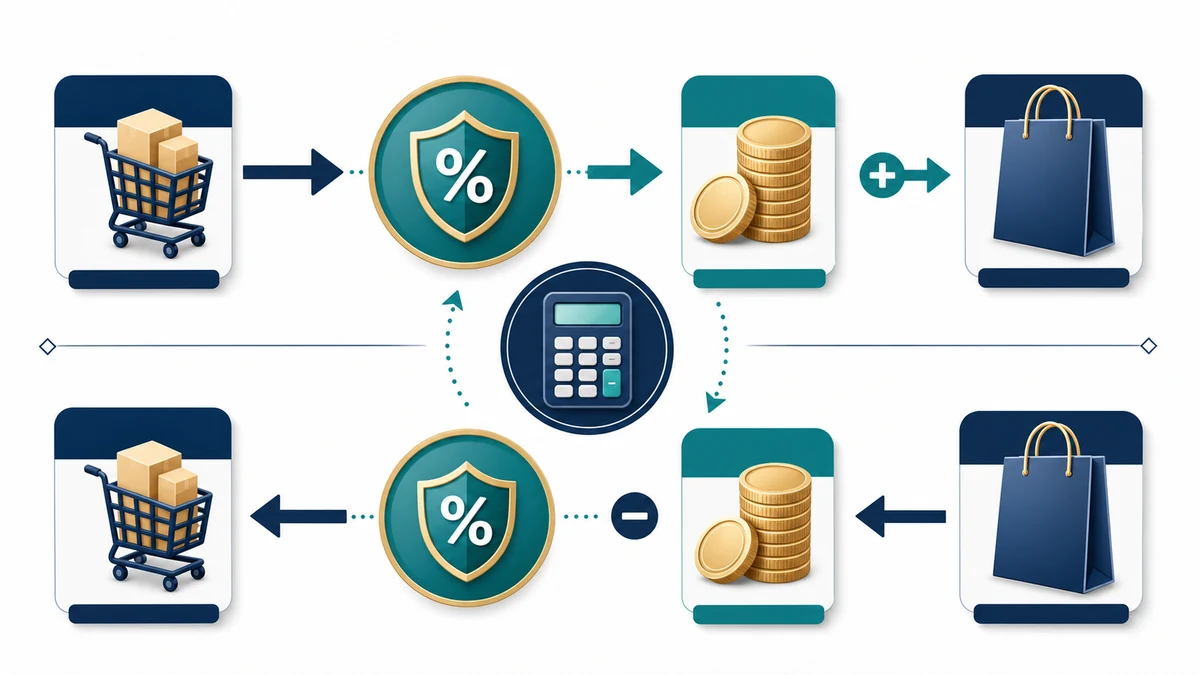
Net price and gross price are different because VAT is added between them.

Term Meaning Example at 20% VAT
Net price Price before VAT. 100
VAT amount Tax added to the net price. 20
Gross price Final price including VAT. 120

When a price is VAT-inclusive, do not remove VAT by simply subtracting the VAT percentage from the gross price. Use the reverse VAT formula instead.

Add VAT vs Remove VAT

Adding VAT and removing VAT are opposite calculations, but they are not performed by the same simple percentage step.

Action Starting Value Formula Example at 20%
Add VAT Net price gross = net × 1.20 100 × 1.20 = 120
Remove VAT Gross price net = gross ÷ 1.20 120 ÷ 1.20 = 100
Find VAT amount from net Net price VAT = net × 0.20 100 × 0.20 = 20
Find VAT amount from gross Gross price VAT = gross − net 120 − 100 = 20

With 20% VAT, the VAT portion of a 120 gross price is 20, not 24. The 20% rate applies to the net price, not to the VAT-inclusive gross price.

Assumptions and Important Notes

  • This calculator uses the VAT rate entered by the user.
  • It assumes the item or service is taxable at the selected VAT rate.
  • It does not verify whether a product is standard-rated, reduced-rated, zero-rated, exempt, or outside the scope of VAT.
  • It does not calculate VAT returns, input VAT, output VAT, reverse charge, import VAT, or cross-border VAT treatment.
  • It does not determine whether a business must register for VAT.
  • It does not perform currency conversion.
  • VAT/GST rates and rules vary by country, region, product type, customer location, and business status.

Worked Example: Add VAT

Suppose the net price is 250 and the VAT rate is 20%.

Step Calculation Result
Convert VAT rate 20 ÷ 100 0.20
Calculate VAT amount 250 × 0.20 50
Calculate gross price 250 + 50 300
Shortcut check 250 × 1.20 300

So, a net price of 250 with 20% VAT gives a VAT amount of 50 and a gross price of 300.

Worked Example: Remove VAT

Suppose the gross price is 300 and the VAT rate is 20%.

Step Calculation Result
Convert VAT rate 20 ÷ 100 0.20
Add 1 to the rate 1 + 0.20 1.20
Calculate net price 300 ÷ 1.20 250
Calculate VAT amount 300 − 250 50

So, a VAT-inclusive price of 300 at 20% VAT contains a net price of 250 and VAT of 50.

Worked Example: Check a VAT Rate

Suppose an invoice shows a net price of 400 and VAT of 80.

Step Calculation Result
Use the rate formula VAT rate = VAT amount ÷ net price × 100 Formula setup
Substitute values 80 ÷ 400 × 100 20%
Check gross price 400 + 80 480

The VAT rate implied by this invoice is 20%. This checks the arithmetic only; it does not confirm whether 20% is the legally correct VAT rate for that transaction.

How to Use This VAT Calculator

  1. Select the currency symbol you want to display.
  2. Choose what you want to calculate: Gross Price, Net Price, VAT Amount, or VAT Rate.
  3. Enter the VAT rate, or choose one of the quick VAT-rate buttons when a VAT rate is required.
  4. Enter only the known values requested by the selected calculation mode.
  5. Leave the selected result field locked or empty, because that is the value the calculator will find.
  6. Click Calculate to show the result.
  7. Review the result table and formula explanation.
  8. Use Reset to clear the calculator and start again.

The currency selector changes the displayed symbol only. It does not convert USD, EUR, GBP, BDT, INR, JPY, or any other currency.

Result Visibility and Input Behavior

The result should appear after the user clicks Calculate. This keeps the calculator clearer because the user first chooses the calculation type, enters the required known values, and then receives the selected result.

Interface Item Expected Behavior
Calculation type selector Controls which value the calculator will solve for.
Selected result field Should be locked automatically so the user enters only the known values.
Calculate button Runs the VAT calculation and shows the result.
Reset button Clears the fields, result, and previous calculation state.
Result table Should stay hidden or empty until Calculate is clicked.

How to Interpret the Result

Output What It Means Important Caution
Net price The VAT-exclusive amount before VAT is added. Useful for business pricing, invoices, and pre-tax comparisons.
VAT amount The estimated tax amount based on the entered values. Only correct if the entered rate and tax treatment are correct.
Gross price The VAT-inclusive amount after VAT is added. Useful for customer-facing price checks.
VAT rate The percentage used in the VAT calculation or implied by the values entered. VAT rates can vary by country, product, service, customer, and transaction type.
Currency symbol The money symbol shown beside the result. It does not perform currency conversion.

VAT Rate Examples and Why You Must Check Official Rules

VAT rates differ by country and by product or service category. Many VAT systems include standard rates, reduced rates, zero rates, exemptions, and special rules.

VAT Treatment General Meaning Why It Matters
Standard-rated The normal VAT rate applies. Common for many goods and services.
Reduced-rated A lower VAT rate applies. May apply to specific categories such as certain essentials, energy, or approved goods depending on local law.
Zero-rated VAT rate is 0%, but the sale may still be within the VAT system. Business reporting and input VAT treatment can differ from exempt sales.
Exempt No VAT is charged, and input VAT recovery may be restricted. Often treated differently from zero-rated sales.
Outside the scope The transaction may not fall within the VAT system. Requires rule-specific review.
Reverse charge The customer may account for VAT instead of the supplier. Often relevant in business-to-business or cross-border contexts.

Always confirm the correct VAT rate and treatment with the official tax authority for your country or region.

Practical Uses of a VAT Calculator

This VAT Calculator is useful for quick VAT arithmetic when the correct VAT rate is already known.

Use Case How the Calculator Helps
Add VAT to a net price Finds the VAT amount and gross price.
Remove VAT from a gross price Finds the net price and VAT portion inside a VAT-inclusive price.
Check invoice arithmetic Verifies whether VAT amount, net price, and gross price are mathematically consistent.
Estimate customer-facing price Helps convert a VAT-exclusive price into a VAT-inclusive price.
Estimate pre-tax price Helps extract the net price from a VAT-inclusive amount.
Compare prices Helps compare VAT-inclusive and VAT-exclusive pricing consistently.
Basic bookkeeping checks Supports quick arithmetic checks before using accounting records.

Assumptions and Important Notes

Assumption or Limitation What It Means
User-entered VAT rate The calculator uses the rate entered by the user and does not verify whether that rate is current or correct.
Taxable-at-entered-rate assumption The calculation assumes the item or service is taxable at the selected rate.
No product-category check The calculator does not determine whether an item is standard-rated, reduced-rated, zero-rated, exempt, or outside scope.
No VAT-registration check It does not determine whether a business must register for VAT or charge VAT.
No VAT-return calculation It does not calculate output VAT, input VAT, VAT due, VAT reclaim, or VAT return totals.
No cross-border VAT treatment It does not handle imports, exports, reverse charge, OSS/IOSS, place-of-supply rules, or digital services rules.
No invoice validation It does not check invoice wording, registration numbers, tax point, customer status, or required records.
No currency conversion The currency selector changes the displayed symbol only.
Rounding may differ Real invoices may round VAT per line, per item, or per invoice total depending on rules and software.

Invoice Rounding and Line-Item VAT

VAT calculator results may differ slightly from a real invoice because VAT can be rounded in different ways.

Rounding Method How It Works Possible Result
Per-line rounding VAT is calculated and rounded for each invoice line. Total VAT may differ slightly from tax calculated on the invoice total.
Invoice-total rounding VAT is calculated once from the total taxable amount. May produce a different penny/cent value than per-line rounding.
Item-level tax systems Each product may have a different VAT treatment or rate. A single-rate calculator may not match a mixed-rate invoice.
Tax-inclusive price rounding Net and VAT are extracted from a VAT-inclusive price. Small rounding differences can appear when prices are displayed to two decimals.

For bookkeeping or invoicing, follow your accounting software settings and the rounding method accepted in your jurisdiction.

Common Mistakes to Avoid

Mistake Why It Causes Problems
Subtracting 20% from a gross price to remove 20% VAT VAT is calculated on the net price, so reverse VAT requires division by 1.20.
Assuming every product uses the same VAT rate Reduced, zero, exempt, and special rates may apply depending on the item and country.
Using a VAT rate from the wrong country VAT rates and rules differ by jurisdiction.
Confusing zero-rated and exempt Both can show no VAT charged, but business tax treatment may differ.
Ignoring customer or transaction status B2B, B2C, domestic, cross-border, import, and export rules can differ.
Treating the currency selector as an exchange-rate converter The selector changes the symbol only and does not convert money values.
Using this calculator as a VAT return tool VAT returns require records of output VAT, input VAT, adjustments, and jurisdiction-specific rules.
Ignoring rounding differences Invoices may round VAT by line item or by invoice total.
Relying on preset rates without checking official rules Rates and product treatments can change over time.

Formula Summary

What You Want to Find Formula Use Note
VAT rate as decimal r = VAT % ÷ 100 Convert the entered percentage before calculating.
VAT amount from net price VAT = net × r Use when the VAT-exclusive price is known.
Gross price from net price gross = net × (1 + r) Adds VAT to the net price.
Net price from gross price net = gross ÷ (1 + r) Removes VAT from a VAT-inclusive price.
VAT amount from gross and net VAT = gross − net Use when gross and net prices are known.
VAT rate from net and VAT amount VAT rate = VAT ÷ net × 100 Checks the implied VAT percentage.
Gross price from net and VAT amount gross = net + VAT Useful when the VAT amount is already known.

When You May Need More Than This Calculator

This calculator is best for simple VAT arithmetic. Some tax situations need official records, tax software, or professional guidance.

Need Better Method or Additional Check
VAT return preparation Use accounting records, input VAT, output VAT, adjustments, and official VAT-return rules.
Business VAT registration Check your local registration threshold and business-status rules.
Cross-border sales Review place-of-supply rules, customer status, OSS/IOSS, import VAT, and reverse charge.
Mixed-rate invoices Calculate each line item using its own VAT rate and treatment.
Exempt or zero-rated products Confirm the correct tax treatment with the official tax authority.
Digital services or marketplace sales Check platform, marketplace, customer-location, and digital-tax rules.
Import or export VAT Use customs, import, export, and documentation rules for the relevant jurisdiction.
Official invoices Use compliant invoice wording, VAT registration details, tax point, and recordkeeping rules.

Frequently Asked Questions

How do I add VAT to a net price?

Convert the VAT rate to a decimal, multiply the net price by the VAT rate to find the VAT amount, then add it to the net price. Shortcut: gross = net × (1 + VAT rate).

How do I remove VAT from a gross price?

Divide the gross price by 1 plus the VAT rate as a decimal. For example, to remove 20% VAT from 120, calculate 120 ÷ 1.20 = 100.

Why is removing 20% VAT not the same as subtracting 20%?

Because the 20% VAT rate applies to the net price, not the gross price. A gross price of 120 with 20% VAT contains 100 net and 20 VAT.

What is the formula for VAT amount?

If the net price is known, VAT amount = net price × VAT rate. If gross and net prices are known, VAT amount = gross price − net price.

What is the difference between net and gross price?

Net price is the price before VAT. Gross price is the price including VAT.

Does the calculator know the correct VAT rate for my country?

No. You must enter the correct VAT rate or confirm it with the official tax authority for your country, region, product, and transaction type.

Can I use this calculator for VAT returns?

No. This calculator only performs simple VAT arithmetic. VAT returns require full business records, input VAT, output VAT, adjustments, and jurisdiction-specific rules.

Does the currency selector convert exchange rates?

No. It changes the displayed currency symbol only. It does not convert between currencies.

What is the difference between zero-rated and exempt VAT?

Both may show no VAT charged to the customer, but they can have different business tax and input VAT recovery treatment. Check official rules before relying on either classification.

Why does my invoice differ slightly from the calculator?

The difference may come from line-item rounding, invoice-total rounding, mixed VAT rates, discounts, shipping, fees, or tax software settings.

References

  1. European Commission — VAT Rates
  2. Your Europe — VAT Rules and Rates
  3. GOV.UK — VAT Rates
  4. GOV.UK — VAT Rates on Different Goods and Services
  5. OECD — Consumption Taxes

Related Calculators

VAT Calculator Disclaimer

This VAT Calculator provides educational, shopping, invoicing, and planning estimates only. It calculates net price, VAT amount, gross price, or VAT rate from the values entered by the user.

It does not verify whether a product, service, customer, invoice, or transaction is taxable, exempt, zero-rated, reduced-rated, standard-rated, outside the scope of VAT, reverse-charged, import-related, export-related, or subject to special VAT/GST rules. It also does not calculate VAT registration, VAT returns, input VAT, output VAT, VAT reclaims, late penalties, customs duties, currency conversion, or cross-border tax treatment.

Actual VAT treatment can depend on country, region, product category, customer location, business registration status, invoice requirements, exemption rules, reverse-charge rules, import/export rules, digital-service rules, marketplace rules, current tax law, and official rounding rules. For official VAT decisions, check the relevant tax authority or speak with a qualified tax, legal, or accounting professional.

More of our calculators...

Mortgage Calculator with Taxes and Insurance

Estimate monthly mortgage payment with principal, interest, taxes, insurance, HOA, PMI, closing costs, loan amount, and amortization preview.

Amortization Calculator

Generate a loan amortization schedule with monthly payment, principal, interest, balance, payoff date, total interest, and optional extra payments.

Refinance Calculator

Compare your current mortgage with our Refinance calculator. Estimate new payment, monthly savings, closing costs, break-even time, interest, and payoff dates.

Credit Card Interest Calculator

Estimate credit card interest from APR, billing-cycle days, and average daily balance. Project monthly interest, payments, purchases, and ending balance.

Balance Transfer Calculator

Compare keeping your current credit card balance vs transferring it to a promo APR card. Estimate interest, transfer fees, savings, and payoff time.

Interest Rate Calculator

Calculate the interest rate needed to grow a present value into a future value. Supports annual, monthly, daily, and continuous compounding.

Inflation Calculator

Calculate how inflation changes money value over time. Estimate future value, today’s purchasing power, cumulative inflation, and monthly inflation schedule.

Salary calculator

Convert hourly, weekly, biweekly, semi-monthly, monthly, and annual pay. Estimate gross salary from hours per week and paid weeks per year.

PayPal Fee Calculator

Calculate PayPal fees, net received amount, and required gross payment. Enter percentage and fixed fees to estimate seller transaction costs.